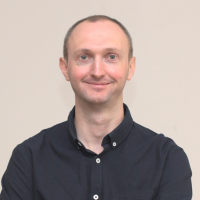
Where does Morocco stand in a world where crises intersect, respond to each other, and reshape balances? How does it fit in, and what responses does it bring to these transformations? These questions, which cannot be overlooked in an extremely troubled international context, structured the intervention of the guest speaker at the Faculty of Legal, Economic, and Social Sciences of Rabat. Indeed, it was around these questions that Lamia Radi, former ambassador of Morocco to Norway, articulated her statements. Right from the start, the diplomat described a fragmented world, marked by persistent tensions and continuous recompositions. And it is in this challenging context that Morocco deploys responses that take into account both exogenous and endogenous factors.
An international environment under permanent tension

For the diplomat, there is now an established reality: that of an international system affected by multiple crises. From the Israeli-Palestinian conflict to the war in Ukraine, passing through tensions in Yemen, Syria, and the Horn of Africa, the whole scenario creates a landscape marked by sustainable instability. In this context, Morocco is not a participant in these conflicts. However, it directly suffers the effects. "These conflicts are not ours, but they directly impact us," she said, citing "the increase in energy prices" and "that of raw materials, especially wheat." Therefore, she added, foreign policy does not operate in a neutral space. It unfolds in a constrained environment where external developments require constant adjustments – and where, consequently, "the ability to anticipate becomes central."

Rising transnational threats

In addition to this conflictual situation, a second level of analysis exists, more diffuse but equally decisive. It concerns the multifaceted nature of transnational threats, which the former ambassador precisely defines as "a problem that cannot be resolved on the scale of a single country." Furthermore, other factors disrupt the landscape of international relations. Terrorism, arms trafficking, drug trafficking, and human trafficking are no longer isolated phenomena. They are now part of interconnected logics, driven by networks whose power can rival that of states. "Criminal networks sometimes have turnovers higher than the GDP of some countries," she emphasizes, also mentioning their "capacity for political destabilization." The migration issue is a concrete illustration of this. It reflects a profound shift in dynamics at work: "There is not a single illegal migrant that arrives without passing through a network," she affirms. Thus, these networks do not operate in silos. They intersect, articulate, and reinforce each other. From this stems "an economy of violence" that, by nature, transcends borders and further complicates state responses.

Regional environment under scrutiny

In the immediate vicinity of Morocco, instability persists and requires sustained attention. Algeria is mentioned through "a capacity for nuisance" that demands, in return, "constant vigilance." Libya, on the other hand, illustrates the consequences of prolonged state collapse, paving the way for the expansion of militias and trafficking. Further south, in the Sahelian region, connections between armed groups and criminal networks further complicate already precarious balances. With full lucidity, Mrs. Radi asserts that "Diplomacy is a permanent war. Peace is the moment between two wars." In this hostile landscape, "We do not have oil, gas, or abundant natural resources," says the ambassador, citing also persistent unemployment and growth that does not fully meet job needs. These constraints add to an even more structural reality: that of an economy under pressure, whose margins remain limited in the face of social demands and the changes in the international environment.

Institutional continuity as an asset

Faced with these challenges, Morocco boasts a significant asset: its institutional framework. "Our greatest asset is governance," she declares, specifying that the Monarchy in Morocco allows for "projections over 20 to 30 years," ensuring "stability and continuity." In an international environment characterized by political alternations and strategic shifts, institutional continuity takes on special significance. It enables actions to be planned over the long term, to support structural projects, and to ensure their realization beyond political cycles. This projection capacity does not rely on a single lever. According to the speaker, it is organized around three complementary registers: the army, intelligence services, and diplomacy. First, the modern and professional army confers an anticipatory capacity. Alongside it, intelligence services, whose efficiency is recognized in international cooperation. Then an active diplomacy, "which goes beyond formal exchanges." As Mrs. Radi highlights, "diplomacy is not just about discussing around a table." It involves analyzing, weighing, and assessing security, strategic, and political stakes to better defend interests.

The diplomatic "layered cake"

To describe Morocco's action, Mrs. Radi uses an almost metaphorical formula, evoking the "layered cake strategy." According to her, "Morocco does not eliminate its strategies, it stacks them." First, a constant presence in different international arenas. "We are everywhere," she summarizes, emphasizing that presence conditions the ability to exist and influence. Then comes the diversification of partnerships. "We never put all our eggs in one basket," she insists, mentioning an expansion of relationships beyond traditional alliances, in a controlled openness logic. As for bilateral relations, they follow a differentiated approach. They are built on a case-by-case basis, according to each partner's specific needs, especially on the African continent, in a logic of tailored cooperation. "We are no longer just managers; we are a force of proposal." Through this affirmation, a shift in Morocco's positioning emerges, moving from an "adaptive posture to an initiative capacity."

Morocco, a trusted mediator

Furthermore, leveraging its achievements and credibility, Moroccan diplomacy assumes a particular role: that of a mediator. "Morocco is a broker, a trusted intermediary," she asserts, emphasizing the "trust that alone conditions the possibility of a dialogue between actors who often no longer communicate." This role is evident in several contexts. In Libya, for example, where Morocco has contributed to reconciling antagonistic parties. It also manifests in a more concrete commitment through participation in peacekeeping operations. For all these reasons, "Morocco becomes a go-to interlocutor," she underlines. People turn to it when usual channels close and maintaining balances becomes more challenging, adds the diplomat. In conclusion, Lamia Radi returns to the essence of her speech, formulating an idea that gives meaning to her entire discourse: in an uncertain environment, Morocco does not merely adapt to external developments. It engages in a dynamic process, characterized by accumulation and projection, gradually shaping the contours of its influence.
Context: The content is a professional news article discussing Morocco’s diplomatic challenges and responses in the face of a turbulent international environment, with insights from a former Moroccan ambassador.
Fact Check: Morocco has indeed been recognized for its diplomatic efforts, including mediation roles in various regional conflicts.