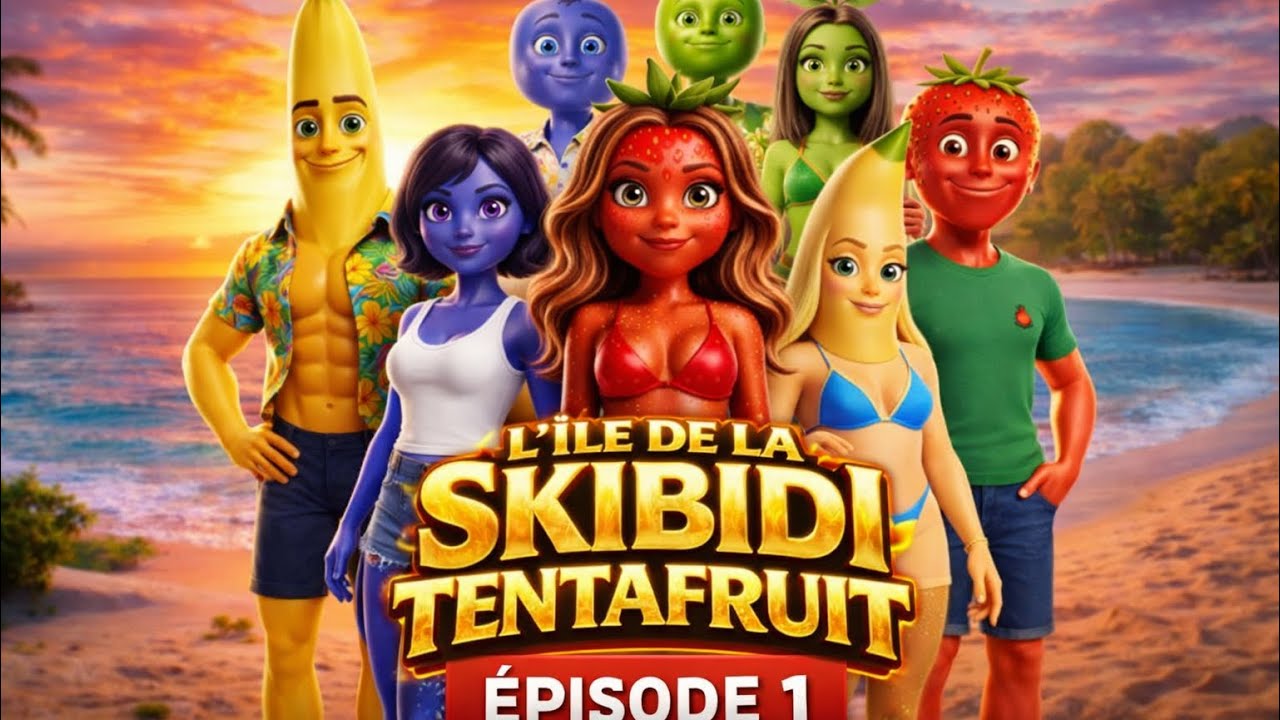
« I heard Pastequo say that you are a tana! », « The girls are jealous of me because you all want to doro me ». If these phrases seem cryptic to you, it’s probably because you’re over 25.
Yet, they are at the heart of the Skibidi Tentafruit Island, the new narrative trend shaking TikTok at the beginning of 2026. Posted by the Onlymoviesfr account, these five-minute videos feature anthropomorphic fruits in a trashy parody of reality.
The success is staggering: 100 million views accumulated in just ten days and growth records that make this account the fastest-growing in the platform’s history. Behind the visual absurdity and flowery punchlines lies an industrial production mechanism where artificial intelligence and the codes of “slop” culture reign supreme.
Episode 1:
An AI-driven content factory
This phenomenon is not born out of isolated artistic genius, but a formidable technical workflow. To bring these muscular fruits or presenter pears to life, creators use tools like Object Talk (a custom ChatGPT bot) for the script and OpenArt for animation. The result? A saturated aesthetic, close to Pixar’s universe, but serving storylines worthy of the worst soap operas.
The series is actually a French adaptation of an Anglo-Saxon concept, Fruit Love Island, proving that current virality relies on the infinite replication of successful formats. In just a few days, dozens of clones like “The night I became a fruit” have inundated algorithms, saturating the digital space with highly sexist and absurd scenarios. This mass production, often labeled as “slop”, aims less at quality than capturing fragmented attention.
The triumph of hate-watching and interaction
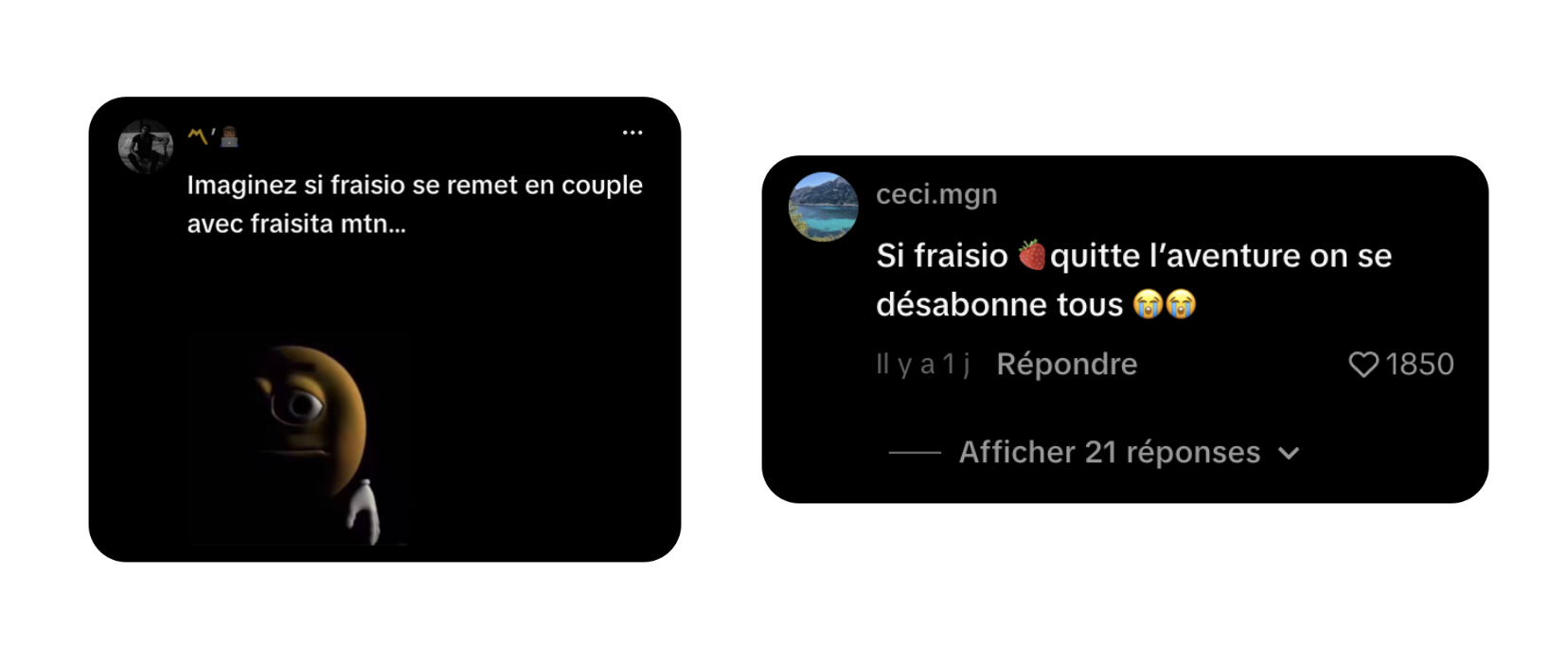
Why does such vulgar and repetitive content explode to this extent? The answer lies in the comments. Like fans of B-movies, Skibidi Tentafruit viewers play at taking the series seriously. Internet users compete in ironic enthusiasm, creating a second layer of content that mechanically boosts the videos’ algorithmic strength.
Added to this is the phenomenon of hate-watching. Many users watch these episodes to mock them on X (formerly Twitter) or through reaction videos on YouTube. Whether you love it or hate it, each click generates value and visibility, trapping the user in a feedback loop that TikTok’s algorithm loves.
READ ALSO: Burger King vs McDonald’s: the war of the bosses inflames social networks
Oasis and Marcel Agency: the marketing heist
Faced with such a cultural tsunami, brands generally hesitate between caution and opportunism. Oasis, whose visual universe is the clear inspiration for the series, has chosen boldness. Accompanied by its agency Marcel, the fruit brand orchestrated a subtle integration from episode 11, placing its cult music “Frsh” as background music.
Episode 11:
The highlight of this strategy comes with the official “reveal” in episode 12. Oasis becomes the first brand to officially collaborate with this program. To seal this unlikely union, a limited edition Apple-Pear flavored collector can, featuring characters Pommita and Poirita, is launched. By gatecrashing the “slop”, Oasis proves that it perfectly masters the codes of Gen Z and Gen Alpha, turning a chaotic meme into a massive sales lever.
Appearance of Oasis at 1:00: