Massive theft and risk of shortage
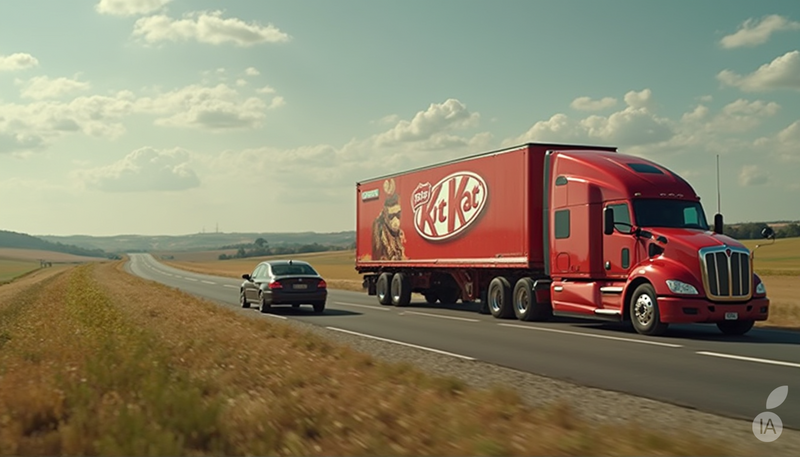
The facts are impressive: a truck carrying more than 400,000 bars KitKat was stolen during transit between Italy and Poland. In total, almost 12 tons have disappeared. One week before Easter, a key period for chocolate consumption, Nestlé is warning of a risk of shortages of said product in stores, particularly in several European countries. And the story could have ended there…
A case that immediately ignites social networks
You know information has gone beyond the economic framework to invade social networks. On X, TikTok or LinkedIn, the affair aroused humorous diversions and improbable theories, thousands of reactions around the biggest chocolate break
of the year. But above all, it triggered a now well-known phenomenon: real-time marketing recovery.
In the hours that followed, many brands published their own reactions, often in the form of false press releases or diverted posts. And to think that it’s not even April 1st!
On the program, food brands talk about secure stocks, competing brands are ironic about the situation, companies outside the sector play the humor or second-degree card. Some have even adopted the press release codestransforming a news item into an opportunity for visibility.
This type of reaction perfectly illustrates the evolution of digital marketing : immediate responsiveness (sometimes in a few minutes), diversion from current events, offbeat or even humorous tone. Remember the Coldplay concert! THE community managers are now on the front line, capable of transforming improbable news into a viral campaign, without a media budget.
While some speeches were praised for their creativity, others also attracted criticism: opportunism considered excessive, comical repetition and loss of meaning of the initial message.
What do you think?
The KitKat affair above all illustrates a basic trend: in the attention economy, each event becomes a pretext for communication. A simple cargo theft thus transforms into a viral subject, a field of marketing expression, and a creativity laboratory for brands. And in all of this, there remain two unknowns: who committed the theft and will there be a chocolate shortage?