The war in Iran has a direct effect on the price of fuels used on farms (+150% in one year) but also on the price of fertilizers. Farmers are considering sometimes radical solutions to avoid it. Some put forward the idea of no longer cultivating their plots.
Am I going to sow my wheat, barley or rapeseed next September? This is the question that arises in some Haut-Marne farms. This radical and extreme decision was never taken. It would be the consequence of the increase in the price of fuels and fertilizers since the war in Iran, with the Persian Gulf countries being among the main world producers.
Farmers would prefer not to incur expenses in their fields without being assured of covering the costs, especially since cereal prices remain very low. Not cultivating anything would avoid working at a loss. Declaring fallow areas would be much more profitable. Never seen before!
In Parnoy-en-Bassigny, Alexandre Brauen is not there. Contacted on Wednesday evening, this member of the Gaec de Grignoncourt is trying to find other less ultimate solutions to counter the increase in charges. In addition to beef production, the two partners and two employees cultivate 390 hectares of wheat, winter and spring barley, rapeseed, corn, sunflower and hemp.
In fertilizer, Alexandre Brauen had not “covered” himself in advance. Until the end of last year, he hoped for declines and finally made his purchases in November. Obviously, he had no idea that a war would be started in Iran and that prices would soar. According to his calculations, the 26-tonne truck now costs €9,100 instead of €6,500 a year ago.
Note that beyond this increase, farms located in Bassigny suffered severe bad weather at the start of the year and had to “resow” their plots by planting sunflowers. The Gaec has thus committed 100 hectares of this crop. Even if he had to provide the necessary inputs, the only interest is that the sunflower uses less nitrogen than cereals. Alexandre Brauen explains that wheat paid today at €200 per tonne does not cover the cost price. If it falls to €170 as announced, with the price of fertilizers so high, the equation is extremely complicated. So, he hopes for a rapid end to the conflict and a return to normal, knowing that “the room for maneuver on the farms is reduced”.
An unprecedented situation
In the meantime, it is said that Bassigny is lucky to still have livestock effluent. He also thinks about digestates from methane digesters. Organic fertilizers partially compensate for chemical fertilizers. In addition, the farm will, in fact, grow more sunflowers and it could replace malting barley with feed barley which requires less nitrogen.
On the other hand, it is impossible for Alexandre Brauen to ignore hemp. The 30 hectares are under contract and he has quantities to supply, otherwise he would be penalized by his buyer.
Installed since 2001, he believes that it would not be reasonable to completely break the system. He thinks about the sectors and the long-term consequences. Anyway, he has never experienced this situation. At the start of the 2000s, cereal prices were low, but so were fertilizer prices. He says: “Usually, the price of fertilizers is indexed to that of crops. For the first time, they are opposed. » Indeed, until now, a rising oil price brings with it, in its wake, all other raw materials such as wheat or even milk. For the moment, these are not taking off.
Frédéric Thévenin
f.thevenin@jhm.fr
An aid of 4 cents on an increase of 111 cents
Last week, the government announced a total exemption from excise duty on non-road agricultural diesel (GNR) for the month of April 2026. This amounts to a reduction of 4 euro cents on the liter paid 1.81 € on April 1, when it was 70 cents euros in 2025.
For the Minister of Agriculture, the measure, estimated at 14 million euros, must compensate for the sudden increase in energy and maintain competitiveness with European neighbors. This is in addition to an existing system for reducing excise duties on agricultural GNR of 1.3 million euros for public finances.
A request at the European level was also made for the suspension of the carbon border adjustment mechanism on fertilizers or, failing that, full compensation to avoid a distortion of competition. In the meantime, yesterday, the “anxiety” of the increase in agricultural diesel marked the end of the FNSEA national congress in Caen. The farmers challenged the Minister of Agriculture Annie Genevard, who came without any new announcement on non-road diesel, the price of which has exploded and for which they are asking for aid of “30 cents per liter”.
Every day has its share of questions
Antonio Perreira, technician at the Chamber of Agriculture, gives some ideas for overcoming this difficult milestone on farms. His thoughts revolve around cultivation systems with a provocative question: “Do we still have to pass through clouds of dust? » His first idea is, if possible, to plant crops using direct sowing, without tilling the soil. He details: “Cultivating one hectare of wheat with deep tillage such as plowing, that’s 100 liters of non-road diesel. With superficial work, it is 70 liters. In direct sowing, it is 50 liters. HAS”
His second piece of advice, this time to deal with the rise in fertilizer prices, is to “cultivate your nitrogen”. Faced with the ton of urea which increased from €500 to €700, he recommends the establishment of intercrops enriched with legumes which capture the nitrogen and return it to the soil. The 2025/2026 campaign having already been played, he is talking about that of 2026/2027.
The third possibility is much more radical. It consists of stopping cultivation and installing leguminous fallows for one year before harvesting the following year. The interest is the nitrogen supply. Antonio Perreira says: “This solution is possible on the most superficial lands, but it could endanger sectors. » He thinks of the loss of markets and the obligation to import.
As for the option of ignoring the nitrogen supply for a year, it does not seem judicious to the technician. “It would result in a loss of production with yields halved. When a ton of wheat is less than €200, having neither the price nor the quantity is like digging yet another hole. HAS”
Antonio Perreira believes more in thinking about crop rotations that consume less nitrogen. In other words: “Opt for sunflower, which requires around forty units of nitrogen, rather than wheat and corn which amount to 160/200 units. » The technician concludes: “Each day that passes sees its share of questions arise for the 2027 campaign.” He goes so far as to hear farmers intending to only grow legumes. The answers will come from Iran and the Strait of Hormuz, where 30% of the world’s fertilizers circulate.
-

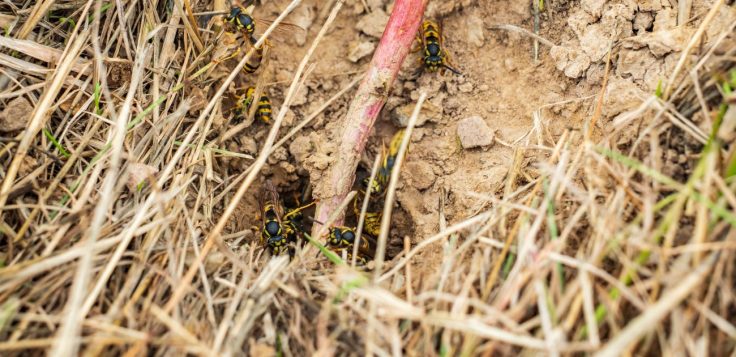
Farmers are hesitating between cutting fertilizer or changing crops. Here on barley. -

-

Direct seeding is the best solution for saving fuel.