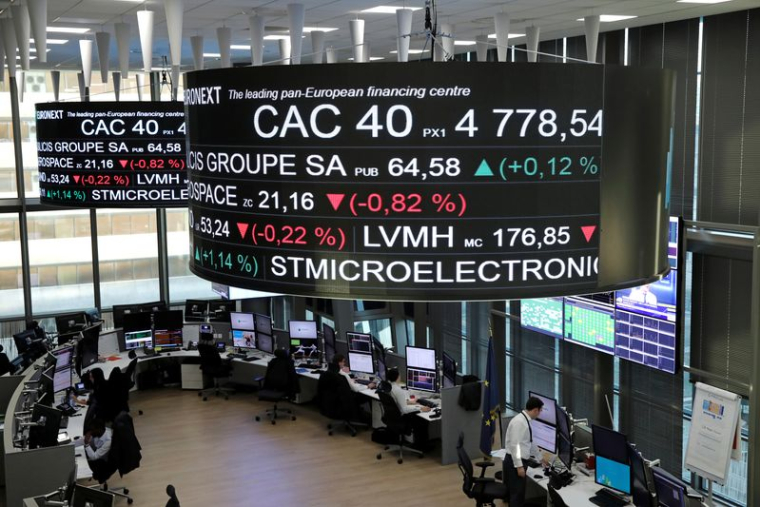
The French stock market index CAC 40 in the business district of La Défense in Paris
by Mara Vilcu
The main European stock exchanges are expected to open slightly lower on Monday as investors brace for a protracted conflict in the Persian Gulf following the initial attacks by the Houthis on Israel over the weekend, coupled with record oil prices, reigniting fears of inflation and recession worldwide.
Initial indications suggest the Paris CAC 40 could open down by 0.17%.
Futures contracts signal a 0.24% drop for the Dax in Frankfurt, 0.03% for the FTSE in London, and 0.28% for the EuroStoxx 50.
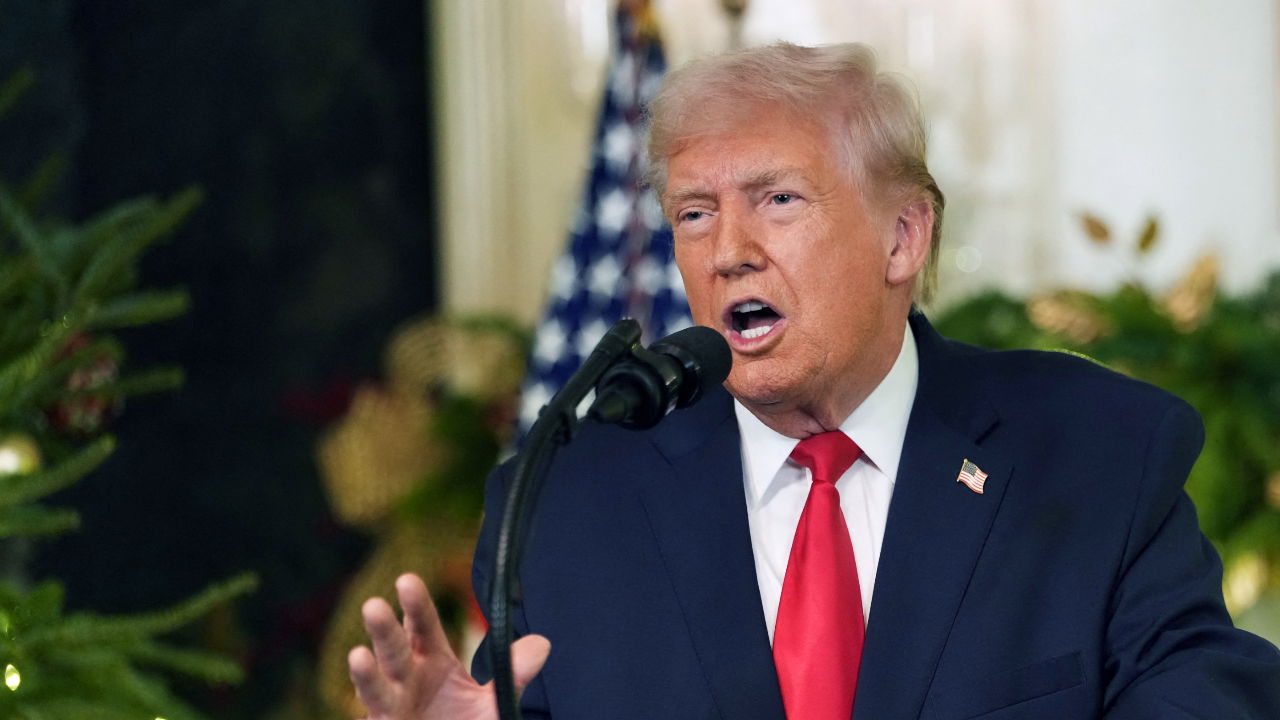
In an interview with the Financial Times on Sunday night, Donald Trump hinted at the US potentially seizing Iranian oil, threatening to take control of the Kharg port crucial for Iranian crude exports, while stating that negotiations with Iran were going “very well.”
As the conflict initiated by US and Israeli airstrikes on Iran continues to unfold, regional countries, including Pakistan, have come together to discuss proposals aimed at ending the war.
For the first time since the conflict began, the Houthi rebels in Yemen, allied with Iran, launched missiles at Israel on Saturday, raising fears of further escalation in the conflict.
The military, political, and religious movement led by the Houthi family has driven oil prices higher, with Brent crude hovering around $115 per barrel on Monday.
“The market has largely ignored the prospect of a negotiated end to the war, despite Trump’s claims of ‘direct and indirect’ talks with Iran in progress, and is preparing for a significant escalation of military hostilities, which is a bullish signal for crude oil, with great uncertainty about the timing and nature of the outcome,” explained Vandana Hari, founder of oil market analysis provider Vanda Insights.
Furthermore, the European Central Bank (ECB) is determined to address inflationary pressures linked to rising energy prices due to the Middle East conflict, although it is premature to discuss a timeline for potential interest rate hikes, said the governor of the Bank of France, François Villeroy de Galhau, in an interview with Italian publication La Stampa.
Fed Chair Jerome Powell will have the opportunity to express his views at a later event on Monday, while the influential head of the New York Fed, John Williams, will also speak.
STOCKS TO WATCH: [L8N40F1PJ]
ON WALL STREET
New York’s stock market ended sharply lower on Friday, with weaknesses in mega-cap stocks dragging the three main indices to their lowest closing levels in over six months as the Middle East conflict continues to dampen risk appetite.
The Dow Jones index dropped 1.73%, or 793.47 points, to 45,166.64 points. The broader S&P 500 lost 108.31 points, or 1.67%, to 6,368.85 points. The Nasdaq Composite fell 459.72 points, or 2.15%, to 20,948.357 points.
IN ASIA
Tokyo’s stock market fell by 3.07%, erasing its gains for the year in a wave of widespread selling in the region, while benchmark bond yields briefly hit their highest level in 27 years before retreating as the Middle East conflict escalated, heightening fears of stagflation.
Chinese and Hong Kong stock markets also declined, with the war weighing on risk appetite.
Shanghai’s composite index advanced by 0.26% and the CSI 300 of major caps lost 0.27%. Hong Kong’s stock market retreated by 1.21%.
INTEREST RATES / EXCHANGE RATES
The yield on the 10-year Treasury fell by 5.2 basis points to 4.3880%. The two-year yield dropped by 3.5 basis points to 3.8811%.
Germany’s 10-year Bund yield declined by 1.7 basis points to 3.8234%. The two-year yield also decreased by 2.9 basis points to 3.8234%.
The US dollar remained relatively stable on Monday, on track to record its strongest monthly gain since July, as investors worry about the implications of a prolonged conflict in the Middle East.
The dollar lost 0.08% against a basket of reference currencies.
The euro gained 0.07% to $1.1516.
OIL
Oil prices continued to rise on Monday, with Brent set to register a record monthly increase after the Houthis launched their first attacks on Israel over the weekend, escalating the US-Israel-Iran conflict in the Middle East.
Brent advanced by 2.51% to $115.40 per barrel, while West Texas Intermediate (WTI) crude gained 1.44% to $101.07.
KEY ECONOMIC INDICATORS ON MARCH 30:
COUNTRY GMT INDICATOR PERIOD CONSENSUS PRIOR
Eurozone 09:00 Economic Sentiment and March 96.8 98.3
Business Climate
Germany 12:00 Consumer Prices IPCH March (flash)
– Monthly 1.0% 0.2%
– Yearly 2.7% 1.9%
(Reporting by Mara Vilcu, with contributions from Reuters, edited by Augustin Turpin)