
Electricity costs reduced by 85%: why this AI chip outperforms NVIDIA in the factory
NVIDIA against SiMa.ai: when the sector giant becomes too expensive for the industry
The global embedded AI market is booming and confronts the sector with a strategic choice worth several million dollars. If NVIDIA, the undisputed giant, dominates the AI accelerator market, a crucial question now arises for managers: is the most powerful hardware always the most economical?
In the manufacturing, logistics and industrial control sectors, demands for autonomous systems, drones and robotic quality control are growing rapidly. Those who systematically opt for NVIDIA, the undisputed market leader, certainly benefit from maximum scalability and an unrivaled software ecosystem, but often at the cost of an exorbitant total cost of ownership (TCO), high consumption energy and complex integration cycles. The American start-up SiMa.ai fills precisely this gap. With its Modalix MLSoC, designed specifically for inference and energy efficiency, the company offers an alternative that impresses not with its raw computing power, but with its intelligent specialization.
Related to this:
This exhaustive comparison uncompromisingly analyzes the strengths and weaknesses of the two platforms. Through three concrete use cases – autonomous mobile robots (AMR), drone inspection and stationary quality control – we reveal in which scenarios NVIDIA’s dominant position on the market remains indisputable and when SiMa.ai represents the choice economically and strategically superior. An essential book for all technology and investment decision-makers who want to future-proof their embedded AI infrastructure for the next decade.
AI at the edge is exclusively about computer architecture. Instead of sending data from sensors or cameras over the Internet to a centralized cloud data center (e.g. AWS, Google Cloud), having it evaluated by an AI on-site, and then sending the result back, the AI model runs directly on a chip in the device itself (at the “edge” of the network).
Physical AI goes much further. It involves AI systems that not only perceive and understand the physical world, but actively interact with it. Physical AI is the fusion of artificial intelligence, robotics and physics. To execute movements, AI must understand the laws of gravity, friction, spatial depth and material properties.
When does choosing an unsuitable chip cost more than the chip itself?
The embedded AI market is among the fastest growing segments of the entire technology economy. This market was estimated to be worth around $12.5 billion in 2024 and is expected to reach nearly $109.4 billion by 2034, an average annual growth rate of 24.8%. The industrial sector, and more particularly production, logistics and robotics, is a key driver of this growth. Faced with this boom, technology and investment decision-makers are faced with a question that, at first glance, seems purely technical, but which actually has strategic implications: when to favor NVIDIA’s dominant physical AI platform, and when the Modalix MLSoC Does SiMa.ai represent the economically more advantageous choice?
The answer is more nuanced than many leaders suspect. It depends not only on computing power, but also on five-year total cost of ownership, continuous operating power consumption, integration efforts and strategic software dependencies. This analysis evaluates available market data, comparative test results and concrete examples of partnerships for three representative use cases: autonomous mobile robots, drone inspection and stationary quality control. She deduces a solid decision-making logic.
The Balance of Power: Goliath Meets the Specialist
NVIDIA unquestionably dominates the AI accelerator market. With an estimated market share of between 80 and 90% of total revenue by 2025 and more than $100 billion in revenue from the data center segment alone, the company enjoys a dominant position, the result of a decades-old software ecosystem. More than four million CUDA developers worldwide, the comprehensive Isaac ROS framework, the HoloScan platform for medical and industrial applications and the Omniverse infrastructure for digital twins constitute a major competitive advantage that no competitor will be able to fully overcome in the near future.
At the other end of the spectrum is SiMa.ai, an American startup specializing in embedded AI. The company positions itself not as a general competitor to NVIDIA, but as a precision tool for specific, energy-efficient and cost-optimized inference applications. With the Modalix MLSoC, a second generation product after the first MLSoC marketed, SiMa.ai precisely meets the needs of classic embedded platforms, which are too energy-intensive, too expensive to acquire or too complex to develop. The Modalix supports CNNs, Transformers, LLMs, LMMs and generative AI at the edge and, according to the company, offers more than ten times the computing power per watt of alternatives.
This is not just a marketing argument. In the MLPerf Inference 3.0 benchmark, the industry benchmark for AI inference comparisons, SiMa.ai won the single-stream ResNet50 benchmark (closed-loop operation) against NVIDIA’s Orin, using standard software and without any manual optimization. In the following MLPerf 3.1 round, the company demonstrated up to 85% higher energy efficiency than its main competitors in the multi-stream benchmark, as well as a 20% improvement in its own closed-loop consumption score compared to the submission previous. These benchmarks are significant because they were not carried out in isolated laboratory environments, but under standardized and reproducible conditions, and because SiMa.ai used TSMC’s 16nm processor technology, two generations behind NVIDIA’s latest manufacturing process.
Platform overview: strengths and weaknesses compared
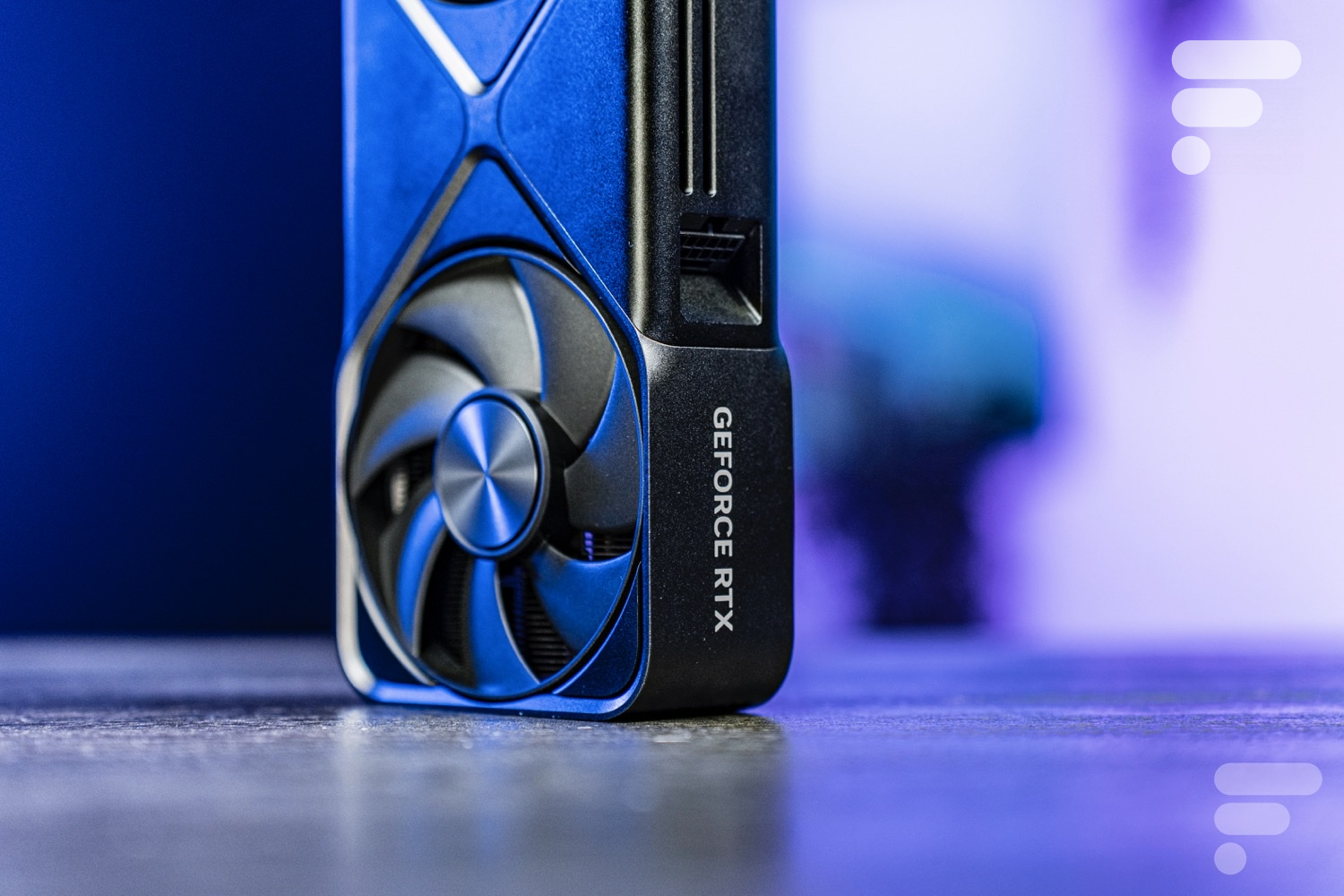
Before analyzing the decision question based on use cases, it is worth examining in detail the technical parameters of the hardware platforms involved. The NVIDIA Jetson Orin NX offers AI performance of 100 to 157 TOPS (INT8) at 10 to 25 W consumption, costs approximately $500 to $700 for an order of 1,000 units, is certified for industrial use, and supports CUDA, JetPack, TensorRT, and Isaac ROS. The NVIDIA Jetson Orin Nano Super achieves 67 TOPS (INT8) at 7-25W consumption, costs around $200-300, is also certified for industrial use, and uses CUDA, JetPack, and TensorRT. The NVIDIA Jetson T4000 offers approximately 1,200 TFLOPS (FP4) computing power at 40 to 70 W consumption, costs approximately $1,999, is certified for industrial use, and supports CUDA, JetPack 7.1, and TensorRT. The NVIDIA IGX Thor graphics card offers up to 5,581 TFLOPS (FP4) for a maximum consumption of 130 W. Positioned in the high-end segment, it benefits from high security certifications such as ISO 26262 ASIL D and IEC 61508, and is compatible with AI solutions Enterprise, Isaac and Holoscan. The SiMa.ai Modalix platform reaches 50 TOPS (INT8/BF16) with a consumption of only 5 to 10 W. Its price is $349 (8 GB) or $599 (32 GB) depending on the memory configuration. Industrially certified, it works with the Palette software development kit (Palette SDK) as well as the no-code Edgematic platform.
| platform | performances of AI | Energy consumption | Price of the module (1k) | Certifications | software |
|---|---|---|---|---|---|
| NVIDIA Jetson Orin NX | 100–157 TOPS (INT8) | 10–25 W | environ 500 à 700 $ | Industrial | CUDA, JetPack, TensorRT, Isaac ROS |
| NVIDIA Jetson Orin Nano Super | 67 TOPS (INT8) | 7–25 W | environ 200 à 300 $ | Industrial | CUDA, JetPack, TensorRT |
| NVIDIA Jetson T4000 | 1 200 TFLOPS (FP4) | 40–70 W | $1.999 | Industrial | CUDA, JetPack 7.1, TensorRT |
| NVIDIA IGX Thor | jusqu’Ã 5 581 TFLOPS (FP4) | jusqu’Ã 130 W | Premium (n/a) | ISO 26262 ASIL D, IEC 61508 | AI Enterprise, Isaac, Holoscan |
| Modalix SiMa.ai | 50 TOPS (INT8/BF16) | 5–10 W | 349 $ (8 Go) / 599 $ (32 Go) | Industrial | Palette SDK, Edgematic (no code) |
NVIDIA’s strength lies in the exceptional scalability of its computing power. The IGX Thor, based on the Blackwell architecture, offers up to 5,581 TFLOPS FP4 and is intended for applications requiring generative AI models, visual language models or full digital twin integrations in outskirts. Compared to its predecessor, the Orin IGX, it delivers up to eight times better AI computing performance on the integrated GPU and 2.5 times better on the dedicated GPU accelerator. The Jetson Thor, specifically designed for physical robotics, reaches 2,070 TFLOPS FP4 with a consumption of 40 to 130 watts and is positioned as a platform for humanoid robotics.
SiMa.ai’s Modalix, on the other hand, is based on a radically different design principle: maximum inference efficiency in a thermal envelope of less than 10 watts, at an affordable module price. The chip is offered in four TOPS configurations (M25, M50, M100 and M200) and is fully software compatible with the first generation of MLSoC, allowing for gradual migration and upgrades without redesign. A major advantage lies in its thermal behavior: while NVIDIA’s Jetson platforms require active cooling under load and are subject to frequency reduction at high ambient temperatures, Modalix operates stably below 10 watts without thermal throttling. This is a considerable practical benefit for industrial environments where cooling is limited.
Use case 1: Autonomous mobile robots – where controlling the total cost of ownership (TCO) is essential
Autonomous mobile robots in warehouses and logistics constitute one of the most relevant case studies for this decision. Their typical requirements include navigation, obstacle detection, trajectory planning and multisensory data fusion (LiDAR, camera and inertial unit), while requiring autonomy of 8 to 16 hours per day and fleets of 20 to 200 units.
From a hardware cost perspective alone, SiMa.ai clearly stands out: for a fleet of 100 autonomous mobile robots (AMR), NVIDIA’s Jetson Orin NX has a total cost of ownership (TCO) of $80,000 to $130,000, compared to $55,000 to $100 $000 for Modalix. Energy consumption considerably reinforces this advantage: while the Jetson Orin NX generally consumes 15 watts under load and reduces its battery life by 10 to 15%, the Modalix, with a consumption of around 7 watts, limits this loss to only 4 to 7%. Over five years, electricity costs per 100 AMR, calculated based on a German industrial electricity price of €0.30 per kilowatt hour, amount to around €19,500 for NVIDIA, compared to around 9 100 € for SiMa.ai. By taking into account all costs linked to equipment and operating energy, SiMa.ai makes a profit of 25,000 to 45,000 euros over a period of 5 years.
The overall weighted score of the evaluation in three categories (TCO 40%, Energy 30%, Integration 30%) is 3.0 for NVIDIA Jetson Orin NX, compared to 4.3 for SiMa.ai Modalix. However, this result deserves further investigation. For complex autonomous navigation tasks using SLAM LiDAR in dynamic environments – such as warehouses with fluctuating goods flows and personnel presence – NVIDIA’s Isaac ROS ecosystem, with its native multi-sensor fusion via the Holoscan platform, still offers significant advantages. Isaac ROS 4.0, available on the Jetson Thor platform in late 2025, significantly expands the GPU-accelerated library offering and provides GPU-optimized abstractions for the ROS 2 framework, ensuring consistent real-time performance. For simpler navigation tasks – line following, point-to-point movement, fixed route planning – this extra effort is not justified.
Use Case 2: Drone Inspection – When Grams Determine Results
Industrial drone inspection is one of the use cases where the SiMa.ai architecture presents a structural and physical advantage compared to the NVIDIA platform. When inspecting solar panels, wind turbines, high-voltage lines and warehouse roofs, weight, energy consumption and thermal stability are not just abstract specifications, but determining factors for usability.
NVIDIA’s Jetson Orin Nano Super (67 TOPS INT8) weighs between 60 and 80 grams including cooling and requires active cooling, which limits its use in weight-optimized drone chassis. The Modalix, on the other hand, weighs between 30 and 40 grams and can be passively cooled – a significant design advantage. Combined with its lower power consumption (6 watts under load on average, compared to 15 watts for the Jetson Orin Nano Super), this translates to a gain of 15 to 25%. in flight autonomy For inspection flights optimized for maximum route coverage per mission, this difference translates directly into savings: fewer batteries, fewer charge cycles and a higher coverage rate per working day.
For image classification and defect detection – a crucial issue in infrastructure inspections – the two platforms offer comparable results. SiMa.ais Modalix processes over 3,000 images per second using image analysis pipelines based on convolutional neural networks (CNN) and transformers, which is more than sufficient for typical inspection environments. Where NVIDIA maintains a clear advantage is in real-time video streaming to the ground station and complex 3D reconstructions in flight: for these applications, its hardware video encoding stack with native support for the RTSP protocol offers a more mature infrastructure.
The weighting of these use cases determines the choice of product. Users who primarily perform defect detection through image classification opt for SiMa.ai. Those who simultaneously transmit high-resolution video streams for remote manual analysis or create clouds of complex, embedded 3D points choose NVIDIA. The overall weighted score from the decision matrix is identical for both platforms in this use case: 4.3, despite different strengths.
Use case 3: Quality control of stationery products – the most compelling case for SiMa.ai
Quality control in production by fixed camera – detection of defects on welds, surfaces and assembly components in continuous operation 24/7 with a latency of less than 50 milliseconds – provides the most convincing data for this analysis. In this case, the differences are so stark that a cost-conscious company has no choice but to seriously evaluate SiMa.ai for standard inspection tasks based on convolutional neural networks (CNN).
In this scenario, the comparison is between NVIDIA’s Jetson T4000 (1,200 TFLOPS FP4, 40 to 70 watts, $1,999 for 1,000 units) and SiMa.ai’s Modalix (50 TOPS INT8/BF16, 5 to 10 watts, 349 to $599). For 50 fixed inspection stations, the hardware cost gap is around $100,000 for NVIDIA versus $17,500 to $30,000 for SiMa.ai, a difference of 70 to 80%. Over five years (50 stations, 24/7 operation, 0.30 €/kWh), energy costs reach around 46,000 € for NVIDIA (average consumption of 55 watts) and only 6,600 € for SiMa.ai (7.5 watts), a saving of approximately 85%.
The crucial similarity lies in inference latency: both platforms achieve latency of less than 10 milliseconds in typical quality control chains, which is sufficient for almost all real-time industrial requirements on a production line. This observation is essential to the strategic decision: if the performances are identical, but the costs differ significantly, there is no valid reason to choose the most expensive option, unless the functional requirements absolutely impose it.
The strategic partnership between TRUMPF and SiMa.ai demonstrates that this is not just a theoretical concept. TRUMPF, a global leader in laser technology and machine tools, has been collaborating with SiMa.ai since 2024 on the development of AI-assisted laser systems for welding, cutting and marking processes, as well as 3D printers for powder metals. The fact that a leading precision technology company in the German mechanical engineering sector – whose technical director considers AI to be a “highly strategic” element for the company – relies on the MLSoC platform from SiMa.ai underlines the concrete relevance of this technology for production and constitutes a valuable reference for high-level decision-makers.
Weighted overall score: NVIDIA Jetson T4000 hits 2.0, SiMa.ai Modalix 4.7 – the most significant outlier in the entire analysis.




/2021/12/14/61b8b9952d5fc_marie-adelaide-scigacz.png "War in the Middle East: Iranian Army claims Trumps arrogant rhetoric has no effect on its operations")
