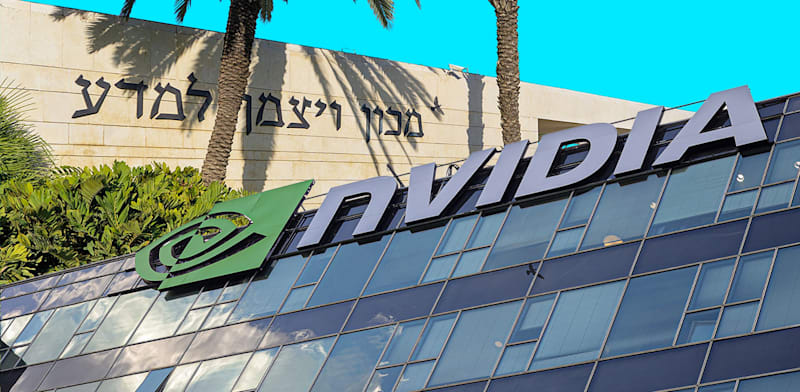
A niche acquisition made by Nvidia is causing concern among specialists in artificial intelligence and supercomputers. The latter see it as a test of the AI chip leader’s desire to maintain fair conditions of competition for its rivals and for data center manufacturers.
Nvidia announced the acquisition of SchedMD last December, giving it control of the open-source Slurm software. The latter ensures the scheduling of computer tasks and proves crucial for the training of the large language models which power conversational agents such as Claude from Anthropic. Slurm also powers government supercomputers used for weather forecasting and nuclear weapons development.
According to SchedMD, Slurm software powers approximately 60% of the world’s supercomputers. Some engineers and executives using these systems fear that Nvidia is subtly favoring itself, according to five sources familiar with the matter, for example by developing software updates for its own chips before those of competitors like Advanced Micro Devices. Slurm is used to manage Nvidia chips within supercomputers or data centers dedicated to AI.
Some users, however, hope that Nvidia, the most valuable listed company in the world, will be able to revitalize development by injecting part of its colossal resources into updating a system designed years ago for state supercomputers, and which now extends to national laboratories to cutting-edge AI companies.
These discussions between AI industry executives and supercomputer experts, as well as fears related to Nvidia’s actions, have not been previously reported. In a statement last week, Nvidia said: “Customers around the world benefit from our free and open-source software. Slurm is open-source and we continue to make improvements for everyone.” When announcing the SchedMD acquisition, Nvidia also committed to developing and widely distributing this “open-source, vendor-neutral software.”
NVIDIA’S COMMITMENT QUESTIONED
Nvidia presented this acquisition as a way to increase its investments in open-source technologies promoting the development of AI. According to Addison Snell, CEO of semiconductor consultancy Intersect360 Research, Nvidia could help SchedMD users – particularly government labs – adopt new AI techniques alongside more traditional supercomputing work.
At the same time, Mr. Snell clarified that concerns remained over the fact that Nvidia could, in the long term, “appropriate a common open-source tool to ensure that it works better, or even exclusively, with its own components, to the detriment of competing technologies such as those of Intel, AMD or any other designer of AI processors”.
One of the first tests will be how quickly Nvidia integrates new AMD chips due later this year into Slurm’s computer code, compared to integrating its own technologies, such as InfiniBand networking chips, one of the sources said. an engineer who has worked extensively with Slurm on intensive computing systems.
Three of the sources who expressed reservations about the SchedMD acquisition work in the AI industry, and two have extensive knowledge of supercomputer operations. All used or developed systems incorporating non-Nvidia hardware.
Several other experts using SchedMD’s software did not express immediate concern, although they said they were aware of these concerns and attentive to the chip giant’s decisions regarding Slurm. For many players in the sector, this acquisition represents a test of Nvidia’s real intentions.
THE MASSIVE ADOPTION OF SLURM
SchedMD’s software has been adopted by AI labs. Meta Platforms, French startup Mistral and Anthropic use it for certain specific tasks, including elements of AI training. OpenAI uses another method based on technology developed by Google (Alphabet), said a spokesperson.
Anthropic, Mistral and Meta did not respond to requests for comment.
AI industry sources cite a previous Nvidia acquisition to justify their fears.
Nvidia acquired Bright Computing in 2022. Although Bright Computing’s software is usable with third-party hardware, it has been optimized for Nvidia, which penalizes performance for users of other chips unless additional adaptation work is done, according to these sources.
Nvidia rejected the claims, saying Bright Computing’s technology supports “almost any CPU- or GPU-accelerated cluster,” referring to the central processing and graphics units that make up the backbone of data centers.
Anyone can get a hold of open-source code, although producing fully working software requires significant effort.
“We encourage others to join us in contributing to the growing free and open-source software ecosystem,” Nvidia said, adding that it has always continued to provide free and enhanced offerings after acquiring open-source software companies.
Nvidia said it would “continue to provide support, training, and open-source software development for Slurm to hundreds of SchedMD customers.”