Hold 6,5 Go de textures high definition in only 970 modes of VRAM.
It’s the story of an eternal beginning: developers release ever more demanding games, and we end up hitting the wall of video memory (VRAM). Do you have an 8 GB card? Too bad, the latest AAA requires 12 for Ultra textures. But Nvidia seems to have found a fairly stunning solution.
To go further
DLSS 5: how Nvidia uses neural rendering to transform your PC games
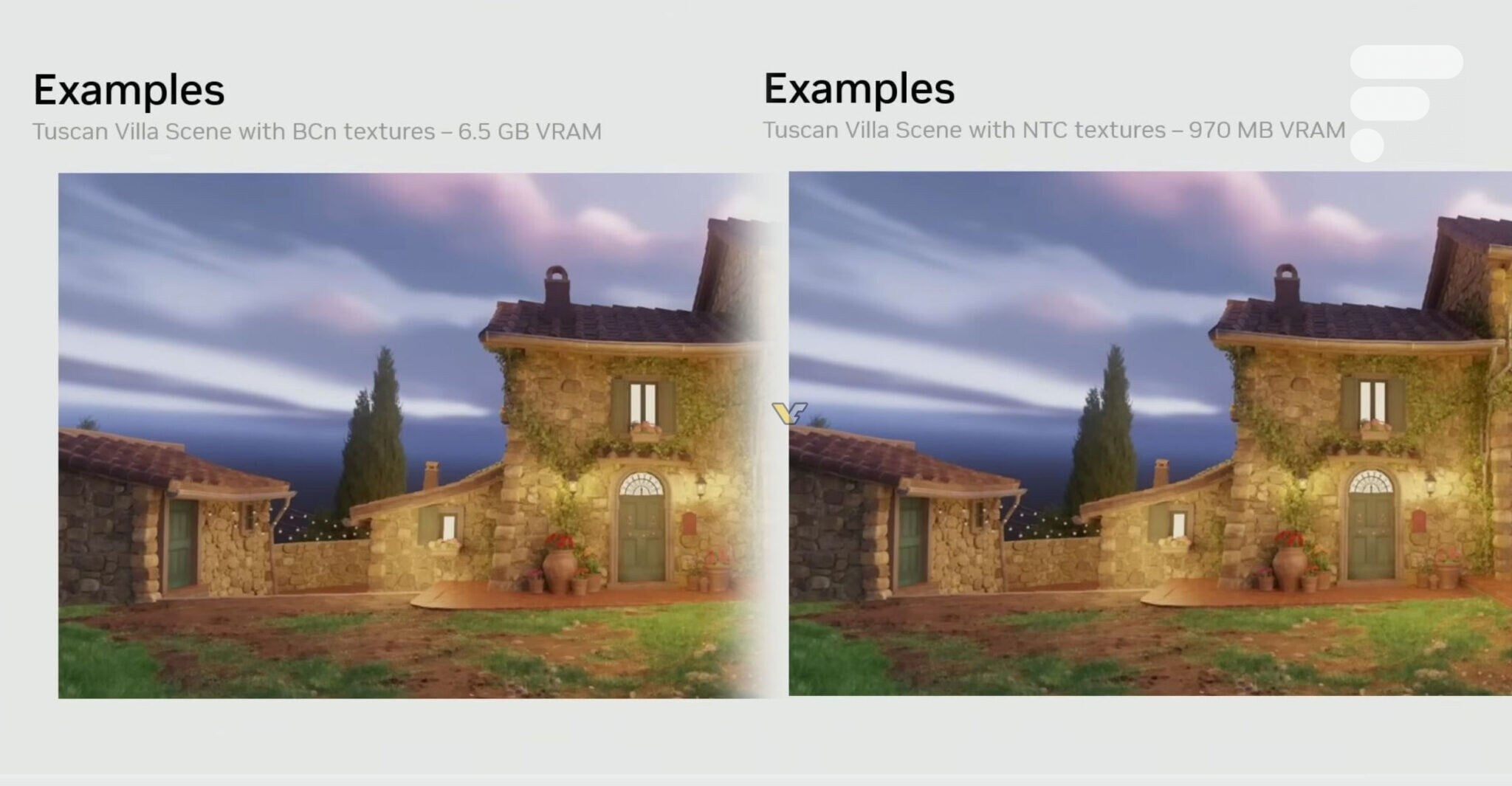
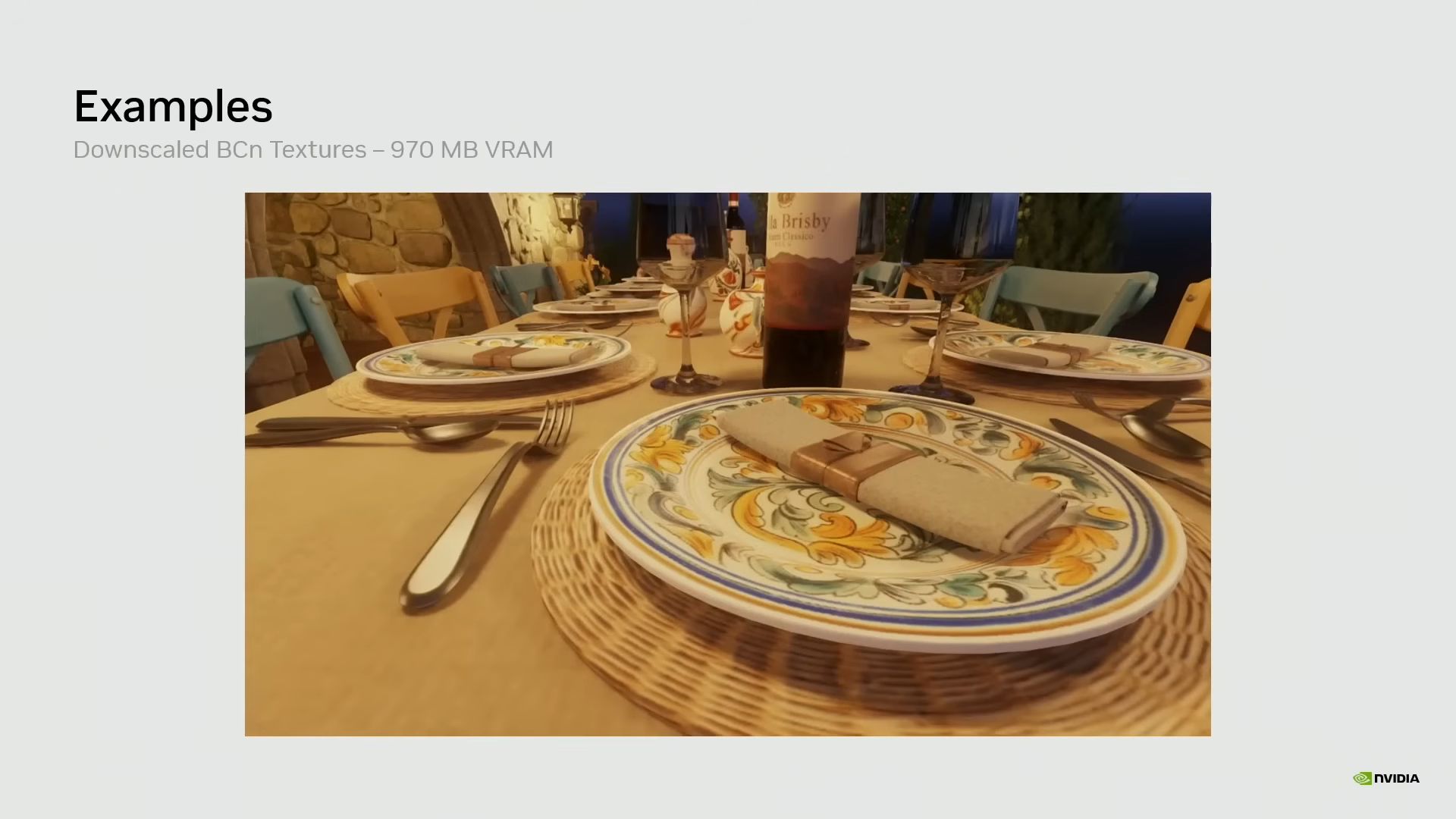
During the GTC 2026 conference, a few days after teasing the future DLSS 5, Santa Clara engineers detailed their new secret weapon: the Neural Texture Compression (NTC). The figure thrown around is absurd: going from a 6.5 GB texture pack to 970 MB. That’s a reduction of 85%. In short, your GPU could store seven times more details in the same memory envelope.
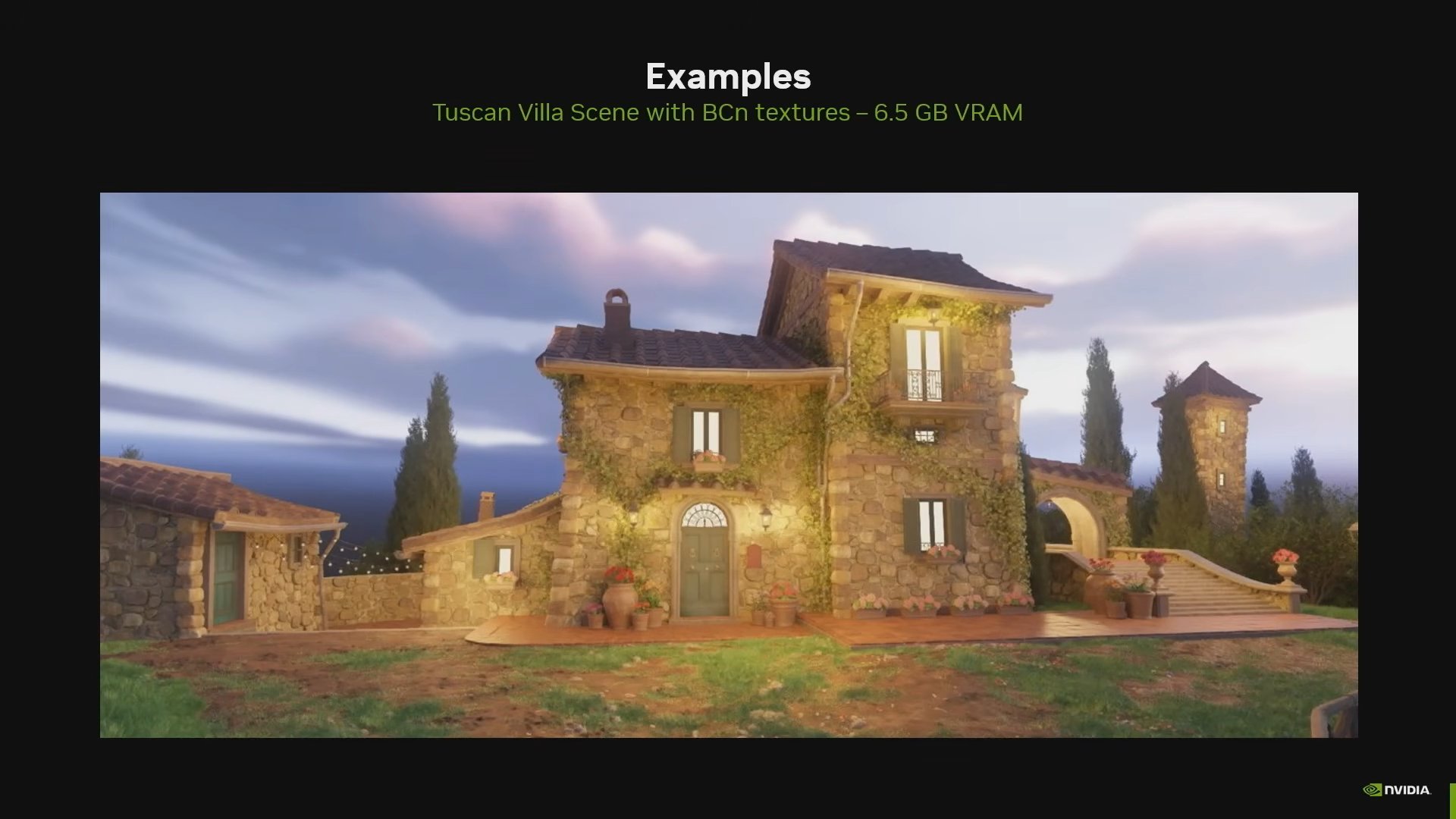
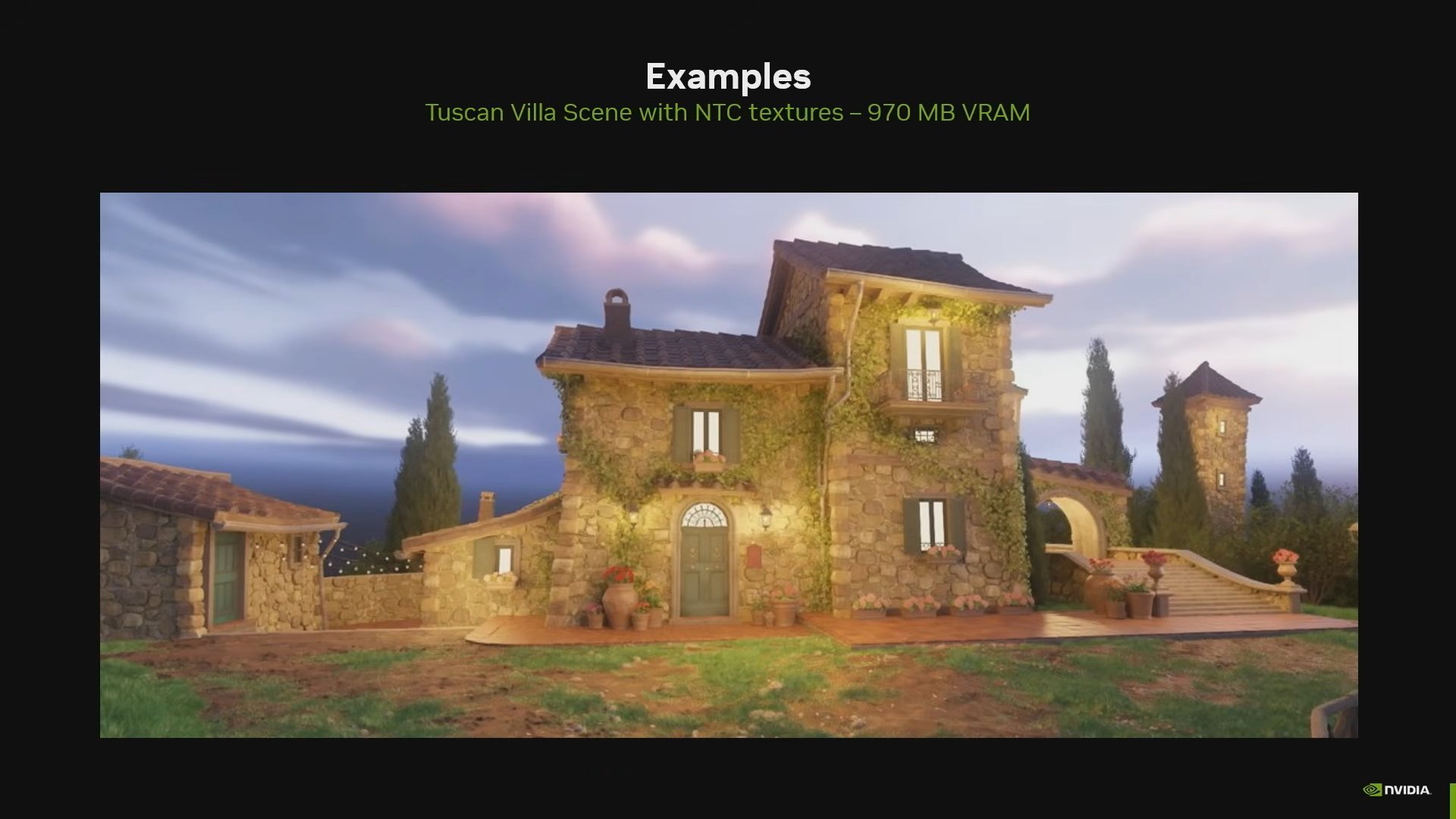
Rather than using classic compression formats (BC7) which are starting to date, Nvidia uses neural networks to compact data in an ultra-efficient manner. It’s brilliant on paper, but as is often the case with miracle solutions, there is a counterpart that marketing tends to whisper rather than shout.
Le secret de la compression « on sample »
Here’s how it works. Until now, we mainly knew about “on load” compression. The game downloads a compact file to your SSD and decompresses it upon loading. This is a good thing for disk space, but once in VRAM, the texture returns to its normal size. Here, Nvidia takes it to the next level with “on sample” decoding.
The principle is simple, the texture remains compressed in the video memory. It is only at the precise moment when the GPU needs to display a pixel that it decompresses the data on the fly. This is where the real saving of VRAM lies. You only unpack what you need, when you need it.
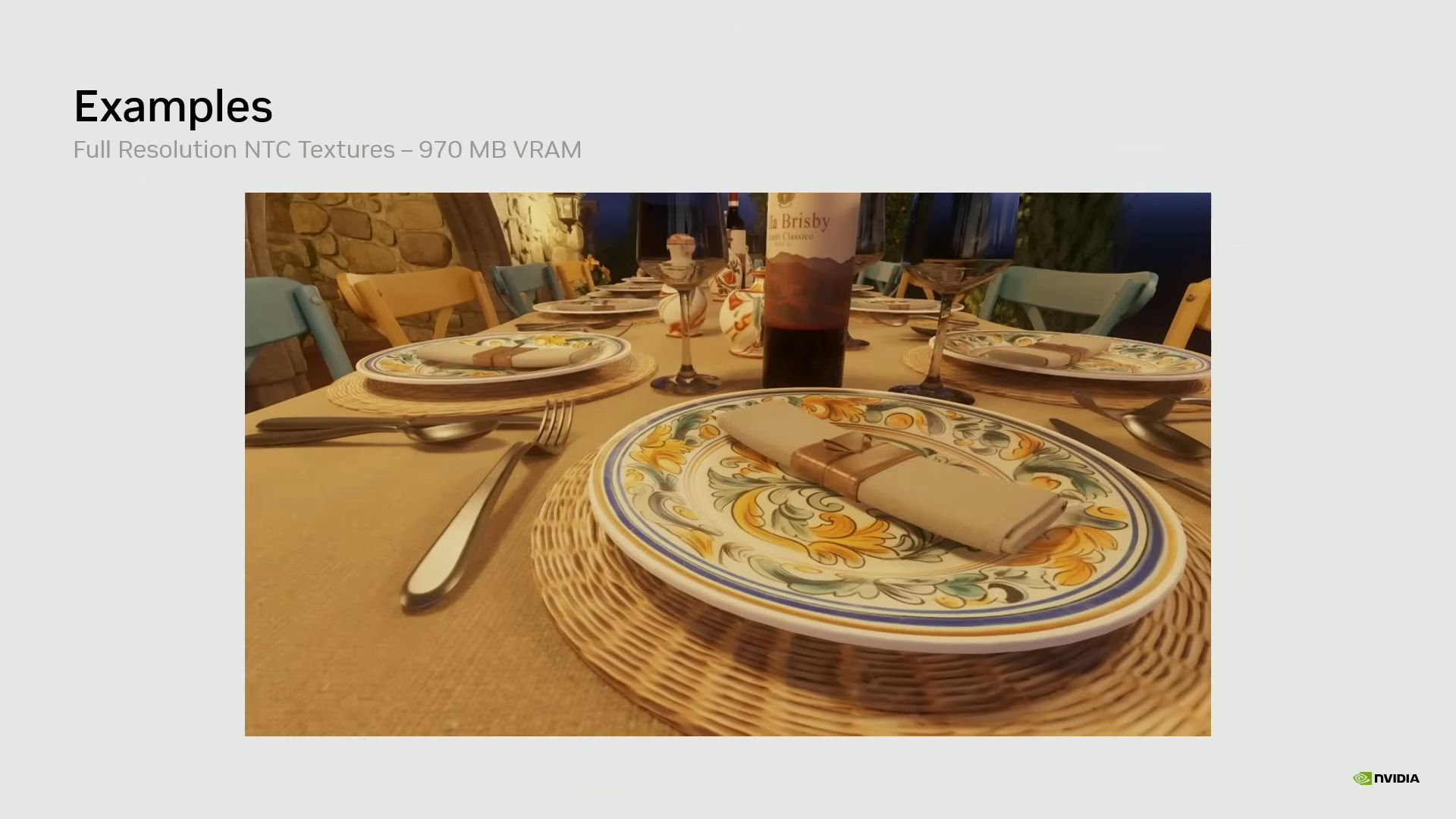
The problem? This intellectual gymnastics for the GPU is not free. In some technical demonstrations, this real-time decoding process resulted in a 30% performance drop.

Basically, you’re trading raw power for memory. On a GPU already pushed to its limits, the remedy could prove to be as painful as the disease.

In the hands of the developers
This technology does not only concern owners of “small” cards. Above all, it prepares the arrival of even denser open worlds. If Nvidia manages to optimize the computational cost of decoding, this means that future games could display incredibly fine textures without requiring cards with 48 GB of VRAM.
But wait. We must not forget that this technology will depend entirely on the goodwill of the developers. As with Ray Tracing in its early days, game engines (Unreal Engine in the lead) will need to integrate these tools natively. Nvidia is pushing its pawns, but the ball is in the studios’ court.
To go further
Ray tracing: what it is and how it improves your video games