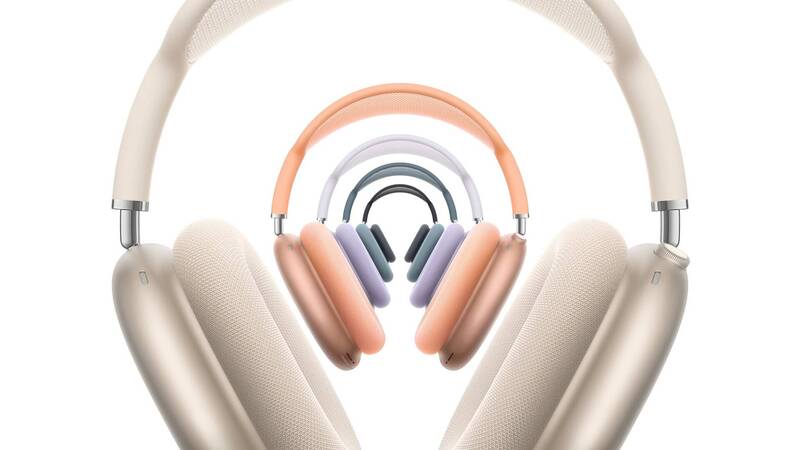
Watch out for counterfeit AirPods Max. There are imitations that copy Apple’s headphones so well that it is very difficult to immediately detect their true nature. YouTuber Deus Ex Silicium demonstrated this by analyzing a particularly successful copy.
A perfect copy in appearance
The story starts like many others. A buyer, Romain, purchases a first-generation AirPods Max through a peer-to-peer resale platform. The transaction is done in person, allowing him to examine the product, try it out, and check the sound. Nothing seems suspicious.
The headphones immediately connect to the iPhone, sync via iCloud, and behave like an official model. The packaging and accessories seem authentic. At first glance, it’s impossible to tell the difference.
It’s later on that Romain notices something is off: firmware updates consistently fail. He then sends his headphones to Apple’s customer service, which refuses to take them in because the device has been modified. When he takes his pair to a repair shop for explanations, he learns that he actually owns a counterfeit, a case that repair centers see from time to time.
A different story inside
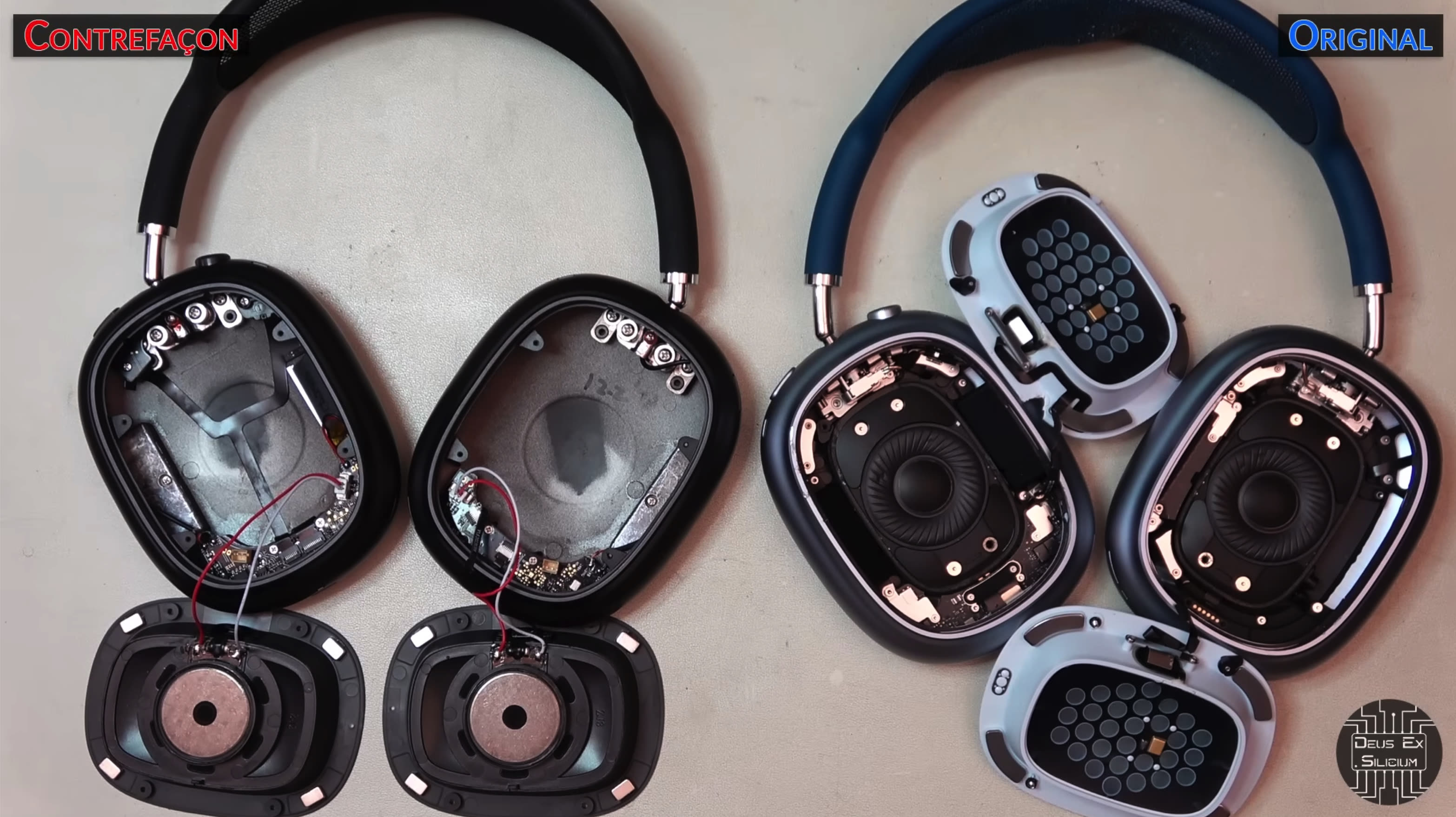
According to Deus Ex Silicium’s analysis, externally, nothing betrays the copy. Even the screws used are identical to those on the original AirPods Max, despite being uncommon. The weight is also the same. However, a first clue appears when clinking the earcups together: the authentic one sounds dense, while the counterfeit sounds hollow – a difference that is difficult to observe without having the original in hand simultaneously.
If the copy sounds hollow, it’s because it contains far fewer components. Many elements are missing, including essential microphones and circuits. The hinge mechanism is simplified to the extreme. In the original, each side carries its own electronics around the H1 chip, totaling about sixty significant integrated circuits. In the copy, everything is reduced to the bare minimum.
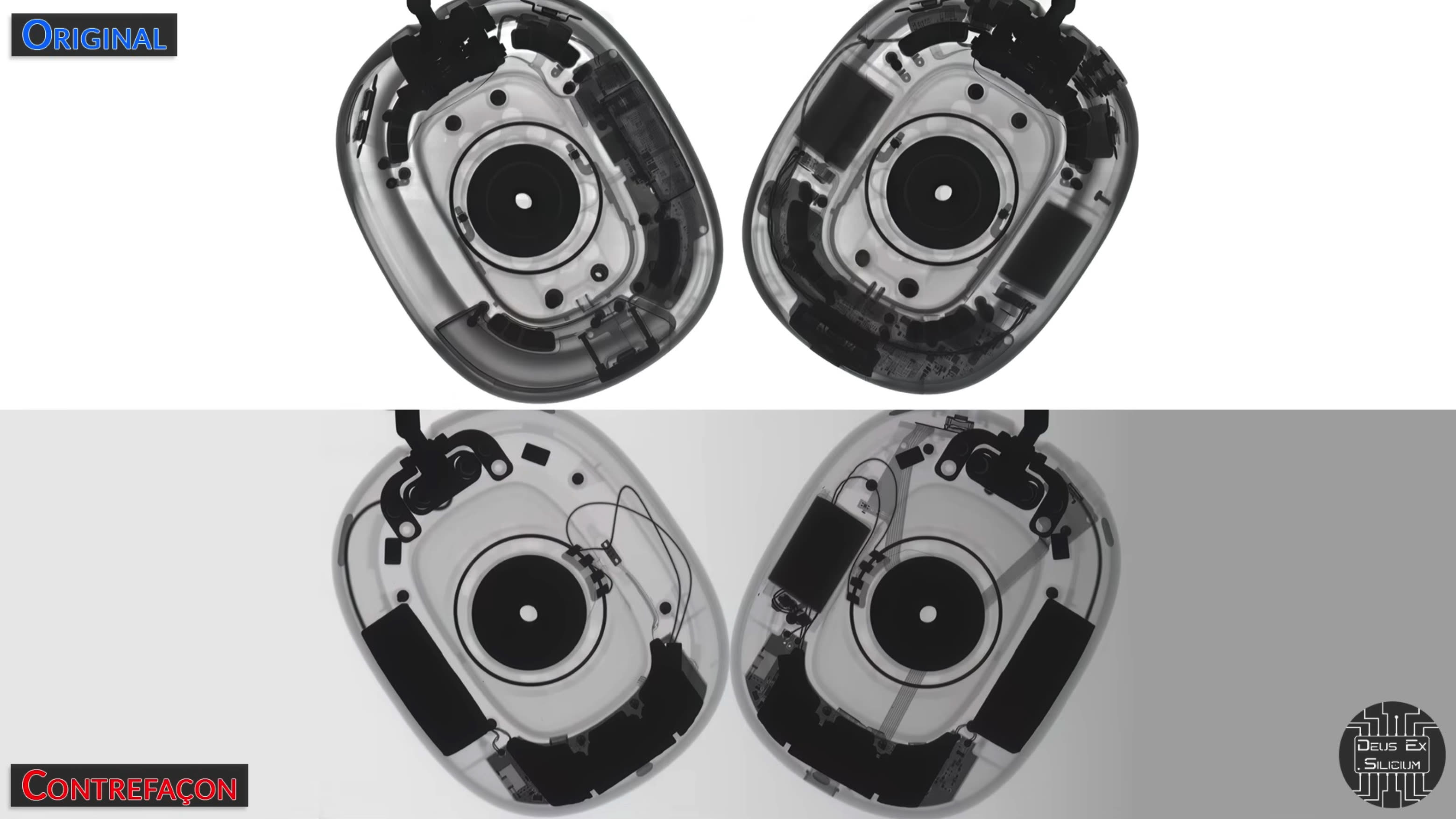
For example, there is only one proximity sensor on the left side, compared to two on the official model. The dedicated microphones for active noise cancellation are missing, meaning this flagship feature is entirely absent. However, the counterfeit has one unique aspect: masses on each side, to achieve the same weight as the original without carrying as many components.
The system-on-chip manufactured by Bluetrum has nothing to do with Apple’s H1. The speakers, however, perform decently but are incomparable to those of the official model.
A well-crafted illusion
The most striking contrast is between the exterior and the interior. The shell, frame, and fabric seem genuine, to the point where the YouTuber believes they are real and come from the same factory as the original products. But everything inside is fake. “It’s important to understand that the electronics of this counterfeit, including the speakers, are on par with what you can find in a $20 Chinese Bluetooth headset sold online,” explains Deus Ex Silicium.
The problem is that this type of counterfeit sells for several hundred euros. With a new pair of headphones close to €600, counterfeiters can sell their copies for €200 to €400, a price attractive enough to deceive while ensuring a very comfortable margin compared to the actual manufacturing cost.
How to avoid being fooled then? In theory, starting from iOS 16, the iPhone can alert when trying to pair fake AirPods. In practice, this case shows that some counterfeits slip through the cracks. The safest bet is to buy AirPods Max from Apple or official retailers (Fnac, Amazon, Joybuy…), avoiding online marketplaces.
When buying second-hand, extreme vigilance is necessary. As often, a too attractive price should raise suspicion. Ask for the receipt (even though it can also be falsified) and take the time to test the product meticulously, especially the active noise cancellation in the case of AirPods Max.
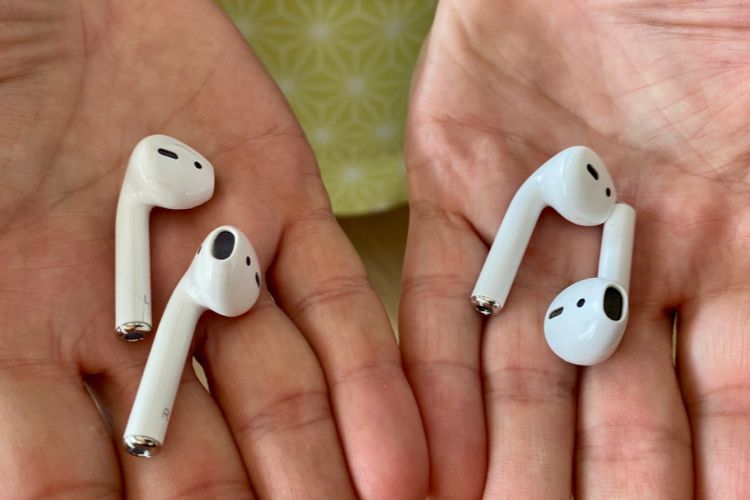
AirPods: How copies imitate the real ones