With the Iranian-American conflict intensifying, oil prices are exploding: the majority of major indices have jumped 75% in less than two months, and this does not seem likely to return to pre-war levels. In France, fuel prices have already started to reflect this oil shock. But to what extent exactly? Let’s go into detail.
Crude price and fuel price
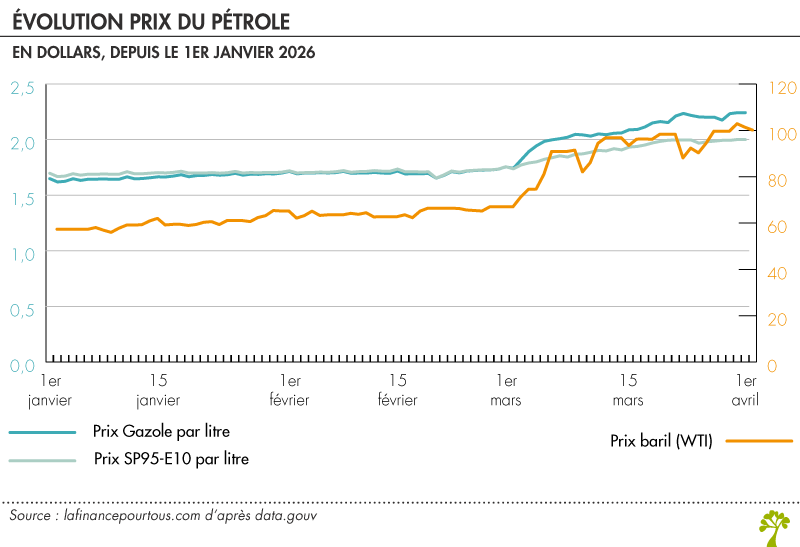
The Strait of Hormuz is a strategic crossing point. Around 20% of global consumption passes through it (particularly towards Asia). Since the blocking of the strait, traffic has collapsed: from 132 boats on February 26 to only 6 on April 2, 2026. Faced with this scarcity, oil prices have soaredgoing from $67.02 to $110 per barrel (WTI).
The French consumer quickly began to feel this surge in barrel prices. If fuel prices in France have followed the rise in oil pricesthey did not do it at the same time, nor in the same proportions.
While oil surged at the end of February, it was at the beginning of March that prices at the pump began to rise. Academic work in economics shows that this transmission is always partial and delayed over time, which means in concrete terms that the increases at the pump are probably not over.
Also read on our site
A heterogeneous increase in fuel prices
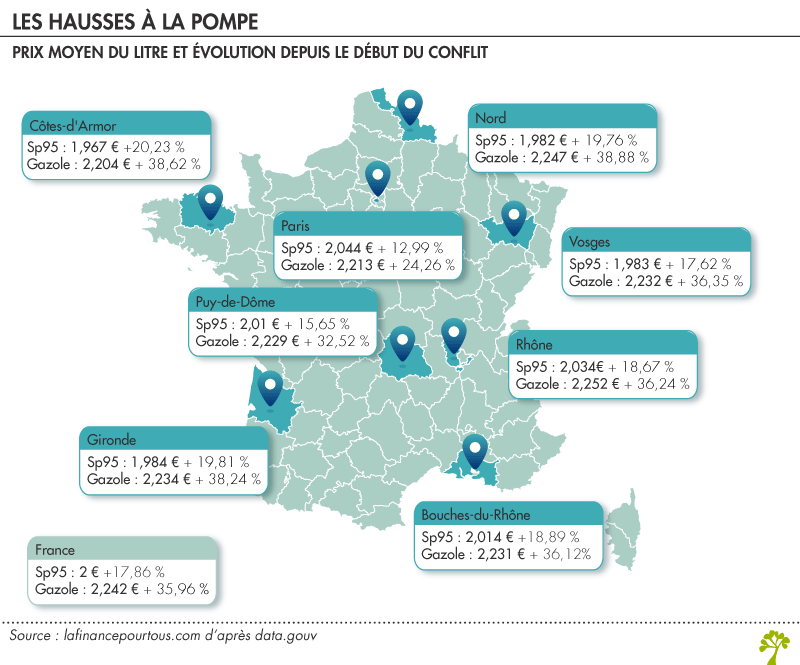
Not all fuels have been affected equally. The price of diesel increased by 36% since the start of the year compared to gasoline which has only increased by 18%. One possible explanation would be linked to maritime transport: diesel is the fuel for trucks and boats which transport goods. With the blocking of maritime routes, journeys become longer, carriers consume more, and the demand for diesel increases mechanically.
THE increases at the pump are also not the same depending on where you refuel. Since the start of the conflict, the price of gasoline has increased by 13% in Paris compared to 20% in Côtes-d’Armor. For diesel, the gap is even more marked: +24% in Paris compared to +39% in Côtes-d’Armor.
These differences could be explained by several factors: local demand, but also fuel transportation costs to the distribution point: the further the station is from the main roads, the more these costs weigh. This could also depend on the distributors, some cutting back more on their margin than others, or being in a more competitive situation.
Prices at the pump: a long chain of actors
It’s difficult to predict how high prices at the pump will rise. Several actors come into play, in addition to the producers, each with their own interests.
First of all, the refiners. Since the start of the conflict, their margins have increased temporarily: they have in fact purchased many of the crude oil before the price rise, and have benefited from the first fuel increases. Total, in particular, succeeded in a very good operation at the very beginning of the conflict by purchasing in advance a very large quantity of crude at a still low price. This additional margin, however, is not intended to last.
Ensuite, carriers and distributors. With maritime routes blocked, carriers must find alternative, longer and more expensive routes. These additional costs also end up being reflected in the final price. Distributors can choose to lower their margin, but it is already very low.
Finally, l state and taxes. On each liter of gasoline, around 60% of the price you pay at the pump goes directly into taxes, via the excise on fuels (68 cents per liter for gasoline) and VAT at 20% (which applies to both the gross price and the excise!). The excise being fixed, the increase in fuel prices is therefore, at least in the short term, always less strong than the increase in crude oil. To mitigate the increase a little, the State could temporarily lower these taxes to relieve consumers, as it did in 2022 with the fuel rebate. Obviously, this would have a cost for public finances.
Also read on our site