On April 1, 2026, Liquity, the protocol issuing stablecoins LUSD and BOLD, announced its acquisition by Circle, the company issuing USDC, on X, triggering an 11.4% rise in the price of the LQTY token. By taking advantage of the hoax, the protocol took the opportunity to denounce the risks of censorship of its direct competitor: USDC.
Liquity announces a false acquisition by Circle, the LQTY is racing
The annual April Fool’s ritual does not spare decentralized finance and the crypto market. This morning, the official account of Liquity, the protocol issuing the LUSD and BOLD stablecoins, published a false announcement of a takeover by Circle, the issuer of USDC, the 2nd stablecoin on the market.
The announcement specified that the operation would allow Circle to “offer an uncensorable stablecoin and directly distribute yield”, a joke denouncing Circle’s acceptance of new regulations, such as the GENIUS Act passed last summer, and the CLARITY Act governing stablecoins, which should soon be adopted.
🔎 What are the best euro stablecoins on the market?
In reaction, the LQTY token, which had been moving around $0.27 for several days, jumped to $0.31 in a few minutes, a maximum increase of around 11.4%.
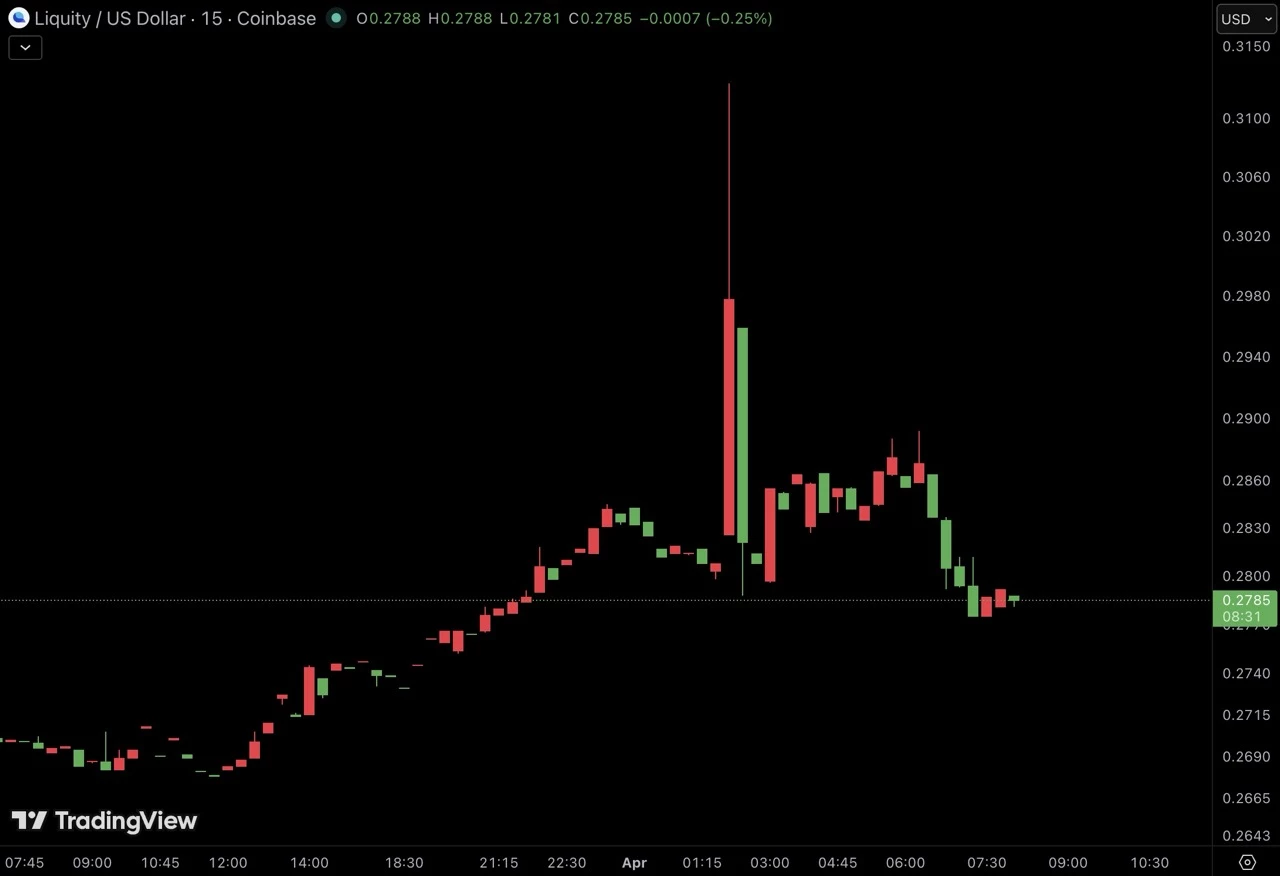
LQTY token price
Â
The reversal was as rapid as the rise, the price returned to its previous level in a few minutes and is already back below 28 cents.
Liquity then issued a response to the initial post:
April 1 is the only day of the year when USDC claims to be non-tradable. BOLD does the other 364. Happy April Fool’s Day.

Trade Republic: Buy Cryptos and Stocks in 5 Minutes
A calculated dig against Circle and its USDC against a backdrop of debate around the censorship of stablecoins
Beyond the hoax, Liquity’s joke points to a structural risk often underestimated by the Ethereum community, that of the centralization of stablecoins and its effect on the blockchains that depend on them.
The problem is not limited to the ability of an issuer like Circle or Tether to freeze tokens on instructions from a regulator. Since the adoption of the GENIUS Act, the surveillance exercised by the American authorities over these issuers gives them indirect power over the neutrality of the blockchain networks themselves.
However, these networks, Ethereum, Tron and even Solana, depend massively on the activity of centralized stablecoins, which according to estimates represent more than 90% of exchange volumes and on-chain liquidity. In the event of regulatory pressure on an issuer, the entire “decentralized” financial infrastructure could be manipulated.
📰 Also read in the news – Donald Trump launches the HORMUZ cryptocurrency to “finance operations aimed at securing the Strait of Hormuz”
This is precisely the problem that Liquity claims to solve with its BOLD and LUSD stablecoins: making it possible to hold dollars on the blockchain without depending on a centralized issuer or being exposed to a freezing of funds.
In theory, a coherent response to the risk described. In practice, the market reality tells a different story.
The combined capitalization of BOLD and LUSD amounts to approximately $60 million, or less than 0.02% of a total market of $315 billion, placing them 83rd and 84th in the stablecoin rankings.
Institutional users, who account for the bulk of demand for stablecoins, value regulatory compliance and liquidity more than censorship resistance.
Buy a Ledger wallet and receive up to $100 in Bitcoin
Publicité
Sources : DefiLlama, X, TradingView
La Newsletter crypto n°1 ðŸž
Receive a summary of crypto news every day by email 💌
Some content or links in this article may be advertising. Cryptoast has studied the products or services presented, but cannot be held responsible for any damage or loss linked to their use. Investing in cryptocurrencies involves risks. Only invest what you are willing to lose.

Journalist and popularizer passionate about Bitcoin, I strive to make an often complex subject accessible.
I made a documentary filmed in El Salvador, which pragmatically explores the impact of Bitcoin on the country.
Every week, I present the show “Peer to peer”, a meeting which deciphers the news and issues of the Bitcoin protocol, with rigor and education.
I also publish, on a daily basis, articles and reflections to fuel interest in BTC and encourage debate around this monetary and technological revolution.
Marius Off-Chain
657 articles