The InCyber Forum attracts an ever-widening international audience and aims to influence digital sovereignty policies.
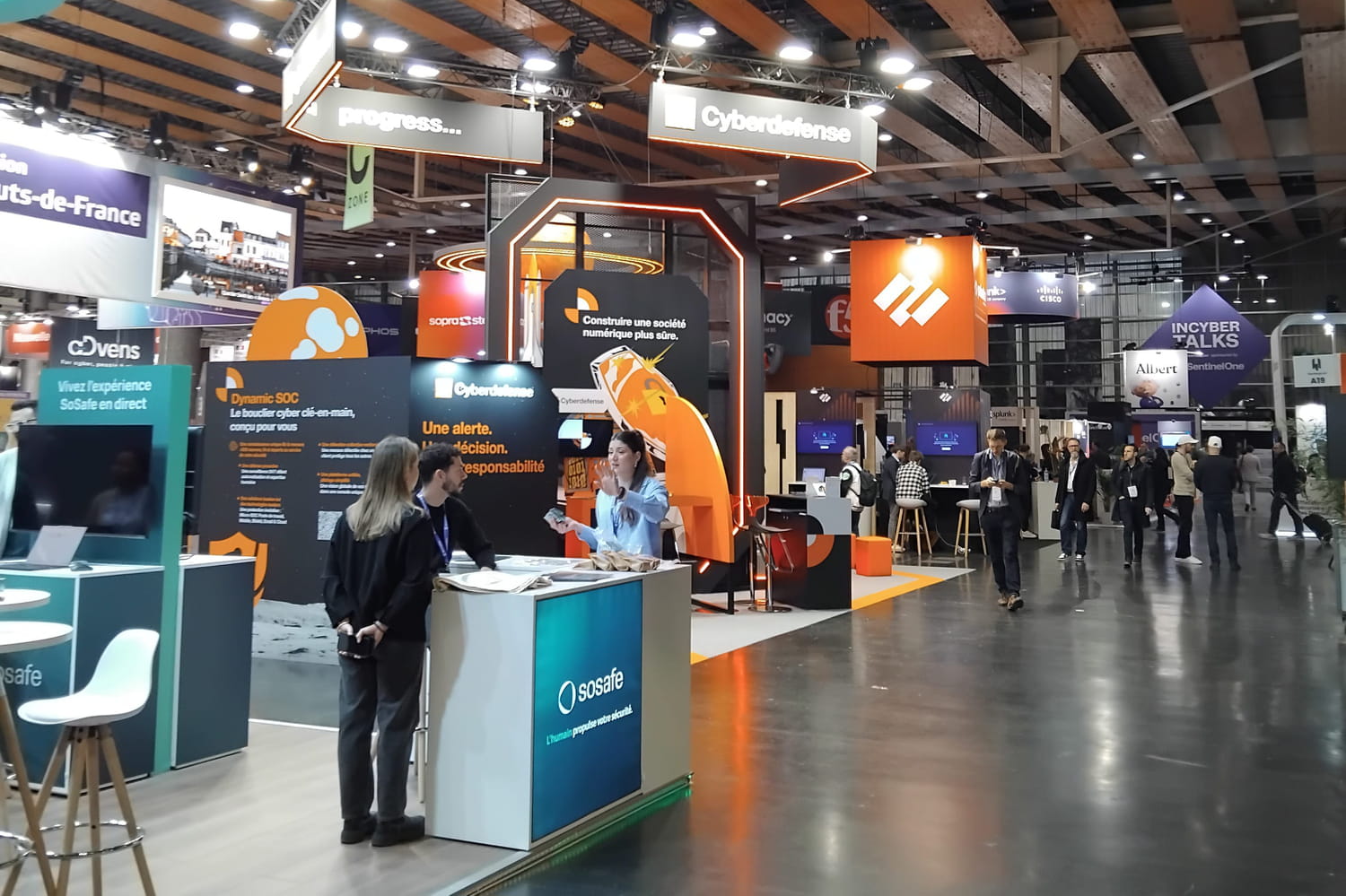
The stands are dismantled, onlookers flock to the station, the last round tables end. In the final exchanges, some greet each other and promise to meet again the following year. No doubt: it is the last day of the InCyber Forum 2026. Most visitors and exhibitors praise the quality of this 18e edition of the Forum, which was held from March 31 to April 2. “It’s very well organized, I think. It’s also very aesthetic, all these colors of these numerous stands. In fact, the style is futuristic, it looks trendy. Cybersecurity is hip now!” marvels Ambroise, a preparatory class student economic and commercial at the Faidherbe high school, in Lille, who points to the Orange cyber defense stand, flanked by orange neon lights, to prove his point.
“Such an event can have an impact on our professional orientation because it allows us to speak to professionals who explain their jobs to us.” Ambroise came with his class and his geopolitics professor to attend the “PhilosoFIC” round table, during which the author of cyber science fiction novels, Guy-Philippe Goldstein, debated with senior executives and cybersecurity experts on the theme of the “cognitive layer” in cybersecurity. Because at the InCyber Forum, there are only a few steps between the scholarly round tables and the business of the exhibitors which dominate the immense space of Lille Grand Palais.
“For us too, this edition was very good!” exclaims Marion Godrix, marketing manager of Sopra Steria, from the company stand. “We indeed felt that the theme of this edition was in line with the increasingly pronounced interest of our clients in sovereign solutions.” The theme of this edition was “Mastering our digital dependencies”.
More international visitors
“The results are rather positive!”, rejoices General Marc Watin-Augouard, founder of the InCyber Forum. “In terms of visitors, we are just a little bit below the 2025 edition, during which there were between 17 and 18,000. (…) It is also because the InCyber Forum is paying for the first time, so there are not all those who come only to hunt for goodies. We also notice a qualitative jump in the public”. For this edition, the Forum offered passes for prices ranging from 24 or 60 euros for students and other visitors, to 468 euros for those wishing to benefit from privileged access. “The volume of visitors does not seem to have changed and we also notice a better quality of visitors,” also affirms a press relations specialist in cybersecurity who has been attending the Forum since its beginnings.
“Above all, we notice that there is a significant increase in international visitors. For this edition, there were still 91 countries represented. Yesterday, a visitor told me “it’s incredible, I hear all the languages!”. It’s the first time I’ve heard that from a visitor. There are visitors who come from Asia, from South America, etc. And before, foreigners often came on a personal basis. Now, they come in large supervised delegations. We have had a delegation from Thailand, the Japanese, the Canadians, etc. Belgium, Switzerland, etc.”, observes the gendarmerie general.
A think tank ambition
“I feel that the theme of this edition was well received. All Europeans, even the most free traders, finally understood that we were a digital colony of the United States, and that we had to regain our independence. Now, we need a clear political discourse at national but also European level. coming from the executive vice-president of the European Commission responsible for technological sovereignty, Henna Virkkunen, is a good signal. “There are good intentions, but they must now be followed by rapid actions,” the general hopes.
According to him, the Forum can be “the start pilot, the heavyweight to encourage these actions. Because it is not just a forum. It is also a think tank. The next 2027 edition will undoubtedly take place earlier, at the beginning of March, because of the presidential election. This is why I would like us to take the opportunity to invite the candidates to the presidential election so that they can work on cyber security. Not to make nice speeches but so that they can tell us what they believe on this subject.