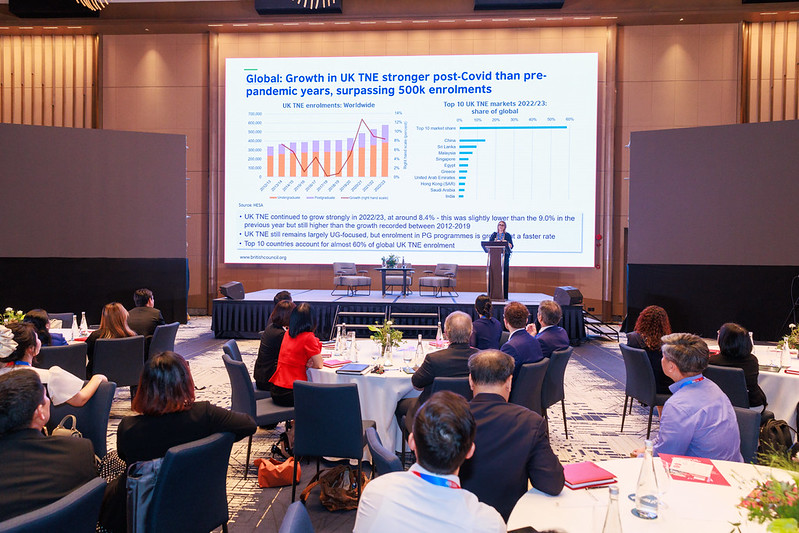
The discussion program on transnational education was organized by the British Embassy, the British Council and the Department of Education and Training. – Photo: BC
“Transnational education” (TNE) refers to a training model in which students complete a program at a foreign educational institution without physically traveling abroad, as in the case of joint programs.
In an interview given to Your Three Online Ms Hoang Van Anh, Director of Educational Programs at the British Council Vietnam, highlighted notable changes in this trend.
70 programs and more than 12,600 students
* What changes have occurred in transnational education in Vietnam over the past 5 to 10 years, Madam?
Currently, the UK leads Vietnam in the number of joint training programs, with around 70 programs. More than 12,600 students are enrolled there, and this number has been steadily increasing by around 20% per year since 2018.
The structure of academic disciplines has also evolved significantly, moving from once popular fields to engineering, science and technology, in line with the economic development needs of the new era.
Vietnamese universities are currently moving from a model of partnerships focused solely on knowledge transfer to deeper academic cooperation, including program co-development, joint research and collaboration in science, technology, engineering and mathematics (STEM), artificial intelligence (AI) and green technology.
It is obvious that TNE is moving from “program transfer” to “value creation partnership”.
* How are TNE programs designed and monitored to maintain academic standards comparable to programs in the UK?
The UK has a very rigorous quality assurance system. Joint education programs meet the same standards as programs delivered in the UK, from learning objectives to assessment methods to academic integrity requirements.
This system was developed in collaboration with the Quality Assurance Agency for Higher Education (QAA) in the United Kingdom and is characterized by its transparency and wide international recognition.
Currently, the British Council is working with the Department of Quality Management of the Department of Education and Training to improve the quality of higher education for international integration, supporting the implementation of Decision 78/QD-TTg on “The development of a quality assurance and accreditation system for higher education and normal schools for the period 2022-2030”.
With the support of QAA, we aim to improve the quality assurance system of Vietnamese universities, helping institutions prepare for academic cooperation, credit recognition and student mobility bidirectional through system assessment, training and policy exchange.
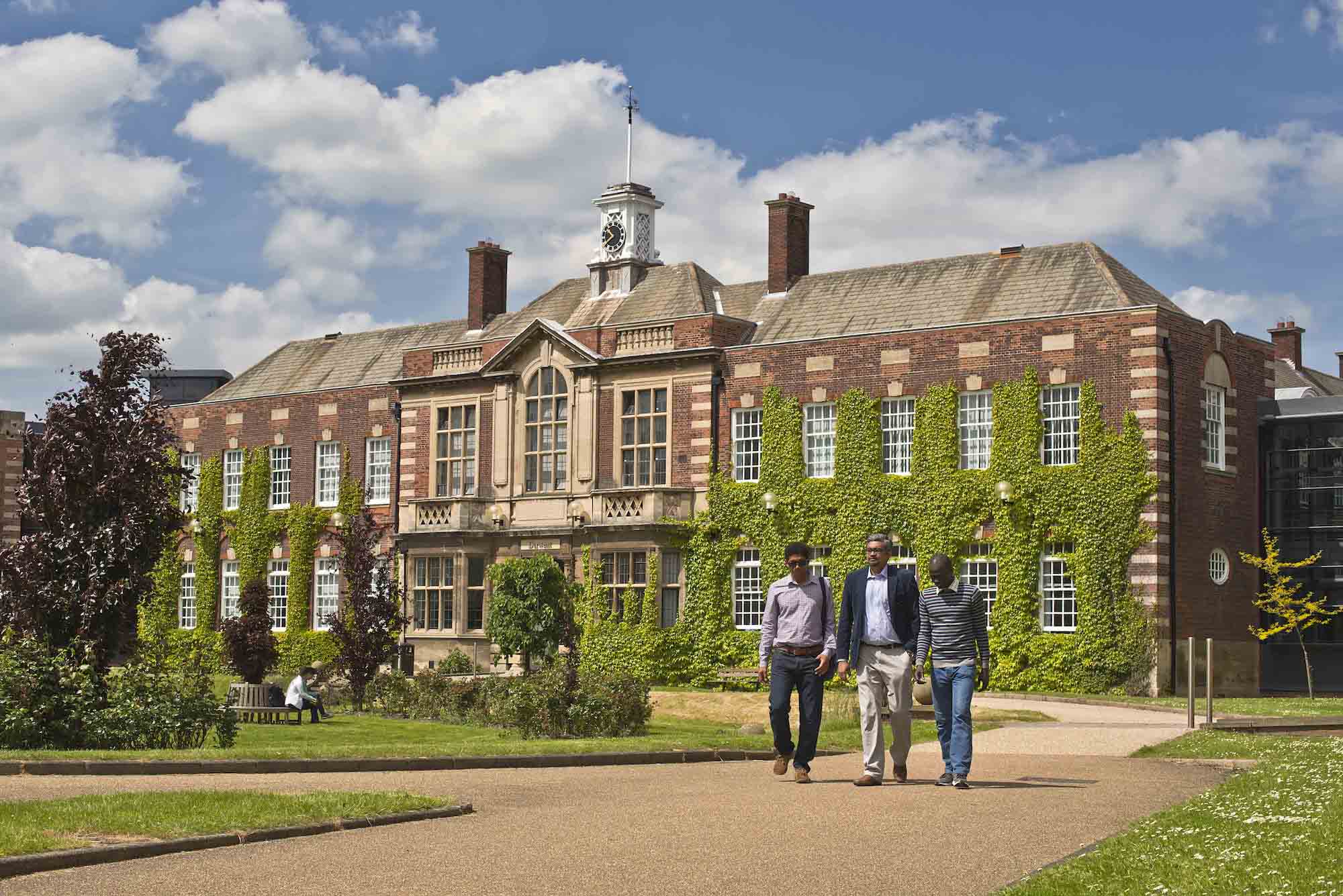
Many British universities are implementing a transnational teaching program in partnership with Vietnamese universities – Photo: REUTERS
Several development avenues for TNEs
* Generally speaking, what is the impact of the TNE model on the possibilities of expanding access to international education in Vietnam, Madam?
The TNE allows universities to access modern programs and advanced teaching methods, while promoting research collaboration and the mobility of students and teachers. It also offers students a fast track to integrate into an international educational environment in Vietnam.
This model builds the capacity of educational institutions, develops faculty, improves learning experiences and increases employability after graduation.
Transnational education (TNE) helps to expand access to quality education at a more affordable cost than full-time study abroad. Students can complete internationally recognized programs directly in Vietnam and have the opportunity to continue their studies at degree-granting institutions, gaining international experience.
In particular, British Council studies show that graduates from joint UK-Vietnam programs contribute significantly to the job market, particularly in areas such as the digital economy, technology and the green economy.
A survey of approximately 550 alumni found that this group has exceptional skills in digital skills, critical thinking, problem solving and working in a international environment.
Training programs are designed based on workforce needs in areas such as AI, data science, financial technology and automation.
In the field of green economy, students also acquire knowledge in renewable energy, environmental management and sustainable development.
The British Council has supported the development of high-quality talent and human resources by funding collaborative projects on transnational education, including funding the establishment of 8 collaborative projects between 8 British universities and 13 Vietnamese universities in the fields of science, technology, engineering and mathematics (STEM). and emerging technologies.
In addition, activities support international integration in education, coordinate research and publish works on international education centers, and guide investment cooperation in the education sector.
In the coming period, the British Council will focus on three main areas: ensuring the quality of higher education, developing transnational educational institutions and promoting research and innovation.
Source : https://tuoitre.vn/giao-duc-tne-cua-vuong-quoc-anh-tang-truong-20-moi-nam-tai-viet-nam-20260401111753908.htm