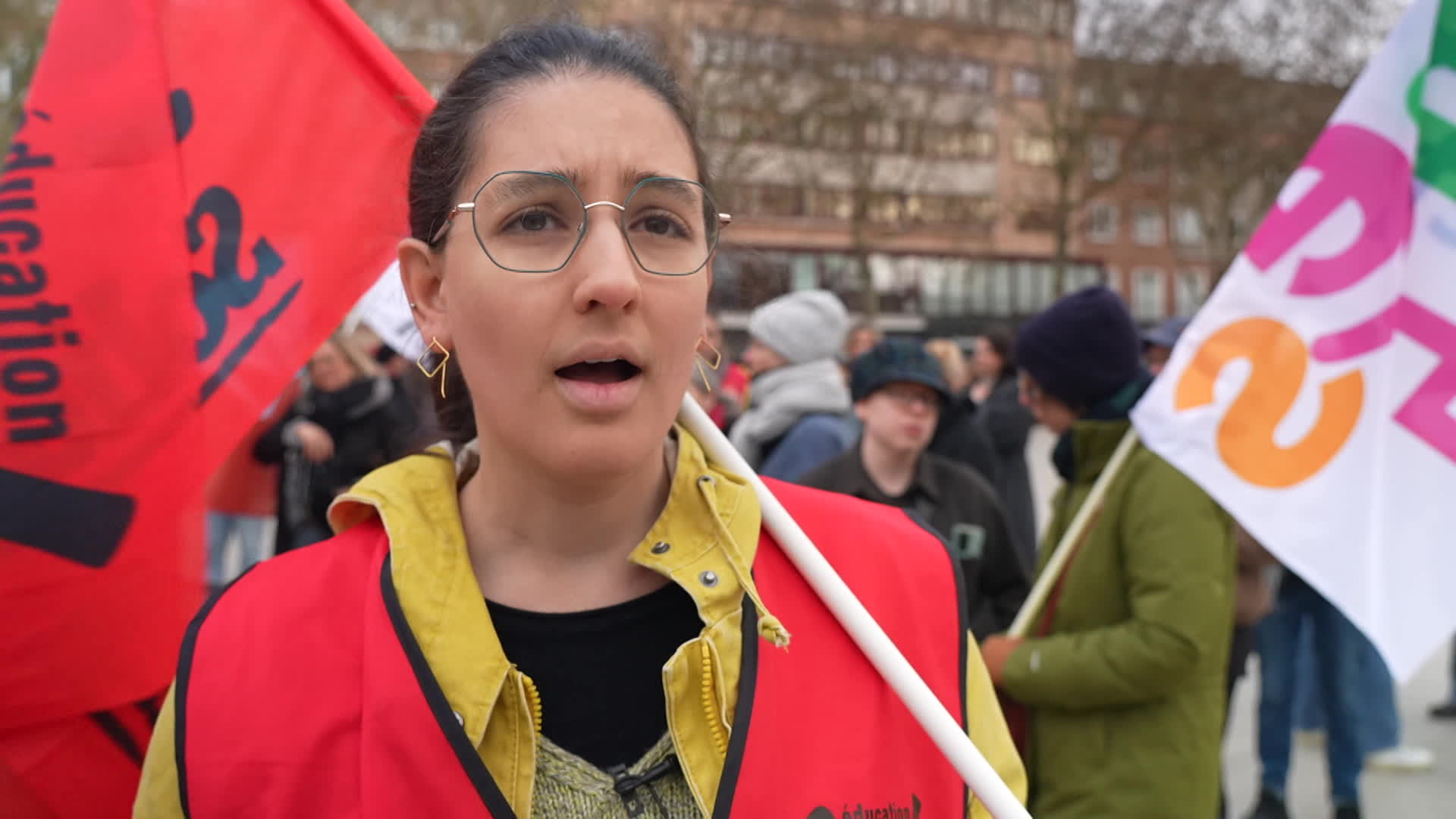
On Tuesday, March 31, some classes will remain closed. This is due to a strike called by a national education trade union (uniting the FSU, UnsA, CFDT, CGT, and SUD) to protest against job cuts and class closures in 2026. “We estimate that 30% of public primary school teachers could be on strike, with schools closed, including those that are not usually involved,” announced Aurelie Gagnier, general secretary of SNUipp-FSU, on Monday. However, the mobilization is expected to vary greatly by department. In secondary education (middle schools and high schools), the extent of the movement remains difficult to predict, as teachers only declare their strike on the same day. “The movement is expected to be quite followed in some regions (Aix-Marseille, Lille, Creteil),” says Sophie Vernetitay, general secretary of SNES-FSU.
At the heart of the protest is the announced cut of 3,256 teaching positions at the beginning of the school year in 2026, including 1,891 in primary education and 1,365 in secondary education, in addition to 762 cuts in privately-contracted schools. This decision was justified by the demographic decline by Minister of National Education, Edouard Geffray. He repeatedly stated that the government could have cut 8,000 to 9,000 positions if it strictly followed the demographic curve, but chose to limit the cuts.
“It is about laying the groundwork for 2027”
These arguments do not convince the unions. “We should expect at least 2,100 class closures in primary education,” explains Catherine Nave-Bekhti, general secretary of CFDT Education. This situation could weaken certain rural areas: “Villages may risk losing their school, forcing families to reorganize and children to take school transport,” points out Aurelie Gagnier.
In secondary education, unions fear an increase in the number of students per class. “This demographic decline is used as an excuse, when it should be an opportunity to give us breathing room,” criticized Morgane Verviers, general secretary of UnsA Education. Another concern: the repercussions of these job cuts on the range of courses offered. “They will lead to a shrinking of specialty or option offerings in high schools,” fears Sophie Vernetitay.
While the unions know they will no longer have an impact on government measures that have already been enacted, they want to use their mobilization to prepare for the future: “It is about laying the groundwork for 2027. It is out of the question that the 2027 budget sacrifices the public education service, it is about the future of our students,” warns Sophie Vernetitay.