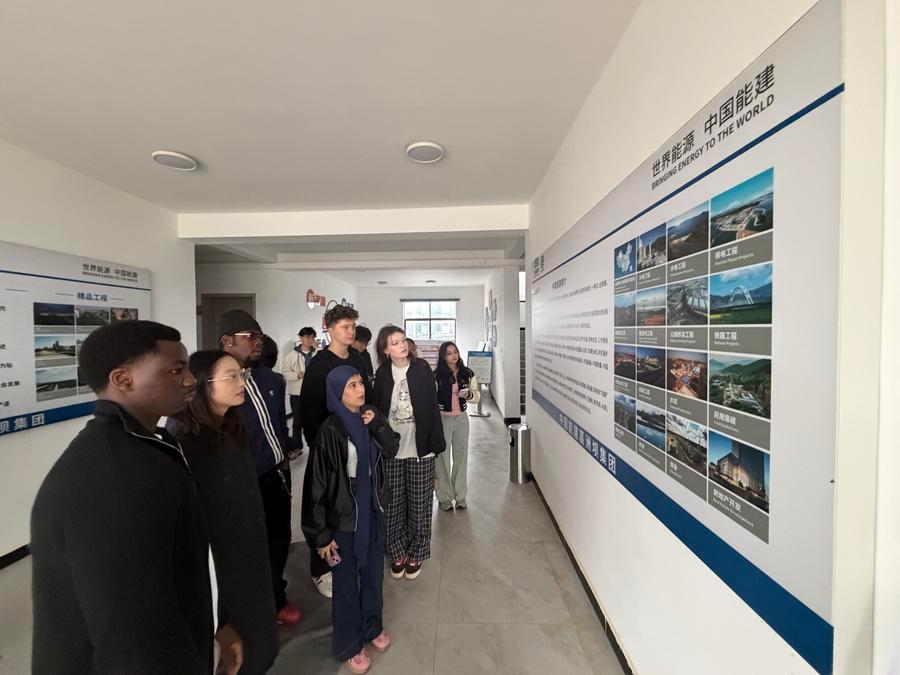
This trend contributes to the training of a generation of dynamic and creative citizens, ready to innovate and contribute to the development of the knowledge economy.
Mr. Le Nhat Quang, Director of the Center for Innovation and Entrepreneurship at Vietnam National University in He Chi Minh City, shared his views on the importance of the Student Entrepreneurship Support Program for the period 2026-2035, recently approved by the Prime Minister.
Entrepreneurship is becoming more and more concrete.
Decision 336/QD-TTg, approving the Student Entrepreneurship Support Program for the period 2026-2035, was promulgated by the Prime Minister on February 25, 2026. It follows decision 1665/QD-TTg of October 2017 relating to the student entrepreneurship support program until 2025. In your opinion, what are the most significant results that decision 1665/QD-TTg has brought to students passionate about entrepreneurship in recent times?
According to Le Nhat Quang, a master’s student, thanks to the support of new policies, student entrepreneurship programs are diversifying, enriching and integrating closely with the national innovation strategy. Students have access to numerous tools, technologies and collaboration opportunities with companies, which creates more favorable conditions for the realization of their entrepreneurial ideas during their studies.
First of all, the culture of entrepreneurship and innovation has become very widespread in the school environment. This spirit is no longer limited to extracurricular activities, but is gradually integrated into teaching programs. Currently, most universities and colleges have put in place support systems for student entrepreneurship. This has had a positive impact on raising awareness among parents, teachers, school leaders and the students themselves.
At the same time, the number of start-up projects led by students has grown rapidly. Between 2020 and 2024, the country has identified around 40,000 start-up projects led by students, including nearly 9,000 by high school students. From ideas born within universities, hundreds of start-ups have emerged, demonstrating the ability to transform concepts into marketable products and services.
The system of support for entrepreneurship and innovation in higher education establishments is improving. Nearly 60% of universities integrate entrepreneurship and innovation courses into their training programs, and set up clubs, support funds, creative spaces and start-up incubators for students. Many universities have notably developed entrepreneurship support and advice systems intended for students.
Competitions and start-up idea shows were also enthusiastically organized, including the Student Start-up Festival, set up by the Ministry of Education and Training. This program attracted more than 480,000 students and nearly 23,000 creative ideas, many of which won awards and continued to benefit from development support.
Overall, the most important outcome of Project 1665 is the development of awareness and entrepreneurship among students, while contributing to the establishment of an ecosystem of innovation and entrepreneurship within educational institutions. As a result, many students’ scientific ideas have the opportunity to be commercialized, and more and more young people are boldly proposing creative solutions and start-up projects, even while studying.
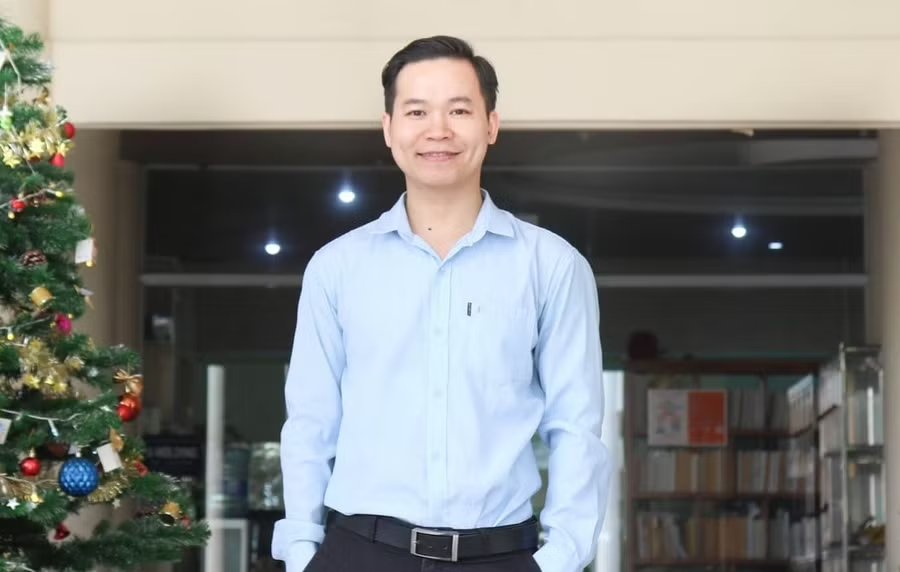
– In recent years, what changes have you observed in the student entrepreneurship and innovation movement, given the numerous resolutions and laws on science, technology and innovation that have been promulgated?
– Against the backdrop of the Science, Technology and Innovation Law 2025 and important Central Committee resolutions such as Resolution 57-NQ/TW on the Development of Science, Technology and Innovation (2024) and Resolution 71-NQ/TW on Education and Training (2025), the movement student entrepreneurship has undergone many significant changes.
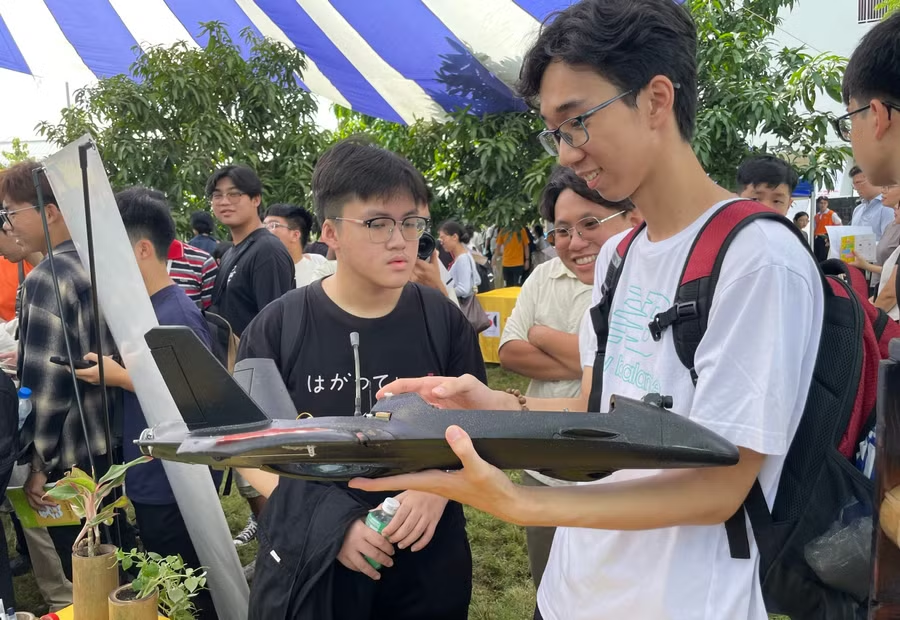
Above all, start-up projects are increasingly integrating cutting-edge technologies. At many recent start-up events, including Startup Festival 2025, many student groups have implemented technologies such as the Internet of Things (IoT), Big Data and artificial intelligence (AI) to solve social and production problems. This trend demonstrates a growing strong desire for innovation, in line with the national orientation towards the development of digital technologies and the innovation ecosystem.
Another important point is the strengthening of cooperation between universities and businesses. In accordance with Resolution 71-NQ/TW, many universities have gradually established modern laboratories and are working with businesses to invest in equipment and provide training that meets international standards. Thus, students have the opportunity to access and become familiar with technological systems such as robots and automated production lines during their studies. Thanks to these efficient infrastructures and the support of businesses, they can start small-scale projects and then develop products through university business incubators.
The legal framework for research and innovation activities has also opened up. The Science, Technology and Innovation Act of 2025 established numerous mechanisms to encourage innovative experimentation, including legal liability waiver provisions for controlled scientific experiments.
Furthermore, resolution 57-NQ/TW identifies innovation as a major strategic axis, while creating more favorable conditions, particularly in terms of resources and procedures, for research activities. These measures allow teacher-researchers and students to calmly implement their ideas and scientific projects, and facilitate access to financing and start-up investment funds.
Thanks to a harmonized policy system, student entrepreneurship programs are increasingly developing. Entrepreneurship festivals, scientific ideas fairs and innovation competitions are regularly organized at different levels, from national to local, thus providing students with a field of experimentation and a source of motivation.
Develop through multiple levels and degrees of education.
The student entrepreneurship support project for the period 2026-2035 aims to equip students with entrepreneurial knowledge and skills not only at university, but also at all levels of education. In your opinion, what is the scope of this orientation?
The objective of equipping students, from primary school to university, with entrepreneurial knowledge and skills, as stipulated in Decision No. 336/QD-TTg, is of paramount importance for the development of learners and the competitiveness of the economy. This objective can be considered from four main angles.
First of all, it contributes to the formation and strengthening of an entrepreneurial culture and state of mind from an early age. Entrepreneurship education at lower levels does not aim to create entrepreneurs prematurely, but focuses on developing qualities such as creativity, self-confidence, proactivity and the ability to initiate ideas. When these qualities are developed early, students will have a positive attitude towards change and will be able to view failure as an opportunity to learn.
Second, a systematic roadmap for the development of entrepreneurial skills should be established. At primary level, the emphasis should be on encouraging children to solve real-world problems and develop self-confidence. At the secondary level, the program can integrate knowledge with practical applications, helping students identify social issues and cultivate perseverance. At university, entrepreneurship education should focus on specialist skills such as business modeling, fundraising and intellectual property protection.
Third, this helps to strengthen motivation and the quality of learning. When knowledge is linked to concrete projects and creates value for the community, students clearly see the meaning of their learning. At the same time, this process promotes the development of essential skills such as teamwork, communication and problem solving – essential assets in today’s job market.
Fourthly, it is essential to develop a workforce capable of adapting and leading innovation. In a context of an ever-changing global economy, early entrepreneurship education helps the younger generation identify opportunities, create value and contribute to solving challenges. technological, environmental and social challenges.
It can be affirmed that the integration of content relating to entrepreneurship at all levels of education reflects a change in mentality, moving from “education for employment” to “education for value creation”, thus contributing to the training of a generation of dynamic, creative and innovative citizens.
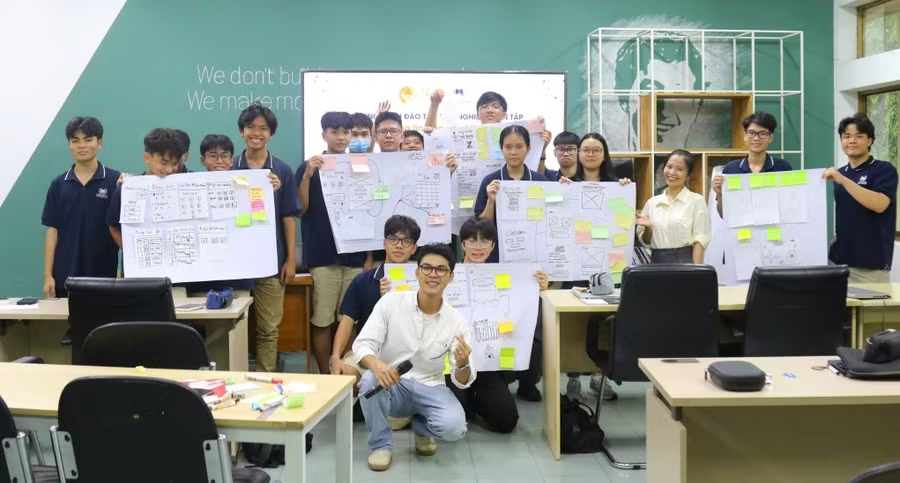
The Student Entrepreneurship Support Program sets several objectives regarding the percentage of educational establishments offering orientation and training in entrepreneurial skills. In your opinion, what resources are necessary to achieve this objective?
– To effectively achieve the goal of equipping primary to secondary school students with entrepreneurial knowledge and skills during the period 2026-2030, as stipulated in Decision 336/QD-TTg, four main resource groups need to be brought together.
First of all, there is human resources, notably teaching staff and the network of supporting experts. Teaching entrepreneurship requires moving from a simple transmission of knowledge to a real stimulation of reflection and experience. Consequently, teachers must be trained in teaching methods that favor learning through action in order to integrate entrepreneurship issues into their courses. At the same time, the mobilization of entrepreneurs, former students and experts as mentors will allow students to access inspiring models and thus strengthen their self-confidence.
Secondly, it is necessary to plan the resources necessary for the program and teaching methods. The content must be designed according to a roadmap adapted to each level of education. In primary and lower secondary education, emphasis should be placed on developing creativity, initiative and problem-solving skills through small community projects. In upper secondary school, students can deepen skills such as business idea generation, financial literacy, intellectual property and project management. The implementation method must favor learning through experience, project-based learning and the resolution of concrete problems.
Third, financial resources and infrastructure are essential. In addition to the state budget, it is necessary to mobilize additional resources from businesses and the startup ecosystem. Funding and rewards for innovative ideas will encourage students to experiment with new initiatives. At the same time, educational establishments must gradually establish innovation spaces, manufacturing laboratories or digital learning platforms in order to support learning and product development.
Finally, resources and political mechanisms are essential. Entrepreneurship education is only effective if close coordination exists between schools, businesses and regulatory agencies. Companies can participate through internships, practical experiences or by providing feedback on student projects. At the same time, a system for evaluating the impact of specific indicators should be put in place in order to measure the evolution of students’ thinking and skills, rather than focusing only on the number of activities or competitions. When these resources are effectively mobilized, entrepreneurship education in high schools will contribute to the creation of concrete value, thus promoting the emergence of a generation of dynamic, creative and innovative young people.
The new student entrepreneurship support program aims to ensure that, by 2026-2030, 50% of high school students, 25% of middle school students and 15% of primary school students are oriented towards entrepreneurship. At the same time, it aims to provide 35% of high school students, 15% of middle school students and 10% of primary school students with the knowledge, skills and mindset necessary for entrepreneurship.
Source : https://giaoducthoidai.vn/kien-tao-dong-luc-khoi-nghiep-cho-hoc-sinh-sinh-vien-post772144.html