Since February 28, 2026, Iran has blocked the Strait of Hormuz in response to American and Israeli strikes. Co-manager of the strait, Oman finds itself on the front line and tries to ease regional tensions. But what room for maneuver does the royal family and the sultan have left? To talk about it, the Royal Podcast interviews Tigrane Yegavian, research director at Conflicts.
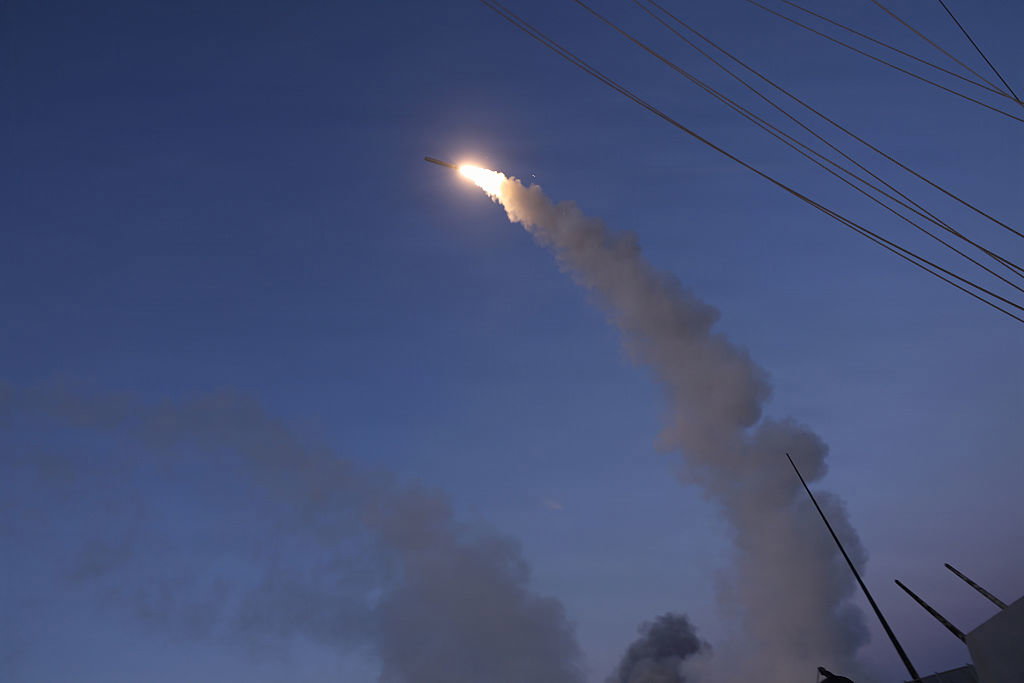
Since February 28, 2026, Iran has blocked the Strait of Hormuz in response to strikes carried out by the United States and Israel. Tensions are escalating in the Middle East. This maritime passage is strategic: nearly 20% of the world’s oil and a significant portion of liquefied natural gas pass through it every day. Since the start of the conflict, the strait has been almost paralyzed.
Historical co-manager with Iran, the Sultanate of Oman finds itself on the front line. Faithful to its tradition of mediation, the country tries to preserve a fragile balance between the powers. But what room for maneuver does the royal family and the sultan have left? Can they still calm the situation? To shed light on these issues, the Royal Podcast interviewed Tigrane Yegavian, research director at Conflictsthe revue de géopolitique.
What role can the Omani monarchy, rather known for its neutrality, play in this crisis around the Strait of Hormuz?
The Omani monarchy has historically played the role of diplomatic mediator, to such an extent that Oman could be described as the “Switzerland of the East”. It is, however, a somewhat weakened power, because the relationship between Oman and Iran, with which it jointly monitors the Strait of Hormuz, is perfectly asymmetrical. Historically, Oman is indebted to Iran, a bit like a “little brother”.
The Iranians had supported the Omani monarchy to crush a revolt in Dhofar in the early days of independence, and the sultanate has owed them a debt ever since. Today, Omani mediation has failed diplomatically because they rightly felt duped and betrayed by the Americans, who were pressured by the Israelis to start this war. On the other hand, the Omanis have not said their last word and are relaunching mediation. It is also significant that Oman is the only Gulf state not to have been directly targeted by Iranian missiles.
What is Oman’s position since the start of this war in the region?
This is the position of an actor who has been wronged, because it is a fragile country which fears regional instability more than anything. Although his efforts were destroyed, he still maintains good relations with all the actors. Oman has never broken with anyone, which makes its diplomacy unique. Their DNA is to ease differences, whether between Americans and Iranians, between Saudis and Iranians, or concerning the Israeli-Palestinian conflict.
Can we say that the Sultanate of Oman occupies a special place among the Gulf monarchies?
Completely apart. Although the regime is considered authoritarian, the former Sultan Qaboos ibn Said was always keen to develop freedom of worship and tolerance. This is due to the geography and history of a people of sailors who constituted a true thalassocracy in the 19th century, extending to Tanzania and Zanzibar There were even two sultanates ruled by the same family. The Omani influence was very strong on the shores of India, in Balochistan or on the coast of Kerala. heritage, which turns its back on the Arabian Peninsula. Their interpretation of Ibadism is extremely modern and constitutes a form of soft powereven if other countries like the United Arab Emirates try to occupy this area of interreligious dialogue. However, Oman is weakened today. Sultan Qabus ibn Said died leaving a lot of uncertainty, because his heir, Sultan Haïtham ben Tariq, did not have the same charisma nor the same know-how. The country is torn by immense economic and geopolitical challenges.
What is the exact role of the current sultan, Haïtham ben Tariq?
He succeeded his cousin in 2020. Originally a businessman, he nevertheless held positions in Foreign Affairs in the 80s and 90s, which constitutes the Omani deep state. He understood that he could not maintain the same governance as his predecessor. Sultan Qaboos ibn Said was the “father of the nation” and concentrated all the royal powers. The current sultan has chosen to delegate essential responsibilities to restructured ministries, abandoning direct management of Finance or Defense. A constitutional amendment established his eldest son as crown prince. We are seeing the beginnings of democratization with more prerogatives granted to the Constitutional Council. The regime seems to be transitioning from an absolute monarchy to a constitutional monarchy.
Is the regime moving towards a constitutional monarchy?
Yes, it is an extremely perilous transition phase, because the legitimacy of the sultanate has until now rested on the purchase of social peace through rent. Oman was not spared by the Arab Spring: in 2011-2012, major demonstrations degenerated into unprecedented riots. The classic response from the government is the massive creation of public jobs, but this becomes difficult if the price of a barrel is too low. Oman has a competitiveness problem. Unlike other petromonarchies where the locals are an ultra-minority, ethnic Omanis represent more than 60% of the population. However, there is a lack of training, and many jobs are filled or duplicated by expatriates, particularly Indians, which has a high cost. The question is whether the government will be able to keep this artificial economy afloat in the perspective of post-oil.
How much power does the Sultan have and what is his ruling style?
He is a discreet man who rarely speaks in public. Unlike Sultan Qaboos ibn Said who toured the whole country for crowd baths, Sultan Haitham ben Tariq remained more distant and did not get out of his car. Its vision “Oman Vision 2040” targets the post-oil transition. Currently, oil and gas still represent 75% of budgetary revenues and 30% of GDP. The country is struggling to find a credible alternative. The 40% renewable energy target is difficult to finance without sacrificing other sectors. Tourism is an avenue, but it is high-end tourism, and conservative Omani society is not necessarily prepared for this shock. Finally, certain infrastructures seem oversized and unprofitable, such as Muscat airport, the Opera or the National History Museum. The question remains how long social peace can be guaranteed by subsidies.
Sultan Qaboos ibn Said truly transformed the country. How important was his legacy?
It is often said that before him it was nothingness, which is incorrect, but Oman was then a very underdeveloped British protectorate and threatened by a rival power, the imamate, in the interior. Having come to power in 1970 with the help of the English, Qabus ibn Saida succeeded in putting down two rebellions: that of the Imamate and that of the Marxists of Dhofar, supported by South Yemen. He achieved this thanks to Iranian help. His strength was to develop the country dramatically in just two decades. Diplomatically, he maintained a moderate and original position, refusing to break with Egypt after the peace agreements with Israel. Muscat has become a meeting place for diplomats from around the world, as evidenced by the size of the Russian, Iranian and American diplomatic representations. It remains to be seen whether Omani diplomacy is a real force of proposal or simply a logistical base.
The Royal Podcast, your Saturday cultural meeting
What secrets and scandals are hidden behind monarchies? Every week, Magali Rangin, head of the culture and people department at BFM, receives a royal family specialist to tell the story and behind the scenes of the crowned heads. A new episode every Saturday is available on the BFM website and application and on all listening platforms: Apple podcasts, Amazon Music, Deezer or Spotify.