Bringing science, technology, and innovation to fields and farms.
In the durian-producing regions of the communes of Ea Bá and Sẻng Hinh, it is now common to see farmers scanning QR codes affixed to each batch of fruits using their smartphones. Who would have imagined that in a region once attached to traditional agricultural methods, the production process would now be systematically digitized?
Mr. Cao Nguyen Lam, a long-time durian producer in Ea Ba, testifies: “Previously, despite meticulous care, it was difficult to gain the trust of distant customers. Now, thanks to traceability, the entire process, from fertilization to watering to harvest, is recorded in the system. Buyers only need to scan the code to verify. As a result, the selling price is higher, and the market is more stable.”
 |
| A training workshop on innovation for youth union members organized by the Department of Science and Technology. |
This change did not happen spontaneously. Over time, the Ministry of Science and Technology has collaborated with research institutes and companies to implement many solutions aimed at integrating science and technology into agricultural production. From supporting organic farming to creating certification labels to facilitating traceability systems, these efforts have gradually contributed to improving the quality and value of durian-derived products.
The need for technological innovation is increasingly felt, not only in agriculture but also in other sectors. According to Mr. Pham Duy Khiem, vice president of the Vietnamese Swallow Association, the current market is flooded with low-quality products, undermining consumer confidence. To build a sustainable brand, companies must invest in modern technologies, from capturing swallows to their processing and preservation.
Mr. Khiem indicated that the company had sought to improve its freeze-drying system at one point to preserve the natural flavor of swallow nests but faced difficulties due to technological limitations. He stated, “Without collaboration between specialized agencies, experts, and solution providers, it is very difficult for companies to make significant advances on their own.”
Developing a long-term strategy
Building on these initial models, Dak Lak is gradually developing a long-term development strategy in which science, technology, and innovation play a central role.
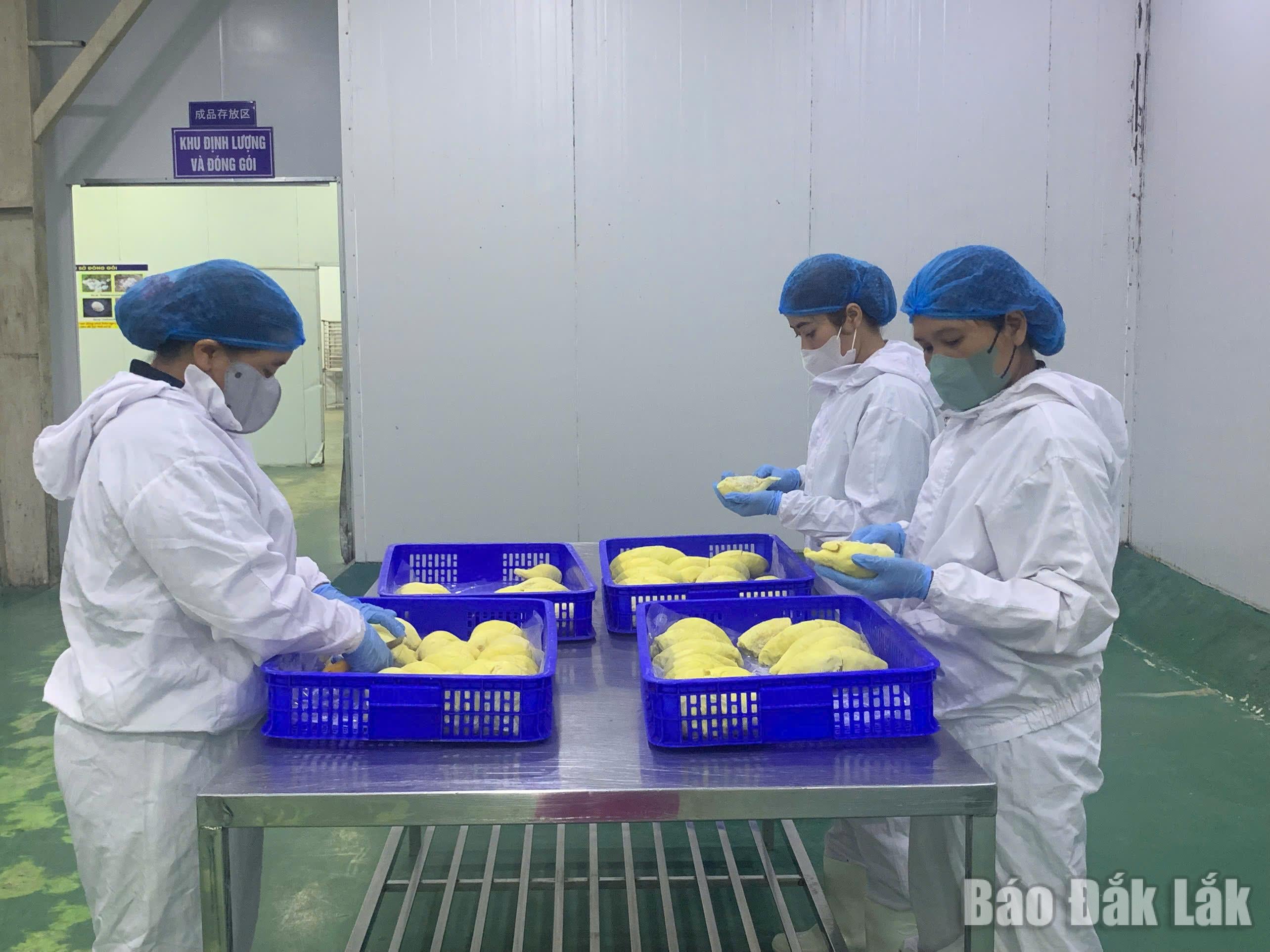 |
| The joint stock company Ban Me Green Farm has invested in a freezing system and processing line compliant with export market standards and requirements. |
To achieve these goals, Dak Lak has identified five priority areas: advanced agriculture; advanced processing industry; renewable energies; smart tourism and digital economy; and smart cities. These areas all have strong potential for technological application, creating significant added value and promoting economic restructuring.
According to Ms. Lam Vu My Hanh, Deputy Director of the Department of Science and Technology, between 2026 and 2030, the unit will adopt a resolutely collaborative and service-oriented approach, moving away from traditional management logic. The goal is to place businesses at the heart of the innovation ecosystem. Additionally, scientific and technological activities will no longer be relegated to the background but must indispensably meet the concrete needs of production.
To ensure the necessary resources for implementing this project, the province plans to allocate around 1 to 1.5% of its total annual local budget to science, technology, and innovation. These resources should serve as leverage, attracting additional social resources and gradually affirming the crucial role of science and technology in promoting growth and strengthening Dak Lak’s position.
Van Tai