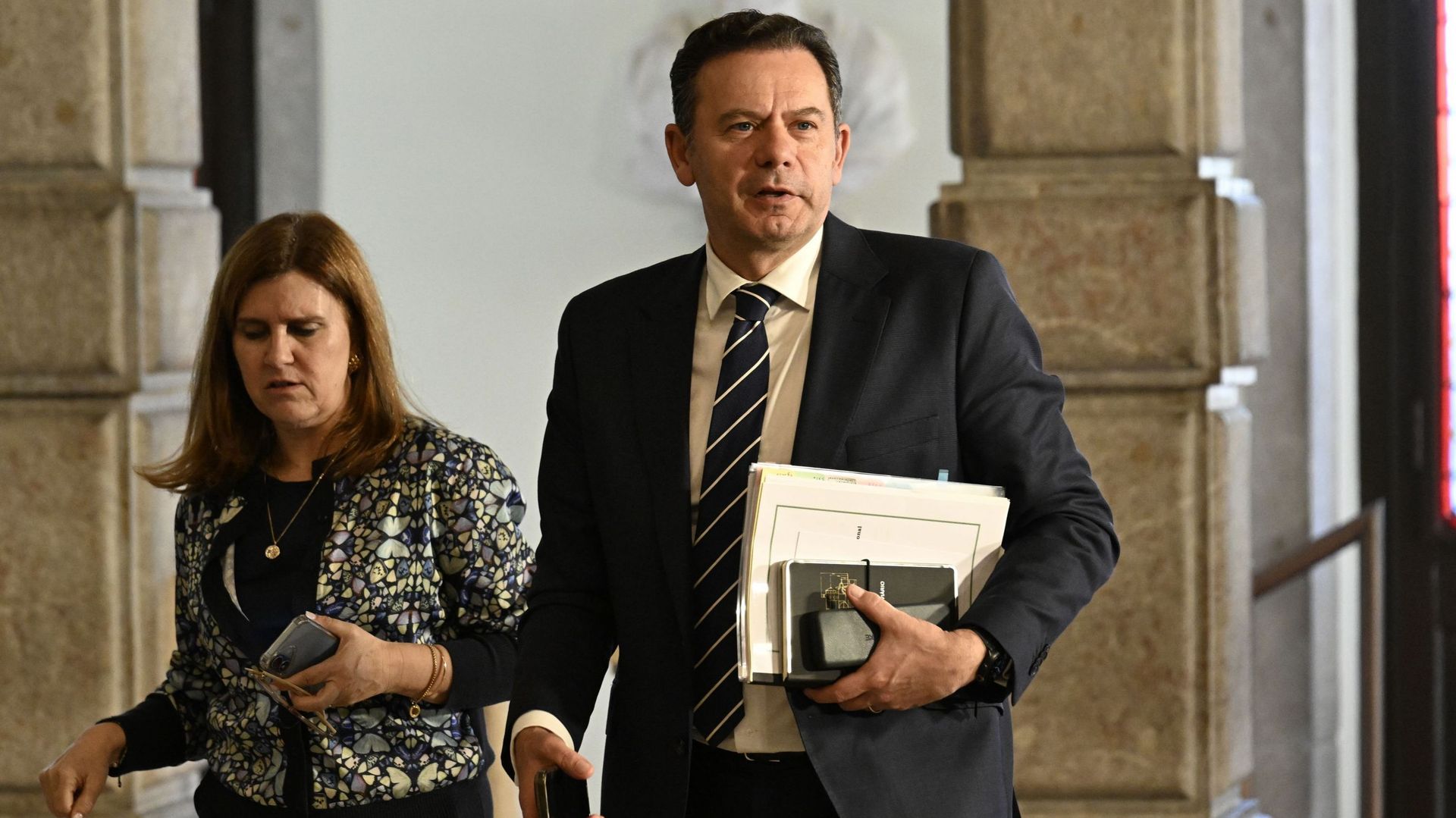
The resignation letter of Joe Kent, director of counterterrorism in the United States, reveals the destructive and destabilizing influence of Israel on American foreign policy. In his first interview, he mentions this role in triggering the war that destroyed Iraq. He said he resigned to avoid repeating the horror with Iran.
Published on 27th March
By Amir Khadir Former Quebec Solidarity MNA
The current war goes beyond the usual geopolitical explanation. To understand why Trump was lured into this war solely for the benefit of Israel, one must open up the angle of analysis.
A dimension often overlooked in the analyses is becoming increasingly clear: the three main actors in the current crisis – the Iranian theocracy of the Pasdaran, the regime of Benjamin Netanyahu in Israel, and the Trump administration in the United States – are each driven in their own way by an eschatological vision of the world. In other words, they act under the influence of actors who believe in the end of times. This convergence of three millenarian beliefs, which herald the return of the messiah for a thousand-year reign, produces a warlike dynamic that classical diplomacy is structurally unable to defuse.
Iran’s Pasdaran: the return of the Mahdi
Since 1979, the Islamic Republic has been built on the doctrine of Velayat-e Faqih – the government of the Islamic jurist – which awaits the return of the Imam Mahdi, the 12th hidden imam in the Shiite tradition. The belief in the appearance of this messiah is shared by millions of Shiites worldwide in a spiritual and apolitical manner.
But in Iran, where I currently reside, the hardline factions of the Revolutionary Guards – the Pasdaran – have turned it into an ideological vector: for them, the greater the regional instability, the closer the return of the Mahdi.
The power in Iran, against which I have long militated actively, is now held by the Pasdaran, who control all sectors of the economy, the state, and the security apparatus, supported by a militia corps of nearly 1 million members.
Theocratic, now dynastic, nongovernmental facade – very fragile as a cartel-state of a fascist nature. The Iranian people, who rose up massively in 2019, 2022, and 2026, are its first victims. Their territory is now the center of a war they did not choose in the name of prophecies they no longer share.
The coalition government in place in Israel since 2022 constitutes the most extremist current ever to hold power in Israel’s history. Prime Minister Netanyahu leads a strategic alliance with ministers Itamar Ben-Gvir and Bezalel Smotrich, whose extreme positions centrally aim to achieve Greater Israel – a distant biblical vision – through the annexation of the West Bank, Gaza, and parts of territories of several countries in the region from Egypt to Iraq.
For more fundamentalist Israelis, the ultimate goal is the reconstruction of the Third Temple on the Temple Mount in Jerusalem, where the Al-Aqsa Mosque is located – a goal that involves its destruction.
In this cosmology, the war against Iran is not just a security operation: it is a necessary step towards fulfilling a divine promise. Some Israeli leaders have explicitly called the war in Gaza “Armageddon.” The underlying strategy is revealing: Israel knows it cannot face Iran alone. The objective, therefore, is to create conditions for an escalation that makes US entry into the war inevitable – a calculation that worked according to Joe Kent.
United States: Trump held hostage by his eschatological allies
Trump’s victory in November 2024 placed a hybrid coalition at the center of American executive power: on one side, evangelical Zionist Christians – several tens of millions of voters who believe, based on a literal reading of the Apocalypse, that Christ’s return is conditioned on the Temple’s reconstruction and a final battle in Jerusalem; on the other, donors and advisers from the “Israel First” movement, such as the Adelson family, who work to fully align US foreign policy with the goals of the Israeli right.
The tragic irony is that this alliance is based on a fundamental theological misunderstanding: in the evangelical cosmology, Jews will eventually convert or perish – a fact Israeli Zionists cynically ignore.
But each side uses the other for their own eschatological ends: Israeli fundamentalists rely on the long-awaited Messiah to settle the account of all non-believers.
Trump – elected on promises of non-interventionism – finds himself ensnared in a conflict he no longer controls. The internal fractures within the MAGA movement illustrate this tension: Tucker Carlson, Joe Kent, Candace Owens and Steve Bannon publicly denounce the pro-Israel lobby’s grip on the White House but struggle to reverse the trajectory.
The fatal convergence of these intersecting millenarian delusions is unprecedentedly grave. For the first time in modern history, three major actors in a single conflict share a theological vision of war: destruction is not a failure – it is a step toward redemption. Chaos calls for the Mahdi’s arrival, the true Shia messiah. War prepares for the Temple’s reconstruction, a condition for Mashiah’s advent. And Armageddon hastens Christ’s return. In this framework, peace becomes a spiritual threat to these fanatics. This is precisely what renders diplomatic rationality powerless: one does not negotiate with actors who believe they serve a divine truth superior to all human calculations.
In the end, the cost of these intersecting millenarian delusions is borne by ordinary people: Iranian, Palestinian, Israeli, and Lebanese civilians. Their leaders – installed in their palaces, bunkers, and mansions – will not share their fate. The only possible response remains what it has always been: the political awakening of peoples and their collective refusal to die for the prophecies of their elites. In the face of such hallucinations, lucidity is the first form of resistance.