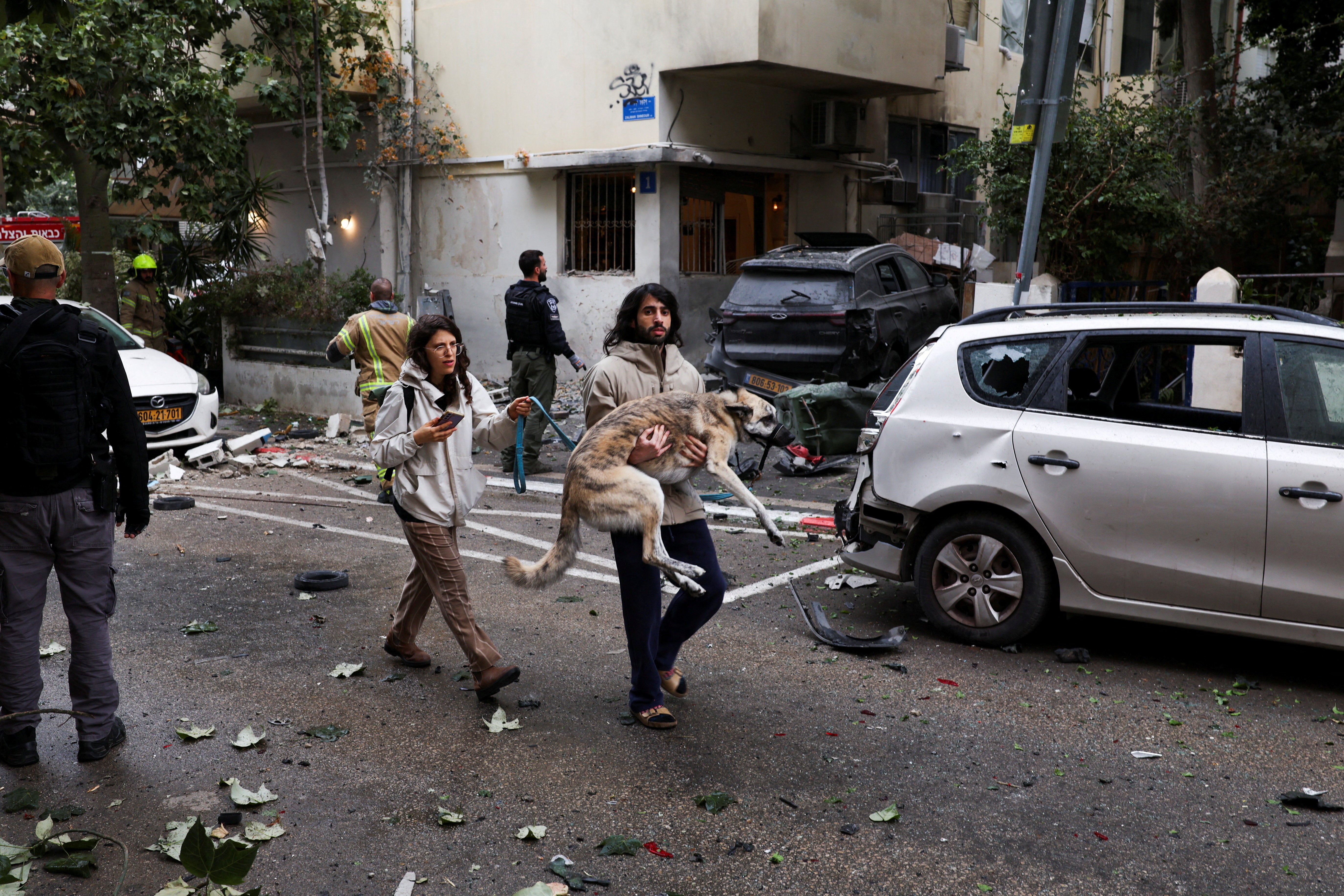
“Tsahal risks implosion”: such a warning from the chief of the Israeli army’s general staff has little precedent. These remarks, made on March 25 by General Eyal Zamir during a closed-door meeting of the security council, were leaked and then publicly endorsed by the spokesperson for the Israeli defense forces, of which Tsahal is the acronym. He claims that at least 15,000 soldiers are missing, including 7,000 combatants. Despite the recall of 150,000 reservists (a third of the total), the Israeli army is at risk of overexposure, especially for ground forces. Never in its history has Tsahal faced such a long war. The wars of 1956, 1967, 1973, and even the one in Lebanon in its most massive phase in 1982 lasted only a few days or weeks.
This conflict, which responds to the massacres committed by Hamas with 1,200 deaths on Israeli soil, has been ongoing for two and a half years. “These are actually intertwined wars of different nature that do not engage the army in the same way,” analyzes geopolitical expert Frédéric Encel. It is not a conflict of very high intensity on Israeli soil or its borders like the ones faced against the Arab states that threatened the existence of the Hebrew state.
Peace agreements with Egypt or Jordan persist, as well as the Abraham Accords for mutual recognition, especially with the United Arab Emirates. Syria remains out of the equation. The Houthi rebels in Yemen, armed by Iran and capable of blocking the Bab el-Mandeb strait south of the Red Sea, are not a real threat.
The challenge is nonetheless immense for an army of citizens, as the government of Benjamin Netanyahu, the most right-wing in the history of the Hebrew state, continues its headlong rush. This is evidenced by the adoption on March 30 of a law establishing the death penalty for murders committed with the intention of “denying the existence of the State of Israel,” which in reality only targets Palestinians. The law has been condemned by European capitals and Israeli NGOs advocating for human rights, as well as opposition groups who have filed a petition for its annulment by the Supreme Court.
“Middle East War: missiles, oil, Strait of Hormuz… With such entrenchment in the conflict, is de-escalation still possible?”
Support for Tsahal remains strong. “While the army is not necessarily a true reflection of the entire population, the support of society remains very strong, despite the failure of October 7th. Tsahal is the most popular institution in Israel, over 80%. The country’s existence depends on the military. And then, Tsahal is often a brother, a father, a son, a daughter. So, everyone identifies with it,” notes Samy Cohen, a professor at Sciences Po and author of “To Kill or Let Live: Israel and the Morality of War” (Flammarion).
The war-weariness is real, but as the saying goes, “the rear holds.” The Israeli society is divided on the Palestinian issue, the exemption of conscriptions for ultra-Orthodox Jews, or Netanyahu’s policies and legal affairs. The consensus, however, is complete in the face of an Islamist regime that has never ceased to call for the destruction of the Jewish state and has notably developed a military nuclear program.
The offensive against Iran, to either destroy the regime or at least significantly weaken it by annihilating what remains of its nuclear program, involves airpower, missiles, cyber warfare, and intelligence. The only risk in the long term of a prolonged war is the exhaustion of the Iron Dome missile interceptors.
On other fronts, however, more manpower is always needed for ground operations. The operation in Southern Lebanon already requires the mobilization of five divisions and 75,000 soldiers to create a buffer zone extending to the Litani River. This comes with the risk of getting bogged down in endless combat, facing a still formidable Hezbollah despite being weakened after the fall 2024 war.
In Gaza, Israeli soldiers continue to patrol along the “yellow line,” which divides the enclave between the zone still occupied by the Israeli state and a territory where Hamas, despite being weakened, still enforces its rule. In the West Bank, settlers are increasing violence and creating unauthorized settlements, 30 of which have just been legalized and must be subsequently secured by the military. “It is unacceptable that, while fighting a war on multiple fronts, the Israeli army is also forced to deal with a menacing minority within its ranks,” publicly expressed the chief of the general staff on March 18.
This general of the armored corps, appointed a year ago to head the armed forces by Netanyahu, is an advocate of speaking the truth, even if it disturbs the government. “Soon, Tsahal will no longer be able to carry out its usual missions, as the reservists will not be able to cope,” General Zamir warned. This increasingly sharpens the question of conscription for the Haredim, literally “God-fearing” – the ultra-religious Jews who have been exempt from military service since the creation of the State of Israel. The ultra-Orthodox religious parties, whose votes are often essential for any government coalition, fiercely defend this exemption to their electorate.
For a long time, the army itself was ok with this, thinking that integrating these ultra-pious individuals into units posed as many issues – respect for holidays and Shabbat, gender separation in units, etc. – as it resolved.
But now, in a situation of manpower shortage, they are necessary, even just to free up other soldiers from logistical tasks because it is not an option to force them to join combat units and bear arms. A proposed law aims to regulate this, albeit in a limited manner since their conscription was abandoned, officially for budgetary reasons but in reality for political ones, as the far-right coalition led by Benjamin Netanyahu needs the parliamentary support of the ultra-religious.
The chief of the general staff emphasized that “the Israeli army needs a conscription law, a law to extend mandatory service and on reservists.” In 2027, the duration of mandatory service is expected to be reduced to 30 months instead of 36, requiring the mobilization of thousands of soldiers. The reserves also show signs of fatigue.
Just after the massacres of October 7th, all reservists had responded to the call. But since then, fatigue has become increasingly palpable. Sometimes 30 to 50% of the personnel are missing. The Israeli army is an army of the people, which is its strength but also its weakness. Continually called to rejoin their units, high-tech entrepreneurs, symbols of the Israeli economy’s dynamism, are often forced to close shop. Although this sector with record exports in the past two years continues to drive the Israeli economy, growth forecasts for 2026 have been slightly revised downward to 4.5%.
Despite the risk of a “security disaster” in the long term mentioned by Yair Lapid, a leading figure of the opposition, Israeli authorities do not intend to halt operations against Iran. “We cannot let this opportunity pass. We must not release the pressure until this regime collapses. Such an opportunity will not present itself again,” confides a member of the general staff to the daily Yedioth Ahronoth. However, while military cooperation – especially in the air – with the Americans is intense with a sharing of tasks and targets, the war aims between Washington and Jerusalem remain divergent, especially in terms of duration.
Supported by his constituency, Benjamin Netanyahu is ready to take on the challenge of a prolonged war. Donald Trump, on the other hand, cannot, as this war is becoming increasingly unpopular, even among his supporters who fear inflation and rising gasoline prices at the pump. He needs to find an exit strategy that allows him to claim victory. The Hebrew state cannot continue the war alone, or at least not in its current form.