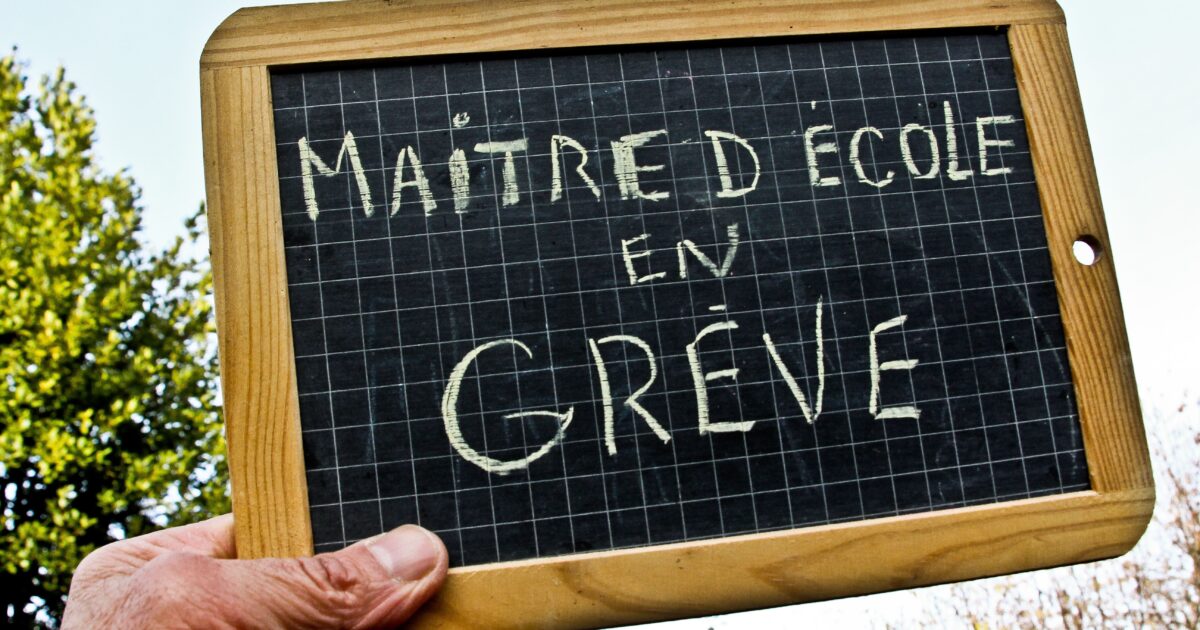
The rate of strikers reached 13.2% in the first degree (nurseries and primary schools) and 7.18% in the second degree, including 9.7% in colleges, 4.94% in general high schools, and 3.5% in vocational high schools, detailed the ministry in a statement. Including other staff, the average is 7.56%.
The unions report a higher mobilization, with 25% of striking teachers, including nearly 20% in Paris and around 30% in Lyon, Créteil, and Normandy, according to the Snes-FSU, the majority union in the secondary sector, and around 30% in schools, estimated the SNUipp-FSU, the primary sector’s leading union.
“This day comes after weeks of mobilization, which began in January,” recalls Sophie Vénétitay, general secretary of the Snes-FSU. On February 17, several hundred people notably demonstrated in Paris, and about 6.16% of teachers in the Île-de-France region were on strike.
As a highlight of a week of actions, the strike is accompanied by demonstrations in many cities. In Paris, a procession will depart at 2:00 PM from Luxembourg towards the Ministry of National Education.
In Marseille, 800 people demonstrated, including 200 high school students, according to the prefecture.
“Positions are being cut when we could have taken advantage of demographic decline (…) to maintain resources as they are and at this moment, have better teaching conditions for students,” lamented Eric Mampaey, regional secretary of Unsa Education, to AFP.
Earlier in the morning, about ten students blocked the entrance of Montgrand high school in downtown Marseille, denouncing the decrease in resources. “Here, 100 hours will be cut,” testified Loeiza Cambie, a 16-year-old in the first year. “We will have fewer options and classes of up to 36 students.”
– 4,000 positions cut –
In Clermont-Ferrand, where 105 positions have been cut across the academy, about 200 people demonstrated behind the banner “For public schools, against job cuts.”
In the procession, Armelle Sunier, a 49-year-old kindergarten teacher, said she was “angry.” “The demographic decline could have been an opportunity to have more staff because there are many children in distress and fewer resources to support them.”
In Lyon, about 200 people marched from the rectorate to the Labour Exchange. Contacted by AFP, the Lyon rectorate had not yet communicated figures on participation.
The main concern of Nathalie Rougane-Ghilardi, a school director north of Lyon, is the job cuts in educational structures specialized for students with disabilities. “Removing these positions is absurd. That’s why I’m angry,” she told AFP, noting that “we have more and more children who are suffering” from the situation.
In total, 4,000 teacher positions, including public and private, are expected to be cut for the 2026 school year, with 1,891 in public primary and 1,365 in secondary education.
“We are experiencing a demographic decline like our country has never seen in its history,” Minister of National Education Édouard Geffray justified in Lyon on Monday. “We are doing everything possible to minimize the consequences of these class closures,” he added, ensuring that there are “still a few months to adjust.”
“It’s not demographics that guided decision-making, it’s the clear and deliberate desire of this minister and many others to save money on public education,” denounced Sophie Vénétitay.
mdv-gir-vk-jp-cca-dfa/rap/alv