Key Information
- The contradictory statements of US President Donald Trump, claiming that the United States is winning while deploying reinforcements, sow confusion and undermine confidence.
- Trump’s tendency to invent conversations and exaggerate threats creates an atmosphere of uncertainty and undermines confidence in his leadership.
- Experts warn that Trump’s lack of rhetorical restraint and insistence on a falsely optimistic vision could lead to a dangerous escalation and miscalculations.
President Donald Trump’s statements regarding the conflict with Iran have caused confusion due to their contradictory nature. He asserts that the US is victorious while simultaneously deploying thousands of additional troops to the Middle East.
Contradictory Messages on Support
Trump has criticized other nations for not providing support, only to later declare that such support was unnecessary. He has repeatedly extended deadlines to Iran for reopening the Strait of Hormuz, threatening to destroy Iranian energy facilities if the waterway remained closed, while claiming that this closure had no impact on the United States.
Additionally, Trump reported a conversation with a predecessor (strongly implying it was a Democrat) who allegedly expressed regrets for not taking similar action against Iran. Representatives of all living former presidents quickly denied this alleged conversation. As the conflict enters its second month, Trump’s tendency to embellish, exaggerate, and make false statements is being put to the test in a context where the stakes are considerable.
Truth, a Casualty of War
Experts like Leon Panetta, who served in various roles under Democratic presidents, note that truth is often a casualty of war. Panetta points out that while previous administrations have not always been honest about war, Trump’s approach, which systematically distorts facts and presents a falsely optimistic picture, is unprecedented.
Michael Rubin, a historian specializing in Iran and Iraq at the American Enterprise Institute, highlights that Trump has no rhetorical boundaries, unlike previous presidents. This lack of restraint breeds confusion and uncertainty.
Intentional Unpredictability?
Some argue that Trump’s unpredictable style is intentional, designed to destabilize his adversaries. However, others see it as evidence of a lack of coherent long-term strategy.
Trump’s approach was evident in the days leading up to his announcement extending the deadline for Iran to reopen the Strait of Hormuz. When asked about his intentions, Trump feigned ignorance, stating that he had a day to make a decision, jokingly referring to “Trump Time” as eternity.
Erosion of Trust
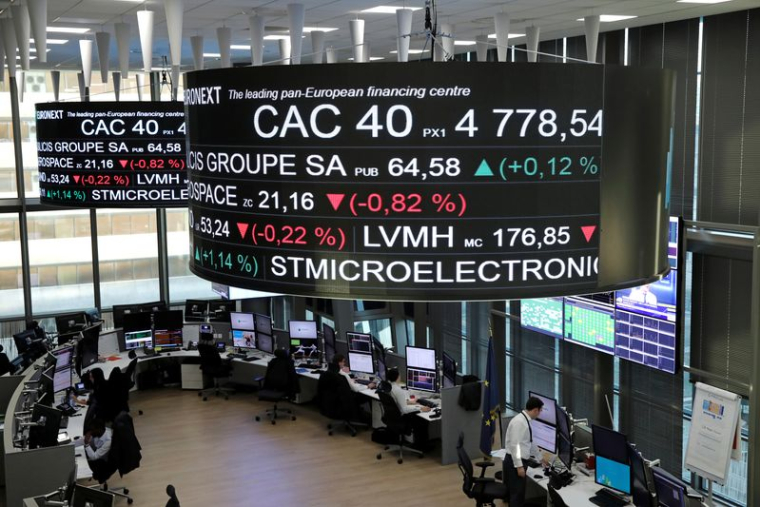
While Trump may find this approach amusing, investors reacted negatively, with US stocks experiencing their worst week since the conflict began. Congressional representatives expressed frustration, questioning the administration’s reliability. Republican lawmakers, despite generally supporting Trump’s actions, voiced concerns about the possibility of prolonged conflict and its economic implications. They advocate for greater transparency and detailed briefings from the administration.
Backlash Risk
Despite strong support for Trump among Republicans, a recent poll suggests that prolonged military involvement in the Middle East could alienate his base. While a majority of Republicans support airstrikes against Iranian military targets, far fewer approve of deploying ground troops.
The risk of escalation and prolonged conflict poses political challenges for Trump, who has not prepared the nation for such a significant overseas commitment. The administration’s request for an additional $200 billion to fund the war would also face significant opposition in Congress, particularly from budget-conscious Republicans in an election year.
Strategic Ambiguity or Reckless Rhetoric?
While some experts suggest that Trump’s unpredictable rhetoric could be a calculated strategy aimed at sowing distrust and fear within the Iranian leadership, others caution against reading too much into deeper meanings behind his statements.
Ultimately, there are concerns that Trump’s pursuit of unrealistic goals, such as the complete elimination of Iran’s nuclear program, may lead him to rely on his usual exaggeration and self-promotion to declare victory prematurely and end the conflict.
Follow Business AM on Google News.
If you want access to all articles, subscribe here!