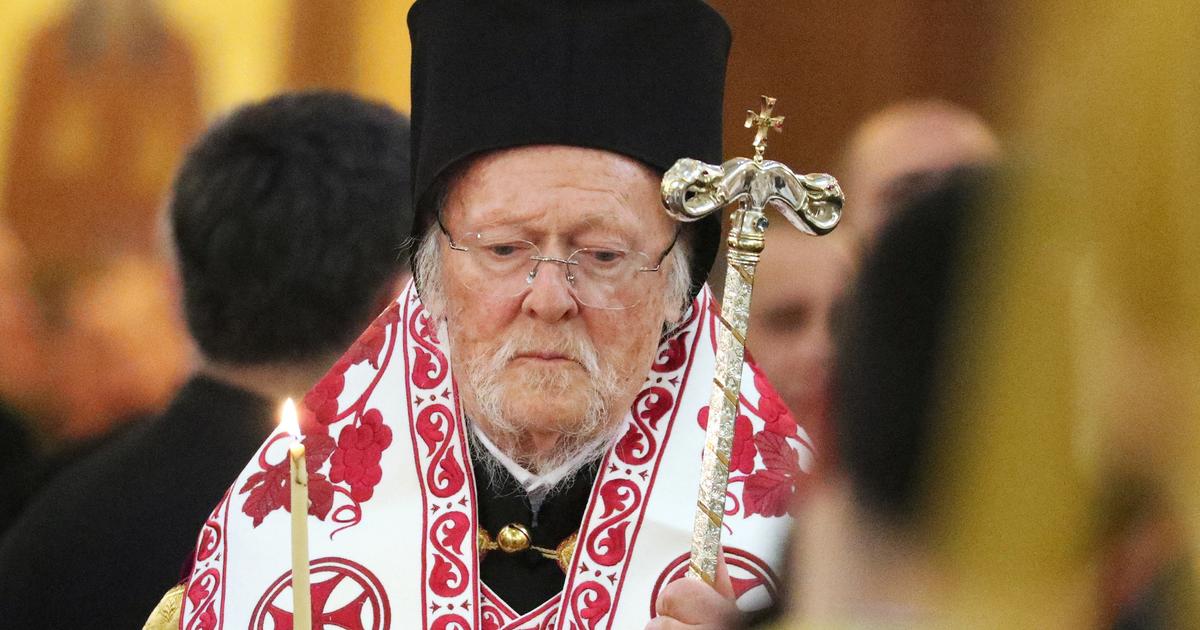
In his Palm Sunday homily, Pope Leo XIV alludes, indirectly, to the context of war in the Middle East, inviting reflection on the moral legitimacy of current conflicts. At the heart of his homily, he declares: “Jesus, King of peace. A God who refuses war, whom no one can invoke to justify war, who does not listen to the prayer of those who wage war.”
This statement poses a clear principle. The pope says no war can be justified by invoking God. This is not just a general call for peace, but a refusal of any use of God’s name to legitimize military action. the Holy Father adds: “He did not take up arms, He did not defend Himself, He waged no war” The words of the Holy Father are based on the figure of Christ: Jesus does not respond to violence with violence, and does not resort to weapons, even in the face of injustice. This direct reference to the Passion places his subject in a theological reading centered on sacrifice and not on power.
Leo XIV fits into an identifiable contemporary context. Several political leaders, particularly in the United States, have accompanied military decisions with religious references or moments of prayer, sometimes even within the Oval Office of the White House. The Pope seems to set a clear limit here: prayer cannot be used to legitimize a military operation. He even affirms that God “Hear not the prayer of those who wage war.” To support this position, he quotes the prophet Isaiah: “No matter how much you pray, I don’t listen: your hands are full of bloodâ€.
This quote establishes a direct link between prayer and moral justice. A prayer associated with violence becomes, according to this logic, ineffective. The rejection of shed blood is thus part of a biblical continuity where God refuses religious practices that are not accompanied by righteous conduct.
This position can be put in tension with the Catholic tradition of just war. In certain situations, particularly in the face of regimes considered hostile or dangerous, military intervention is sometimes presented as necessary. Countries like Iran are often mentioned in this context. From this perspective, some believe that military action can be a political responsibility, even if it arouses criticism within the international community. We can also consider that if the United States achieved its objectives in the face of certain regimes, part of the world could live with it.
The pope’s position, however, is part of another logic, centered on the suffering Christ. He states:
“In his wounds, we see the wounds of so many women and men today” The Pope thus establishes a link between the Passion of Christ and contemporary victims of conflicts. War is then seen not only as a political reality, but also as an attack on human dignity which finds an echo in the suffering of Christ himself.
PALM SUNDAY: PASSION OF THE LORD –
COMMEMORATION OF THE ENTRY OF THE LORD INTO JERUSALEM AND MASS
PAPAL CHAPEL
HOMILY OF POPE LEO XIV
St. Peter’s Square
Sunday March 29, 2026
« Dear brothers and sisters,
while Jesus travels the way of the cross, we follow him, we follow his steps. And as we walk with Him, we contemplate his passion for humanity, his heart which breaks, his life which is a gift of love.
We look at Jesus, who presents himself as theKing of Peacewhile around Him war is brewing. He remains firm in gentleness, while the others become agitated in violence. He offers himself as a caress for humanity, while others brandish swords and sticks. He is the light of the world, while darkness is about to cover the earth. He came to bring life, while the plan to condemn him to death was accomplished.
En tant queKing of PeaceJesus wants to reconcile the world in the embrace of the Father and tear down the walls that separate us from God and our neighbor, because “It is he who is our peace” (Ep 2,14).
En tant queKing of PeaceHe enters Jerusalem on the back of a donkey, and not on horseback, thus fulfilling the ancient prophecy which called for rejoicing in the arrival of the Messiah: “Here is your king who comes to you: he is righteous and victorious, poor and riding on a donkey, a Donkey, the calf of a donkey. This king will make the chariots of war disappear from Ephraim, and the horses of war from Jerusalem; he will break the bow of war, and he will proclaim peace to the nations” (Zc 9, 9-10).
En tant queKing of Peacewhen one of his disciples draws the sword to defend him and strikes the servant of the high priest, He immediately stops him saying: “Put away your sword, for all who take the sword will perish by the sword » (Mt 26, 52).
En tant queKing of Peacewhile He was burdened with our sufferings and pierced for our faults, He “opens not his mouth: as a lamb led to the slaughter, like a sheep mute before the shearers, he does not open his mouth” (Is 53, 7). He did not take up arms, He did not defend Himself, He waged no war. He manifested the gentle face of God, who always refuses violence, and instead of saving himself, He allowed himself to be nailed to the cross, to embrace all the crosses planted at all times and in all places in the history of humanity.
Brothers and sisters, this is our God:Jesus, King of peace. A God who refuses war, whom no one can invoke to justify war, who does not listen to the prayer of those who wage war and rejects it by saying: “No matter how much you multiply your prayers, I do not listen: your hands are full of blood” (Is 1, 15).
Looking at Him, Him who was crucified for us, we see the crucified of humanity. In his wounds we see the wounds of so many women and men today. In his last cry to the Father, we hear the cries of those who are defeated, those who are hopeless, those who are sick, those who are alone. And above all, we hear the groan of pain of all those oppressed by violence and of all the victims of war.
Christ, King of peace, still cries from his cross: God is love! Have mercy! Lay down your arms, remember that you are brothers!
Taking up the words of the Servant of God, Mgr. Tonino Bello, I would like to entrust this cry to Mary Most Holy, who stands at the foot of the cross of her Son and who also cries at the feet of the crucified today:
“Saint Mary, woman of the third day, give us the certainty that, despite everything, death will no longer have a hold on us. That the injustices committed by people have their days numbered. Let the glow of war be a twilight. That the suffering of the poor is in its final stages. […] And that, finally, the tears of all the victims of violence and pain will soon be dried, like frost under the spring sun” (Mary, woman of our time). »
Source Vatican