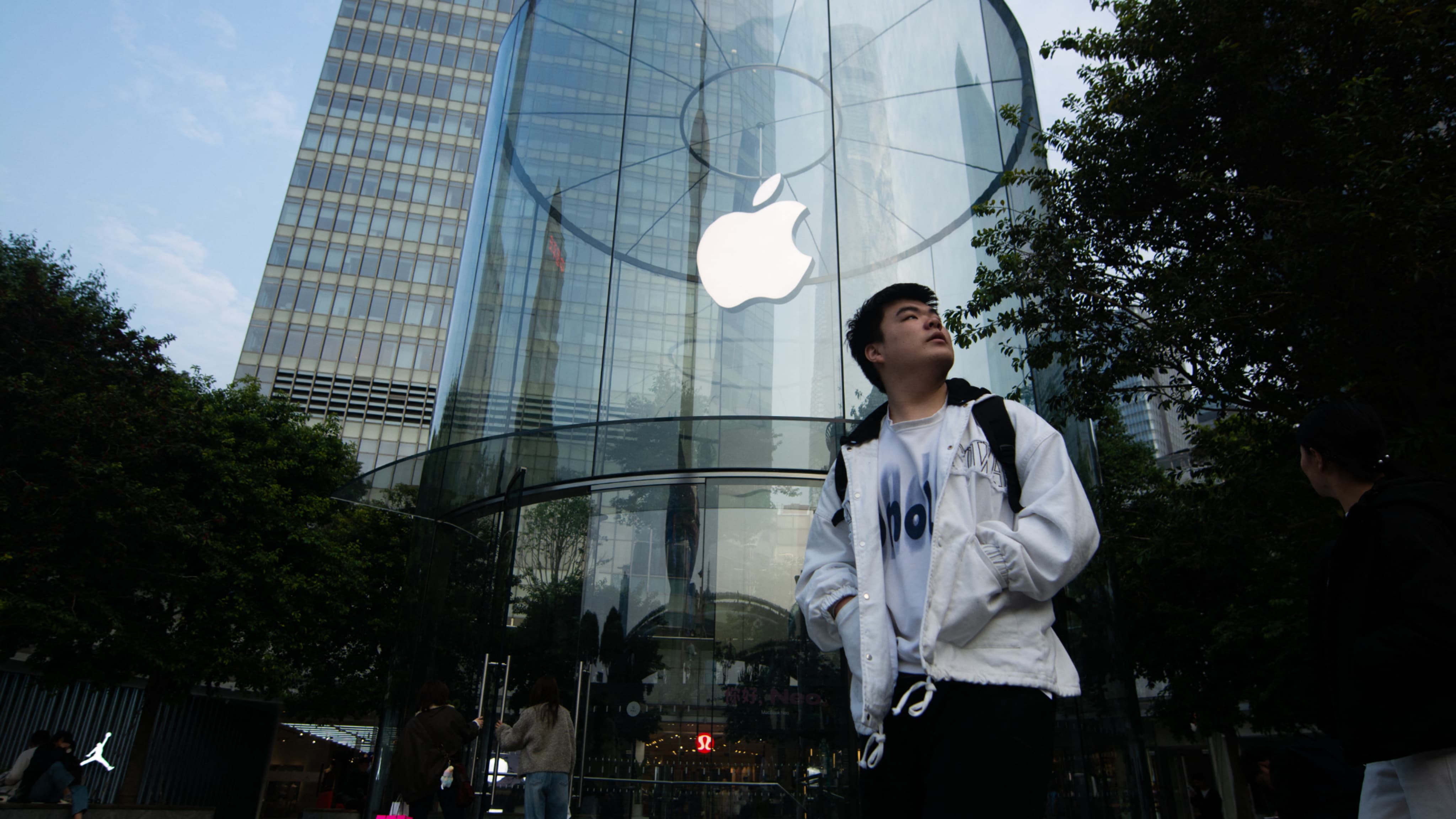
Present in China for more than two decades, Apple, which celebrates its 50th anniversary on April 1, 2026, has maintained a complex relationship with Beijing. While this relationship has long been beneficial economically and industrially, recent geopolitical tensions between the United States and China, as well as technological concerns, now pose new challenges for the company.
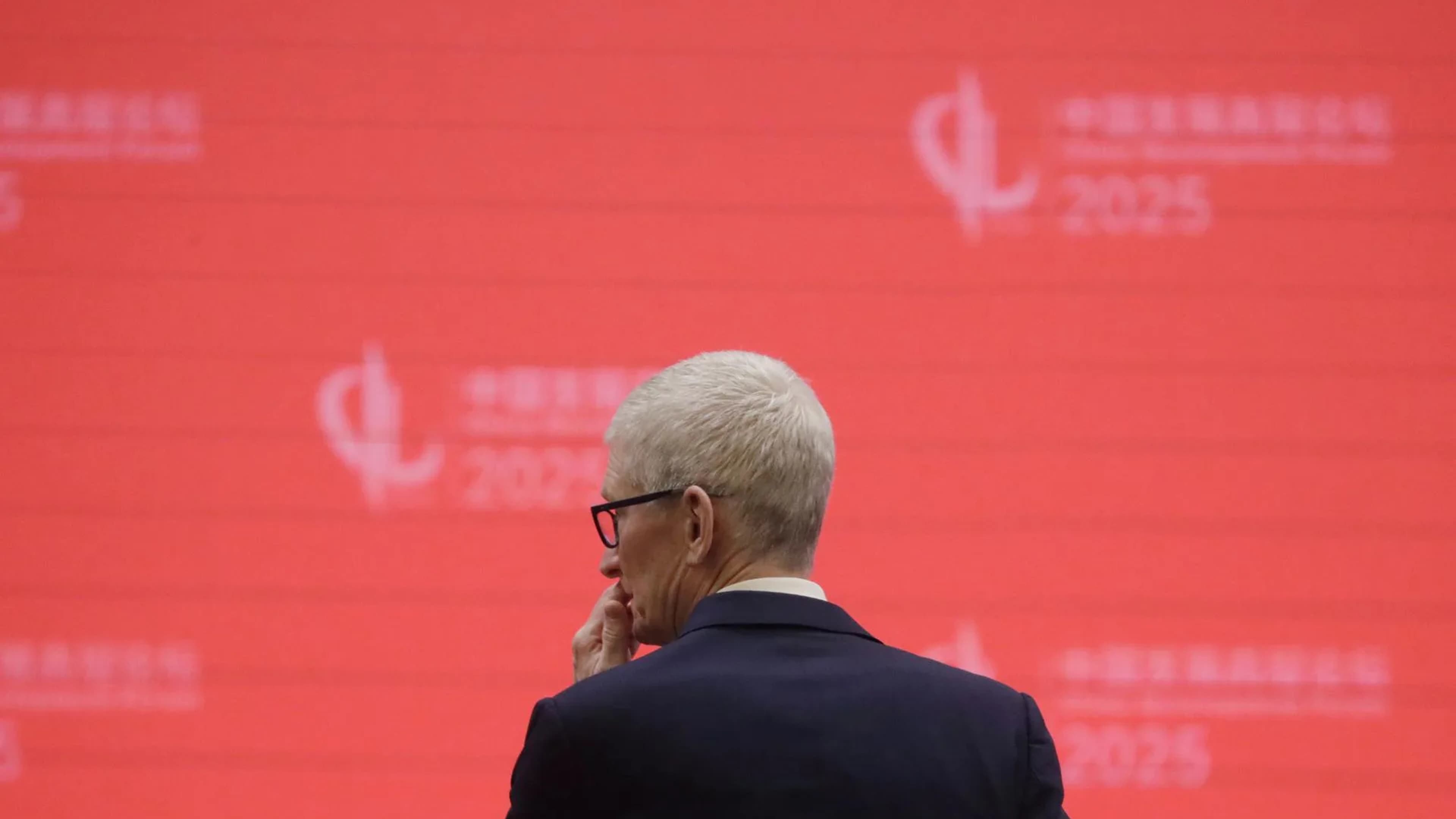
A ‘symbiotic’ relationship. This is how Tim Cook described the connection between Apple and China. At the end of March 2023, the number one of the American firm was in Beijing to participate in the China Development Forum, a major event organized by the Chinese state that brings together top officials and influential figures from the entrepreneurial world.
Between official speeches and strategic meetings, Cook also visited a downtown Apple Store. There, amidst customers and bright screens, he posed for a selfie with singer Huang Ling: a photo that quickly went viral on Chinese social media, illustrating both the cultural influence of the brand and its economic impact on the local market.
But relations between Beijing and the Silicon Valley giant have not always been smooth sailing. They have been more like a long journey on the waves of the global economy and geopolitics. Suffice to say that the journey has never been like a peaceful cruise. And Tim Cook, who praised this ‘special’ relationship in 2023, knows this better than anyone. In 1999, as head of operations at Apple, he formed a decisive partnership with Foxconn and its founder Terry Gou, who would become the main iPhone assembler in China.
This laid the foundation for the gigantic production chain that would allow Apple to produce on a large scale. At the time, the famous iMac was just a small beacon. And it wasn’t like any other computer. Neither rectangular, nor beige, nor gray, nor white, its rounded shape evoked a drop of water and its translucent casing came in bright, vivid colors. Like many Apple products today, it combined cutting-edge design with meticulous manufacturing.
Financial difficulties and a phone call with Foxconn
In its early days, Apple manufactured its products in the United States. At its origins in 1976, Steve Jobs’ sister, Patty, hand-assembled the electronic boards of the first computer, the Apple I. For the Apple II in 1977, the company reportedly recruited “a motley network of immigrants, some undocumented, to assemble electronic boards and power supplies in overcrowded apartments and houses in the San Francisco Bay Area,” as detailed by Michael Malone in his book Infinite Loop.
A situation that is hard to imagine today, but reflects a reality that was beyond control due to the explosion in demand and the youth of the structure that Apple was at the time. Michael Malone wrote: “Nobody mentioned the minimum wage, social security, or workplace safety laws. So, for over a year, the Apple II, presented as the machine capable of liberating individuals from bureaucratic slavery and office work, was actually partially assembled in clandestine workshops.”
Quickly, however, with the growth in production needs, Apple industrialized its manufacturing process and expanded its own factories. Thus, the Apple II or even the Lisa in its early days were assembled in Carrollton, Texas. In the 80s, Apple’s largest factory was in Fremont, California. This was where the Macintosh computers were manufactured. Fremont was later replaced at the beginning of the 90s by the Elk Grove site, still in California.
However, faced with financial difficulties in the mid-1990s, Apple began progressively outsourced its production to reduce costs, improve efficiency, and support its stock price, following in the footsteps of its already well-established competitors in the market.
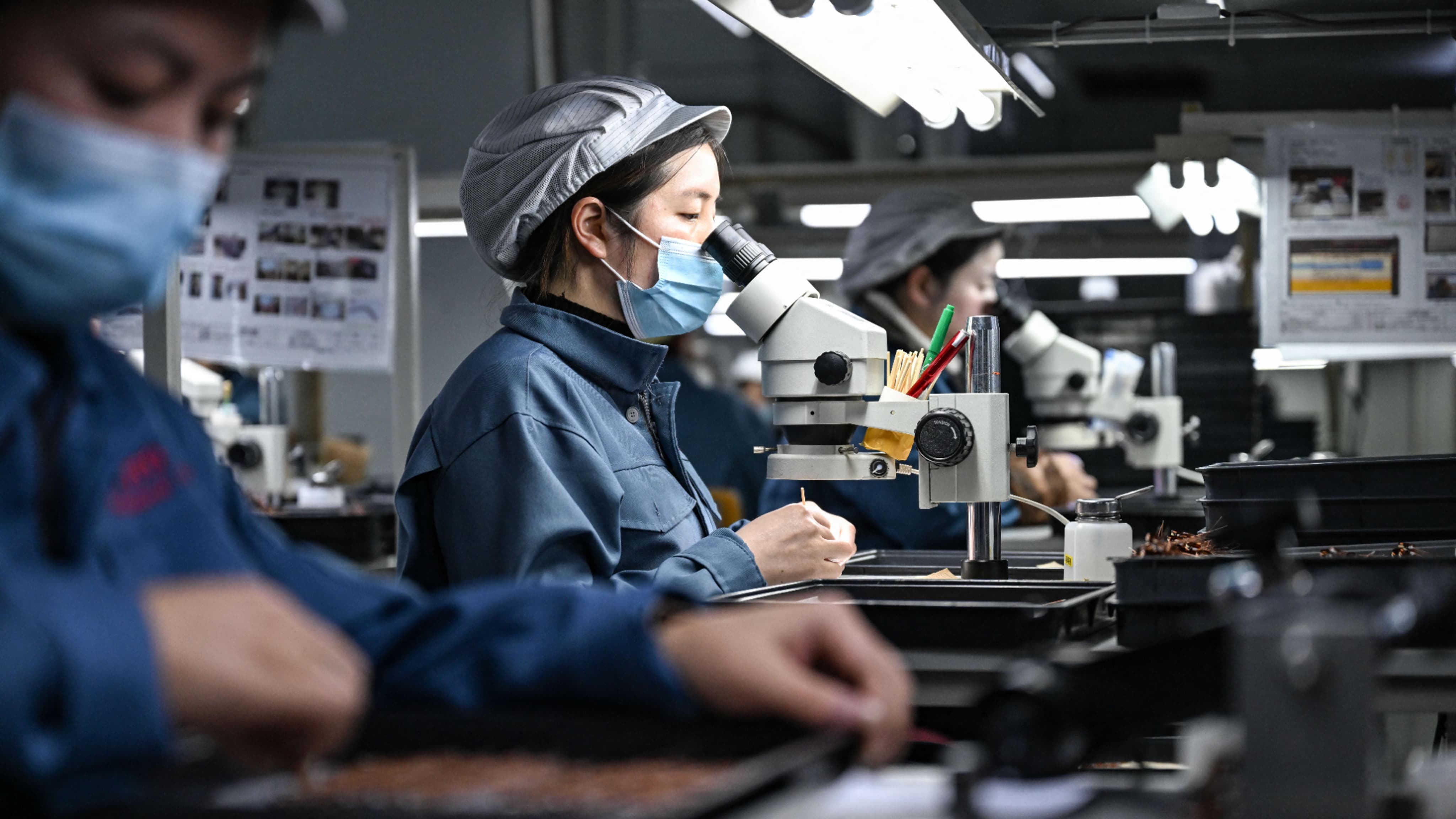
In this context, Apple forged its “renowned” partnership with Foxconn. Although based in Taiwan, the company has long (and still does today) based its success on its factories in mainland China, to which it gradually transferred its production in the 1980s in response to rising labor costs in Taiwan. Terry Gou and other Taiwanese entrepreneurs, known as ‘Taishang’, then contributed to developing the “Guangdong model.” A policy that involves moving industries that require a large amount of labor to favored regions in Guangdong, on the southeast coast of China. Shenzhen is a prime example of Beijing’s willingness to establish export-focused special economic zones promoting the rise of industrial capitalism, particularly in this coastal region.
Financial Times journalist Patrick McGee, an expert in tech and China’s economy, explains in his book “Apple in China: Conquering the World’s Largest Company” (2025) that this partnership marked the beginning of a much closer commercial relationship, capable of transforming not only the two companies, but also the economic destiny of China and, potentially, the global geopolitical balance.
From 2000 to 2007, Apple began outsourcing a large part of its production to Chinese factories like those of Foxconn and Pegatron, benefiting from the cheap labor and logistical efficiency offered by China. With the launch of the iPhone in 2007, the country gradually became the main manufacturing hub for the company, with almost all assemblies being done in mainland China and Taiwan.
Foxconn (and China) proved to be an exceptional partner for Apple. “As soon as Foxconn started producing the iMac on a large scale, Apple engineers were impressed by what was called the ‘Chinese speed’ – the ability to accomplish things at a frenetic pace, surpassing the understanding of Western visitors,” details Patrick McGee.
In 2014, Apple signed a strategic agreement with China Mobile, the country’s largest operator, allowing for a massive distribution of the iPhone in Chinese territory. Two years later, in 2016, Tim Cook, who became CEO of the company in 2011, obtained a $275 billion agreement over five years from the Chinese government, combining investments and partnerships in exchange for regulatory facilitations that propelled Apple to the forefront of the high-end smartphone market in China.
Scandals in the factories
But living in symbiosis with a partner also means inheriting its problems. Apple thus found itself embroiled in two major scandals related to China: the use of child labor in its assembly chain and the forced labor of Uighurs in certain supplier factories. Between 2009 and 2010, internal audits revealed the presence of minors under 16 in several Chinese factories of its subcontractors, despite an official “zero child in the chain” policy.
In 2011, Apple published its “Supplier Responsibility” report, acknowledging that 91 children had worked in 10 factories, with 42 on a single line. The company stated that most had been sent home with their school fees covered and that a subcontractor had been excluded. In the following years, Apple strengthened its audits and control rules, a complex and long-term task given the sprawling nature of supplier chains that sometimes involve cascading subcontractors. This task was made even more difficult by the need to fill factory towns, which house up to 200,000 workers, to produce iPhones, for instance, before annual launches. Despite these efforts, some NGOs and media outlets, like The Atlantic, continued to denounce shortcomings in monitoring subcontractors and labor agencies.
The subsequent years were not any better for the company. Between 2017 and 2019, reports from think tanks such as ASPI and the US Congress revealed a program of “forced labor transfer” from Xinjiang, where tens of thousands of Uighurs were said to have been sent to Chinese factories under conditions close to forced labor. These sites, supplying sectors like electronics, automotive, and clothing, mentioned Apple as an indirect beneficiary of these chains.
In 2020, an investigation by the Australian Strategic Policy Institute (ASPI) confirmed that some of Apple’s suppliers were employing forcibly displaced Uighur workers, some from detention camps. Faced with these revelations, NGOs and several American lawmakers called on the company to sever all ties with implicated suppliers and ensure the absence of Uighur labor in its chains. Last September, the American association China Labor Watch, which had previously collaborated with Apple, once again criticized the working conditions of workers made available to the American giant.
Geopolitical tensions
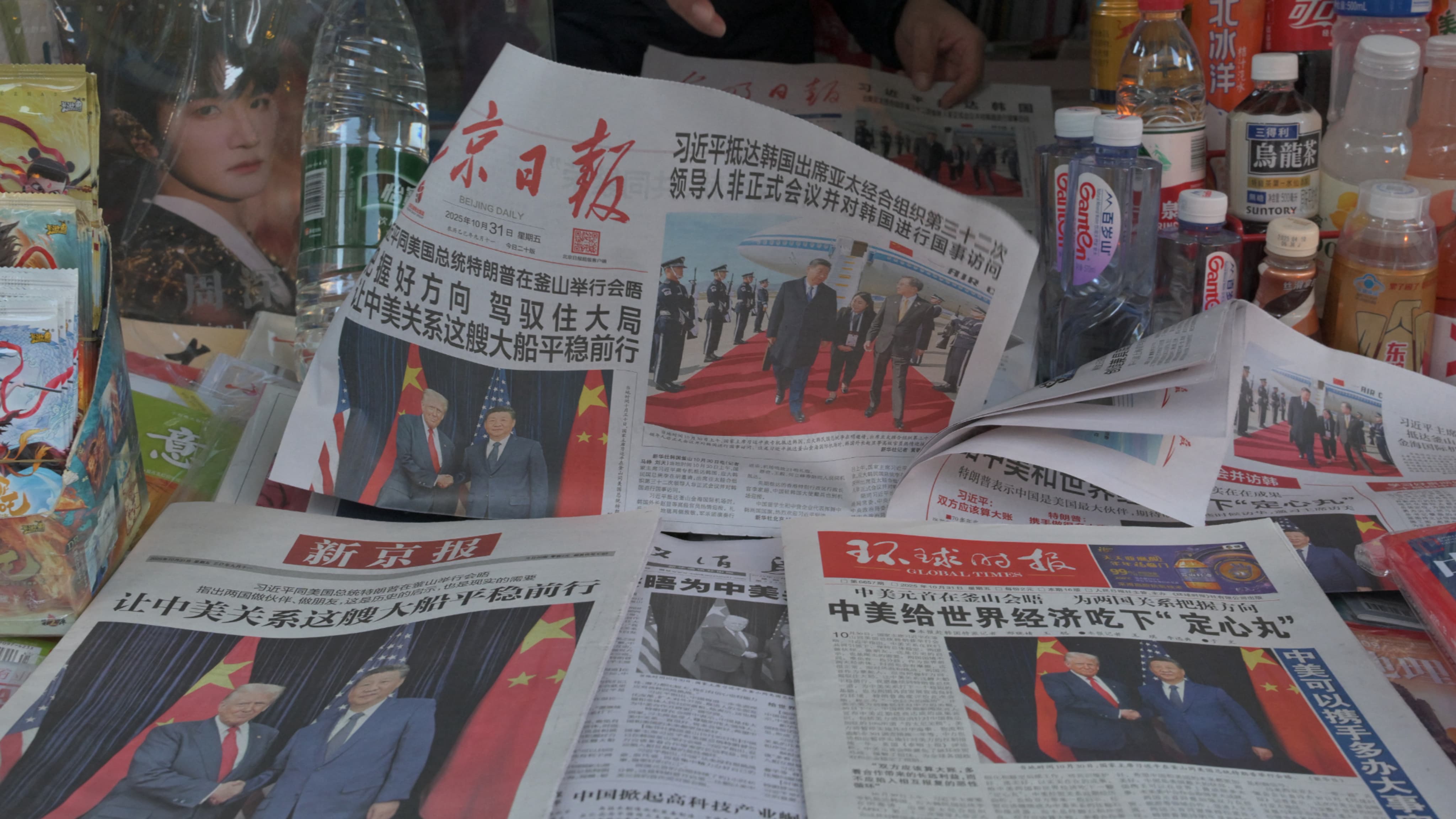
Another aspect of the relationship between Apple and China unfolds on the stage of international politics. The relationship between Apple and the Middle Kingdom is deeply marked by tensions between the United States, the brand’s country of origin, and the Chinese government. In this context of technological tensions with Washington, Beijing has multiplied pressure points. Initially, authorities introduced a gradual restriction on the use of iPhones for certain officials, sending a clear political signal. In addition, oversight of the App Store has been strengthened, with antitrust investigations and a forced decrease, in March 2026, of the commissions charged by Apple, against the backdrop of the threat of increased control over revenues.
Furthermore, censorship requirements have forced Apple to remove sensitive applications and strictly conform to local standards. For some observers, “these warnings were not really targeted at Apple […] it was aimed at the American government,” as China seeks above all to “show off its power” and its desire to control.
In this climate, Beijing also supports its national champions, driven by patriotic fervor, while subtly keeping pressure on Apple, which is deeply entrenched in the Chinese economy. It is indeed a paradox. On one hand, China remains essential to Apple: it concentrates much of its production chain and a significant portion of its revenue, making any break very costly. On the other hand, Beijing does not hesitate to favor its domestic champions like Huawei and send political signals to remind of its economic sovereignty.
Caught in the tumult of geopolitics, Apple attempts a delicate “balancing act”: partial diversification of its production (India, Vietnam), regulatory concessions in China, and closer ties with Washington to secure its strategic supplies. The company has become a key player in a fragmented world, where tech firms are not just economic actors… but instruments and stakes of power between major nations.
Concerns in Washington
Another striking aspect of the proximity between Apple and China: the central role played by the company in the industrial development of the country. In his book, Patrick McGee presents striking facts and figures about the extent of this contribution. Reading Apple in China, one question arises: in its quest for profit, has Apple inadvertently contributed to the emergence of a new world order… led by one of the main rivals of the United States?
Apple has indeed massively invested in China without openly displaying its presence. “No production site bore the Apple name […] and yet, by 2012, the value of the machines […] had soared to $7.3 billion.” According to internal documents cited by NPR, these investments reached “$55 billion annually in 2015,” a colossal amount that does not even include components.
But beyond the sums committed, the most strategic investment was largely human: “Apple estimates to have trained at least 28 million people since 2008.” To ensure its standards, the company sent entire teams to China, to the point of mobilizing dedicated flights: it deployed “so many engineers […] that it convinced United Airlines to open a direct route between San Francisco and Chengdu.”
And in the eyes of American policymakers, the continuous training of Chinese engineers and workers in cutting-edge technologies… is becoming increasingly difficult to swallow. At the beginning of the 2000s, Apple’s strategy in China aligned with a consensus favorable to the country’s opening, with hopes of building “a better world, a more prosperous economy, and a more democratic China.”
But from 2013 onwards, the situation changed: under Xi Jinping, China toughened, while in the United States, the negative effects of free trade became more visible, culminating in the election of Donald Trump in 2016. Ever since, Apple has found itself in a delicate position, described by the press as a company deeply dependent on Chinese production, from which it is difficult to extricate itself despite political pressures.
In summary, Apple’s history in China is a true loop where everything echoes each other. Strategic interdependence and economic weight intertwine in an increasingly unstable geopolitical context between the two powers. As a result, by building ties too tightly, one ends up turning a network into a noose.
In recent years, Apple has been trying to gradually loosen it, encouraging its partners, like Foxconn, to open factories in other countries, whether in Asia (Vietnam, India) or on the other side of the world, in Brazil. The Cupertino giant has also launched a $600 billion reshoring program in the United States, which will take a long time to truly bear fruit, if it can counterbalance the weight of Asian factories. For the nooses, unlike the Gordian knots, are not easily cut…

/https%3A%2F%2Fsportsmole-media-prod.s3.gra.io.cloud.ovh.net%2Fuploads%2F2026%2F03%2Fimago1072743393-69b01c38f1829561442006.jpg "Liverpool cop early Champions League blow against PSG quarter")